
AHA vs BHA vs PHA is the ultimate structural blueprint you must audit before applying another harsh scrub or chemical peel to your face. We’ve all been there—trying to scrape away stubborn dullness to achieve that coveted K-Beauty “Glass Skin” glow, only to end up with a compromised lipid barrier that feels like an overheated radiator, covered in flaky patches and screaming with dehydrated oily tightness.
As a professional repair technician who spends his days auditing complex industrial systems and calibrating high-precision machinery, I know that applying a coarse, aggressive abrasive to a sensitive, high-friction surface is a guaranteed way to cause severe system corrosion.
My own skin infrastructure taught me this exact mechanical rule. I once blindly flooded my reactive skin with a high-concentration glycolic acid module, completely stripping my lipid mortar and causing an emergency system shutdown marked by intense redness and purging breakouts. To safely clear out your pores without triggering a massive barrier breakdown, you need a precise technical breakdown of these three distinct exfoliation components.
1. The Problem: Over-Exfoliation and the Broken Lipid Mortar Friction
The struggle is real—you want to smooth out uneven texture and fade acne scars, you stack heavy-handed chemical exfoliants together, and your face instantly stings like crazy under your daily moisturizer. Traditional skincare advice often tells you to push through the burning phase, but that aggressive attack mindset is exactly what shatters your skin’s defensive seal.
For our 2030s community dealing with a classic reactive, dehydrated oily “Subuji” base, using an uncalibrated chemical exfoliant can trigger a severe structural failure. Instead of melting away dead cells, it causes microscopic tears, vascular flushing, and a greasy midday slick as your system overcompensates by pumping out excess sebum. This protective mismatch is why a proper AHA vs BHA vs PHA mechanical audit is vital for your long-term skin health. If your current chemical pad leaves your skin flaking or tight, you are using the wrong tool for your specific dermal chassis.
2. The Explanation: The Technical Science of AHA vs BHA vs PHA
To master your 2026 weekly maintenance schedule, we must inspect the molecular weights, solubility metrics, and operational depths of AHA vs BHA vs PHA. In K-Beauty ingredient engineering, exfoliation efficiency is calculated by how cleanly a molecule breaks desmosome bonds without inducing an inflammatory cascade.
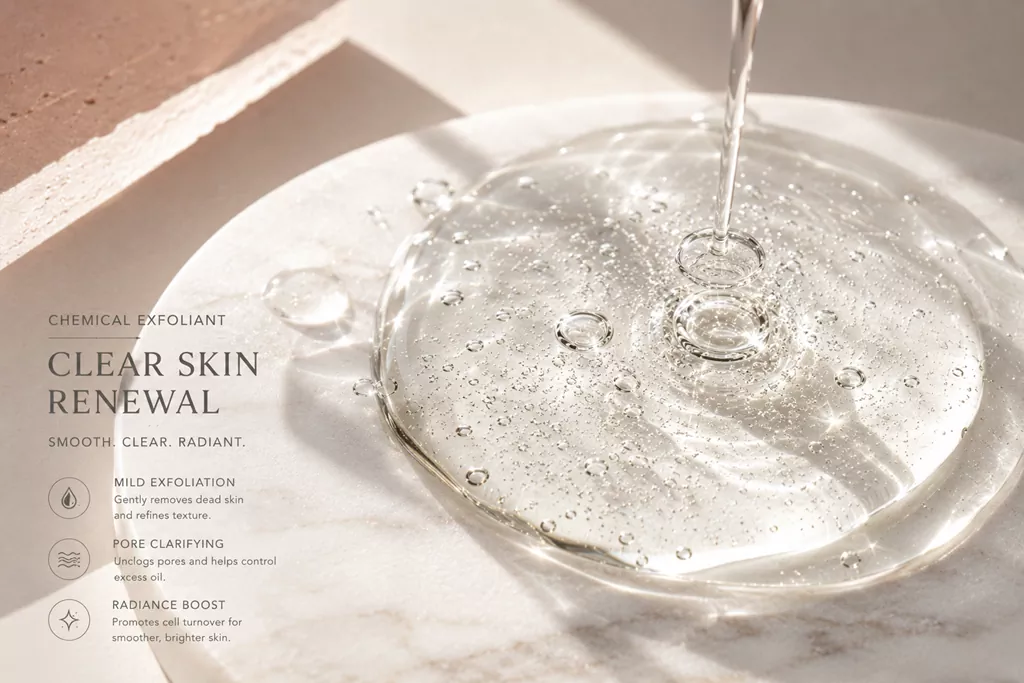
| Feature | AHA (Alpha Hydroxy Acid) | BHA (Beta Hydroxy Acid) | PHA (Poly Hydroxy Acid) |
| Molecular Size | Small (Deep Penetration) | Medium (Targeted Delivery) | Large (Surface Only) |
| Solubility | Water-Soluble | Oil-Soluble | Water-Soluble |
| Primary Target | Surface flakes, dark spots | Deep pore sebum, blackheads | Ultra-sensitive surface texture |
| Best Skin Type | Dry, Sun-damaged skin | Oily, Acne-Prone, Subuji | Raw, Reactive, Rosacea-Prone |
| Texture Feel | Tingling, smoothing | Light, liquid-like, clearing | Soothing, hydrating, mild |
Technical Audit Analysis: Why Molecular Weight Dictates Your System Output
The table above reveals the exact mechanical truth behind the AHA vs BHA vs PHA operating systems. AHAs (like Glycolic and Lactic Acid) are water-soluble and have a tiny molecular footprint, meaning they penetrate deep into the structural layers to sweep away surface dead cells, but low-key cause stinging if your barrier is cracked. BHAs (Salicylic Acid) are oil-soluble, acting like a chemical pipe cleaner that physically cuts through the grease slick to clear out heavy sebum blockages inside the pore walls.
Conversely, PHAs (like Gluconolactone) are the next-gen heavy machinery. Because their molecular structure is massive, they physically cannot penetrate into the deep dermal architecture. They sit safely on the outer matrix, locking in hydration while melting away surface roughness with zero friction.
Understanding this AHA vs BHA vs PHA data is the fastest way to stop the breakout cycle. To see the clinical safety profiles and barrier preservation metrics of these hydroxy acids, you can verify this authoritative PubMed Clinical Study on Polyhydroxy Acids in Refinement and Barrier Function which details the real dermal tolerance thresholds. For a practical application of how to safely pair this smoothing step with deep tone calibration right after your pore clearance shift, make sure to read our comprehensive K-Beauty Niacinamide Benefits Glass Skin Guide to prevent standard cosmetic setbacks.
3. The Solution: The Calibrated Weekly Clearance Schedule for Subuji Skin
Navigating the AHA vs BHA vs PHA dilemma isn’t about picking a single winner; it’s about smart industrial scheduling. In 2026, high-performance K-Beauty routines completely avoid heavy daily scrubbing, opting instead for a low-frequency, targeted separation blueprint.
The 2026 Skin Infrastructure Blueprint
- The Sebum Clearance Shift (BHA): If you are fighting an oily T-zone and congested pores, apply a gentle 2% BHA liquid twice a week at night. This flushes out the oil channels before sebum can oxidize into blackheads. Since chemical exfoliants low-key increase your skin’s sun sensitivity, always back up this nighttime clearance shift with a high-performance UV shield the following morning to prevent premature infrastructure damage.
- The Surface Polishing Shift (PHA): For the rest of your sensitive skin chassis, introduce a mild PHA toner. It gently polishes the surface and acts as a humectant barrier, prepping your skin to receive deeper active ingredients.
By mastering this AHA vs BHA vs PHA dual-calibration technique, you build a perfectly clean, unobstructed foundation that allows your system to fully absorb high-performance remodeling agents without any structural interference, such as the cellular components we analyzed in our K-Beauty Peptides Benefits Glass Skin Guide.
4. FAQ: Troubleshooting Your Chemical Exfoliation Tolerance
Q1: Can I use AHA vs BHA vs PHA formulas on the same night?
Absolutely not. Stacking multiple acids in a single evening shift creates extreme system friction and will down-regulate your skin barrier. Pick one targeted module per shift depending on your immediate infrastructure needs.
Q2: Will PHA cause a heavy skin purge like other chemical exfoliants?
No. Because PHAs operate strictly on the surface level without forcing rapid cellular turnover deep in the follicle, they do not trigger the classic inflammatory purge. It is the safest holy grail for sensitive types.
Q3: How soon can I layer my brightening active serums after exfoliating?
Give your skin matrix a 5-minute cooling-off period to allow its pH to re-stabilize. Once the system is balanced, you can safely introduce your morning shield or evening repair creams without triggering a chemical clash.
5. The Final Verdict: The Conclusion on Your Clearance Blueprint
In conclusion, the winner of the AHA vs BHA vs PHA audit depends entirely on the current tolerance and oil-production levels of your skin architecture. If your system is highly reactive, easily inflamed, and flaking, PHA is your safe, non-negotiable humectant protector. If you are battling a heavy sebum slick and stubborn acne congestion within your pores, BHA is your mandatory pipe-clearing tool.
Stop punishing your delicate skin gears with harsh physical friction. Use the precision of K-Beauty ingredient science to smoothly calibrate your glow from within!
Medical Disclaimer: I am a professional industrial tool technician and skincare auditor, but I am not a physician. This content is for educational purposes only. Always patch test and consult a dermatologist before changing your routine.