
Managing dehydrated oily skin is arguably one of the most frustrating skincare riddles out there. Picture this: your face is shining like a disco ball by 2 PM, yet your cheeks feel so intensely tight they might actually crack. Welcome to the perplexing world of the “oily-yet-parched” cycle.
For the longest time, the gut reaction for most of us has been to aggressively attack the shine with harsh, squeaky-clean foams, inadvertently treating our skin like the enemy. However, over-stripping your natural moisture barrier only forces your skin into reactive panic mode, triggering even more oil production.
To break this loop, we need to ditch the stripping products and adopt a strategic, “Water-First” approach that focuses on restoring deep cellular hydration.
1. The Core Dilemma: Why Your Skin is Playing You
When you continuously strip your skin’s natural lipid layer with harsh cleansers, your face reacts defensively. Dehydration compromises the stratum corneum (your skin’s outermost layer), causing your sebaceous glands to overcompensate by pumping out excess sebum.
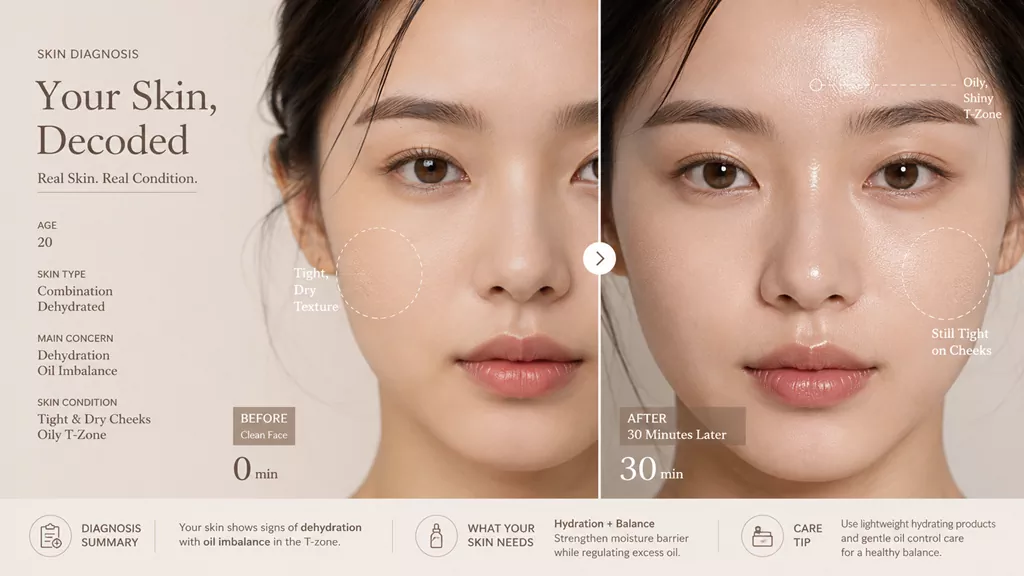
The 30-Minute Self-Test
If you’re unsure whether your skin is genuinely oily or just crying out for water, try this quick diagnostic test:
- Wash your face using a gentle, pH-balanced cleanser.
- Leave your skin completely bare—do not apply any products—and wait for 30 minutes.
- If your T-zone exhibits a greasy shine while your cheeks feel tight and stretched, your primary concern is dehydration, not excess oil. Your face is starving for water, not lipids.
2. The Science: Oil is a Skin Type, Dehydration is a Skin Condition
To effectively curate your routine, it is essential to understand that oily skin is a genetic skin type characterized by active sebum production. Conversely, dehydrated skin is a temporary condition caused by a lack of water retention in the epidermis.
| Feature | Oily Skin (The Genetic Type) | Dehydrated Skin (The Temporary Condition) |
| The Feel | Slippery, heavy, and naturally greasy | Tight, itchy, and uncomfortably stretched |
| The Look | Enlarged pores, overall shine throughout the day | Dull complexion, fine dehydration lines, flaking under oil |
| The Cause | Genetics and hormonal fluctuations | Damaged moisture barrier, over-stripping, environment |
| The Targets | Sebum-regulating actives (Niacinamide, BHA) | Powerful humectants (Glycerin, Hyaluronic Acid) |
| The Goal | Regulate and balance excess sebum | Restore trans-epidermal water levels |
Think of skin-identical humectants like Glycerin and Hyaluronic Acid as molecular water magnets. They flood your skin cells with weightless moisture without needing heavy, pore-clogging oils to seal the deal.
According to clinical data published by the National Institutes of Health (NIH), a compromised skin barrier drastically increases Transepidermal Water Loss (TEWL). Dermatological research demonstrates that when the skin’s moisture content drops below the optimal 10-15% threshold, the epidermal repair mechanism signals the sebaceous glands to double their lipid production as a protective shield. Flooding your skin with water is the biological foundation for regulating that afternoon oil slick.
Pro-Tip: For a seamless, non-cakey finish over your freshly plumped base, check out my curated guide on choosing formulas in my K-Beauty Cushion Foundation Guide.
3. The 3-Step Hydration Protocol for the Ultimate Balance
The ultimate game-changer for a parched barrier is “Water-Layering”—delivering lightweight moisture in thin, sequential steps rather than suffocating your skin with a single heavy cream.
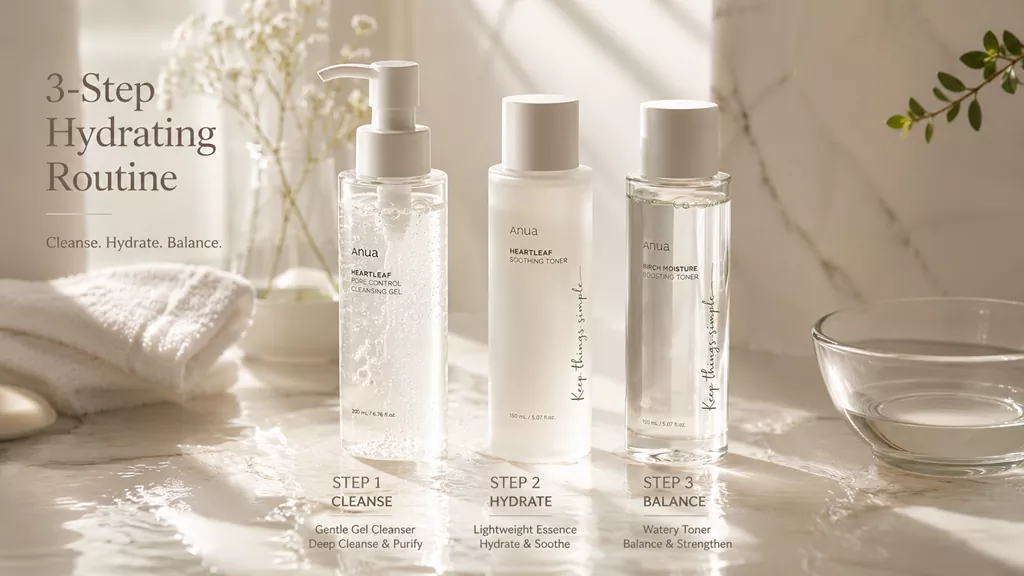
Step 1: The Non-Stripping Cleanse
Switch to a pH-balanced milk or low-foaming gel cleanser that respects your skin’s delicate acid mantle. Avoid drying sulfates that compromise your lipid layer. For a detailed breakdown of formula red flags, read my guide on 5 Major Red Flags When Choosing a Gentle K-Beauty Cleanser.
Step 2: Damp-Skin Application
Never let your face dry completely post-cleanse. Apply your first hydrating essence or toner while your skin is still damp. This simple trick traps surface moisture and heavily enhances product absorption.
Step 3: The Multi-Layer Toner Method
Instead of relying on heavy moisturizers, apply two to three thin layers of an alcohol-free, hydrating toner (such as the P.CALM Barrier_cycle Toner). This method plumps the skin from within without clogging pores. Opting for formulas that prioritize Fragrance-Free Ingredients in Korean Skincare is critical during this phase to prevent irritating a vulnerable barrier.
4. Daily Habits for a Radiant (Not Greasy) Finish
Consistency is absolutely vital when repairing a damaged barrier. Once your skin recognizes that its water levels are fully optimized, reactive oil production naturally calms down.
- Internal Hydration: Pair your topical routine with proper internal hydration. Drinking sufficient water daily directly benefits cellular turnover and overall skin health.
- Environmental Support: Using a humidifier in dry or air-conditioned spaces prevents environmental factors from stealing moisture from your skin while you sleep.
- Tailored Adjustments: Keep in mind that No Skincare Ingredient Works the Same for everyone. Monitor your skin’s daily behavior and adjust the number of hydrating layers based on seasonal weather shifts. Embracing a thoughtful, Gentle Approach to Korean Skincare will consistently yield the best long-term results.
5. Final Thoughts: Prioritize Hydration to Control Sebum
When you stop over-cleansing and start flooding your skin with the deep, weightless hydration it craves, the sebum levels will naturally find their equilibrium. True skin clarity begins when you address the underlying lack of water.
How does your skin feel in the afternoon? Let’s talk about the balance between oil and water in the comments below!
Disclaimer: The information provided in this article is for educational purposes based on skincare research and personal experience. It is not a substitute for professional medical advice. If you are experiencing severe inflammation, cystic acne, or a heavily compromised skin barrier, please consult a certified dermatologist.