
We’ve all been there—dropping $50 on a viral, heavy barrier cream only to wake up with a greasy T-zone and skin that still feels incredibly tight and irritated underneath. This frustrating paradox is the reality of dealing with dehydrated oily skin. Slathering on thick, wax-based moisturizers often creates a superficial film that traps heat and clogs pores, while the deeper layers of your skin remain functionally starved.
Through years of analyzing cosmetic formulations and tracking lipid profiles for reactive skin types, the breakthrough realization became clear: a damaged skin barrier does not need more heavy grease; it requires precise, molecular alignment. To achieve a resilient, healthy complexion, understanding the specific science behind your barrier repair products is essential.
1. The Problem: The Chronic Dryness Paradox and Surface Occlusion
When your skin barrier is compromised, it loses its ability to retain moisture, leading to rapid Transepidermal Water Loss (TEWL). The common instinct is to apply heavy, occlusive balms. However, generic synthetic waxes often act like a temporary tarp over a leaky roof—they stop the immediate evaporation of water but do nothing to repair the structural damage underneath.
For young women managing sensitive, acne-prone, or combination skin, these dense formulations frequently cause congestion and micro-comedones. If your skin continues to sting when applying gentle formulas or active ingredients, your intercellular matrix is structurally compromised. Treating this starving barrier requires ingredients that can seamlessly integrate into your skin’s natural lipid architecture rather than just sitting on top of it.
2. The Molecular Audit: Ceramide vs Phytoceramide Breakdown
To optimize your daily skincare routine, it is necessary to examine the biological source, structural compatibility, and absorption rates of lab-synthesized lipids compared to plant-derived alternatives.
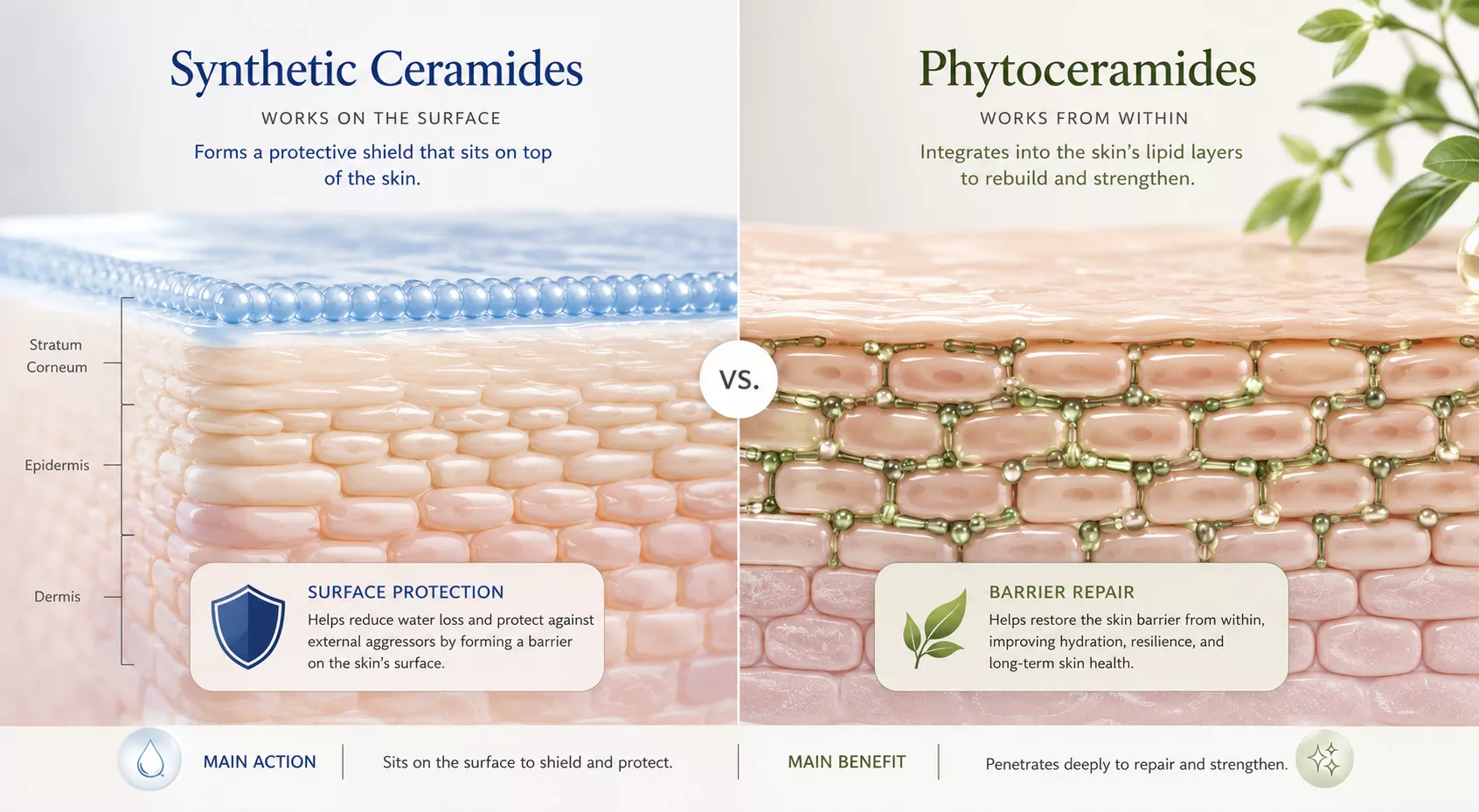
In advanced cosmetic science, bio-identity serves as the benchmark for cellular recovery. The following comprehensive breakdown highlights the functional differences between conventional synthetic ceramides and plant-based phytoceramides.
| Biochemical Feature | Synthetic Ceramides (Lab-Derived) | Phytoceramides (Plant-Based) |
| Primary Source | Chemically synthesized in laboratory settings | Extracted from natural sources like Rice, Wheat, or Sweet Potato |
| Molecular Framework | Standardized linear pseudo-ceramides | Rich in Phytosphingosine; bio-identical to human skin lipids |
| Penetration Depth | Primarily stays within the upper Stratum Corneum | Deeply integrates into the intercellular lipid matrix |
| Texture & Sensory Profile | Typically dense, rich, and highly occlusive | Lightweight, breathable, and easily absorbed |
| Common Label Identification | Ceramide 1, Ceramide 3, Ceramide 6-II | Ceramide NP, Ceramide AP, Ceramide EOP |
When evaluating these ingredients, plant-derived phytoceramides—specifically listed as Ceramide NP (Phytosphingosine-based)—demonstrate superior biocompatibility. Because their molecular structure closely mimics the lipids naturally produced by the human body, they function like a precise replacement part for your skin. Instead of creating a suffocating external shield, they sink into the microscopic gaps of your cellular wall to physically rebuild the intercellular cement.
To practicalize this during your next skincare haul, always check the International Nomenclature Cosmetic Ingredient (INCI) list. While synthetic options often appear simply as Ceramide 3, true phytoceramides are frequently paired with Phytosphingosine or Sphinganine on the label, signaling a formulation that works in tandem with your skin’s natural biology. For a deeper understanding of how these topical lipids behave under clinical observation, ou can explore peer-reviewed clinical research on how biomimetic ceramide formulations significantly increase skin moisture and accelerate stratum corneum recovery.
3. The Solution: Rebuilding the Matrix with the 3:1:1 Golden Ratio
True skin barrier rehabilitation cannot happen using a single isolated ingredient. Clinical dermatology shows that optimal barrier repair relies heavily on the 3:1:1 Golden Ratio: 3 parts Ceramides, 1 part Cholesterol, and 1 part Free Fatty Acids. Pioneered by legendary dermatological researchers like Dr. Peter Elias, this exact ratio has been proven to accelerate the skin’s natural healing trajectory far more effectively than applying ceramides alone. When these three components are formulated together, the speed of barrier recovery accelerates significantly.
The Strategic Layering Routine
To maximize absorption and prevent product congestion, apply your topical lipids from the smallest molecular weight to the largest:
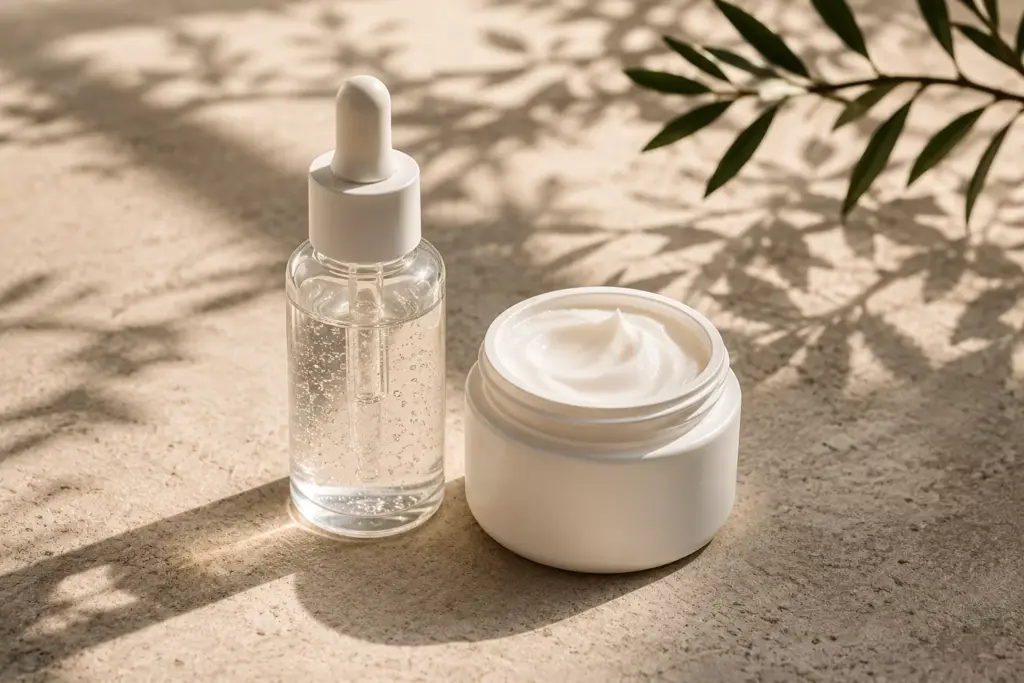
- The Repair Layer (Deep Penetration): Immediately after cleansing, apply a lightweight, phytoceramide-rich essence or targeted serum. This allows the bio-identical plant lipids to penetrate deeply into the microscopic cracks of the skin barrier without being blocked by heavier textures.
- The Shield Layer (Moisture Locking): Follow up with a well-formulated moisturizer containing synthetic ceramides or fatty acids. This creates the final, breathable seal that prevents TEWL throughout the day or night.
Incorporating this balanced layering method allows you to protect your skin’s integrity while safely utilizing other targeted treatments. For instance, if you are currently trying to transition into a more minimalist approach, mastering this specific lipid order is the foundation of our comprehensive skinimalism guide, ensuring your skin stays plump without relying on a complicated ten-step process.
4. Frequently Asked Questions (FAQ)
Q1: Are plant-based ceramides safe for acne-prone skin?
A. Yes. Because phytoceramides are bio-identical and naturally lightweight, they repair the moisture barrier without adding the heavy, pore-clogging occlusion associated with traditional synthetic creams. This makes them highly suitable for combination and oily-dehydrated skin profiles.
Q2: Can a phytoceramide serum completely replace a traditional moisturizer?
A. While a high-quality serum delivers deep structural repair, individuals with elevated dryness levels should still follow up with a light cream or emulsion to lock those lipids into place and ensure prolonged protection against environmental stressors.
Q3: How long does it take to see visible improvements in the skin barrier?
A. When utilizing a proper 3:1:1 ratio formulation, topical signs of redness and surface dehydration can begin to diminish within 72 hours. However, a complete structural rebuild of the stratum corneum typically requires approximately 28 days, aligning with a natural cellular skin cycle.
5. Summary and Final Verdict
For skincare enthusiasts seeking a genuinely resilient, plump, and clear skin barrier, plant-derived, bio-identical options offer superior precision repair. By focusing on molecular compatibility and the clinical 3:1:1 ratio, you can move away from heavy, temporary fixes and choose a scientifically backed method to physically restore your skin’s health from within.
Medical Disclaimer: The information provided in this article is strictly for educational and informational purposes. This content is not intended to be a substitute for professional medical advice, diagnosis, or treatment. Always consult with a qualified dermatologist or healthcare provider before introducing new topical ingredients into your skincare regimen.