
If you have watched skin-tok videos lately, you have probably seen creators dunking their faces into bowls of ice water or rubbing raw ice cubes directly over their cheeks to snap their pores shut and banish morning puffiness. While the instant tight feeling seems satisfying, applying freeze-point ice directly to your skin causes severe micro-capillary damage, intense contact erythema, and a compromised moisture barrier.
I discovered this the hard way last summer before a big morning meeting. Hoping to instantly erase heavy facial puffiness, I rubbed a giant ice cube all over my cheeks and jawline for three minutes. Within ten minutes, my face turned bright crimson, stinging intensely whenever I applied serum. The extreme thermal shock broke delicate surface capillaries and left my skin flaky and sensitive for a week. That painful experience taught me that shock-cooling damages fragile epidermal cells, whereas a clinical K-Beauty approach uses regulated, botanical-infused ice toning to soothe puffiness and shrink the appearance of pores safely.
In this guide, we will break down the science behind a safe K-Beauty Ice Toning Routine, why raw ice cubes ruin delicate skin, and how to execute a soothing 4-step regimen that sculpts your face without compromising your moisture barrier.
1. The Problem: Why Direct Ice Dunking and Ice Cubes Damage Your Skin Barrier
While cold therapy is widely used in esthetic treatments, applying raw ice directly to dry or delicate facial skin creates severe dermatological risks.
Cryo-Shock and Broken Capillaries
Facial skin contains a dense network of thin capillaries. Subjugating skin to zero-degree ice creates rapid vasoconstriction followed by rebound vasodilation. This severe thermal shock can permanently dilate or burst tiny blood vessels, leading to persistent facial redness and spider veins (telangiectasia).
Severe Barrier Disruption and Contact Irritation
Direct ice friction strips away natural epidermal lipids and creates micro-frostbite on delicate stratum corneum cells. This leads to sudden trans-epidermal water loss (TEWL), leaving skin dehydrated, raw, and highly reactive to regular skincare products.
2. Understanding the Science: Regulated Cooling and Vasoconstriction
A clinical K-Beauty ice toning approach focuses on controlled thermal reduction paired with barrier-reinforcing soothing botanicals.
Cryo-Soothing, Micro-Circulation, and Thermal Recovery
Clinical research in dermatology demonstrates that regulated cryo-cooling stimulates epidermal protein synthesis and reduces inflammatory cytokine release while protecting the lipid layer. When seamlessly integrated into a dedicated K-Beauty morning de-puffing routine, controlled cooling drains excess fluid while sealing in essential humectants.
3. Comparing Raw Ice Dunking vs. Formulated K-Beauty Ice Toning Routine
To help you protect your delicate skin barrier, here is a breakdown comparing harsh home ice hacks with a lab-tested K-Beauty ice toning technique.
| Key Feature | Raw Ice Cubes / Ice Dunking | K-Beauty Ice Toning Routine |
| Temperature Range | Extreme Freeze (0°C / 32°F) | Controlled Soothing (15°C–18°C / 59°F–64°F) |
| Vascular Safety | High risk of broken capillaries | Vascular-safe; gentle lymphatic drainage |
| Barrier Impact | High lipid stripping & micro-frostbite | Reinforces barrier lipids & hydrates |
| Active Ingredients | Plain tap water; potential impurities | Centella, Panthenol, Ceramides & Green Tea |
| Long-Term Result | Redness, dehydration, flared sensitivity | Depuffed, calm, poreless glass skin glow |
Pro-Tip for Cryo-Care: Never place freezing cold metal tools or gel packs directly onto bare skin from the freezer. Always store cooling globes or sheet masks in the refrigerator (4°C–8°C) for a safe, refreshing temperature.
4. The Solution: A Barrier-Safe 4-Step K-Beauty Ice Toning Routine
Here is the exact step-by-step method designed to sculpt facial contours, eliminate morning puffiness, and preserve your skin barrier safely.
Step 1: Splash with Gentle Room-Temperature Water
Avoid shocking your face with freezing or boiling water. Start your morning with a gentle splash of lukewarm or cool room-temperature water to wash away overnight sebum without stripping natural oils.
Step 2: Apply a Refrigerated Centella Green Tea Toner Pad
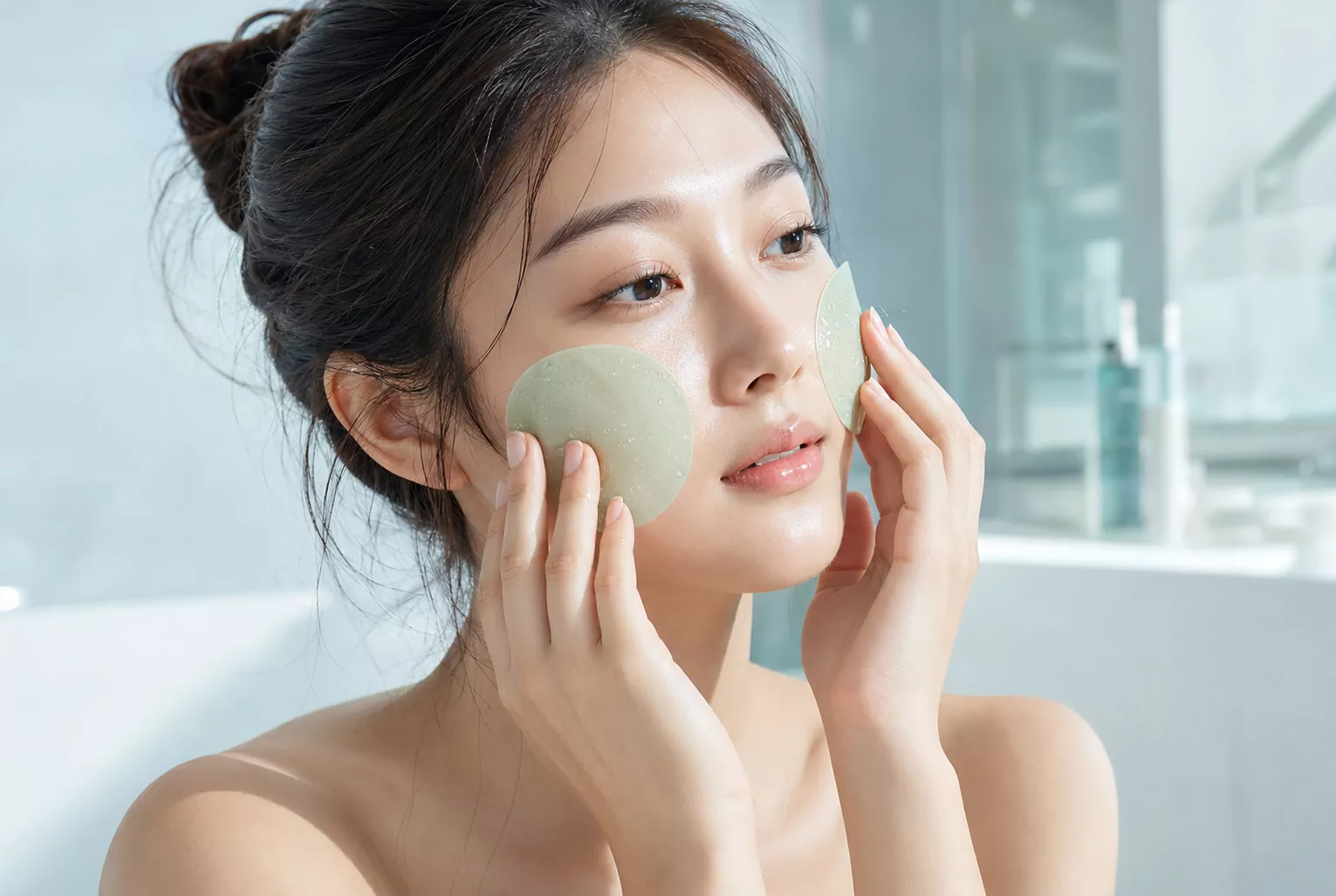
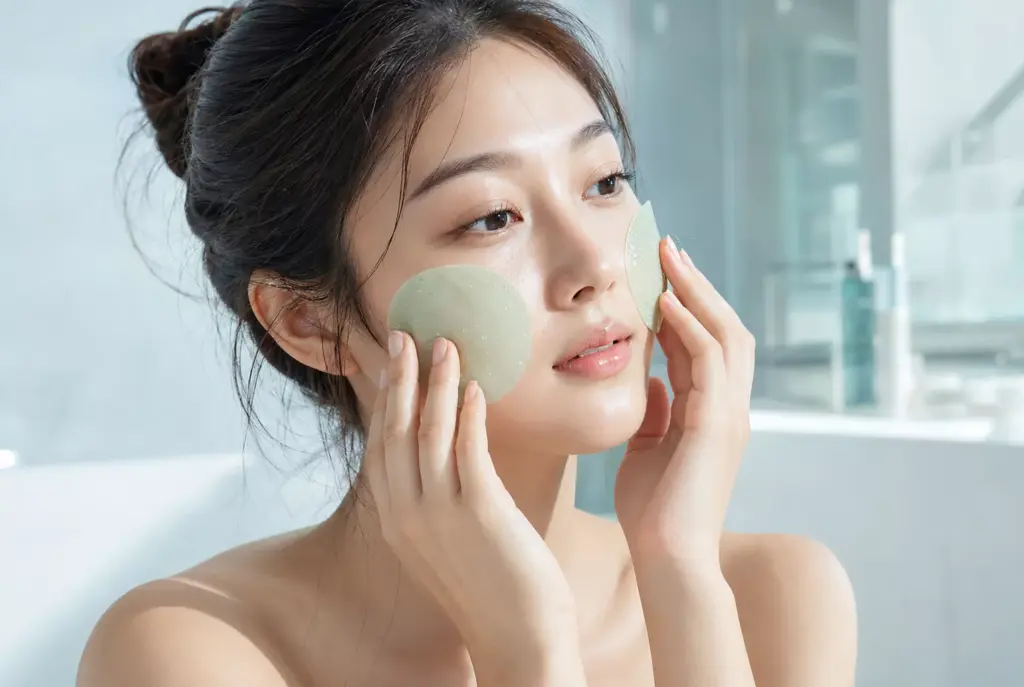
Take a low-pH, Centella-infused toner pad stored in your refrigerator (not the freezer). Always store chilled toners and soothing pads in a clean, airtight container away from food compartments to prevent bacterial contamination. Gently sweep it across your face, then leave the chilled pads over your cheeks and forehead for 3 minutes.
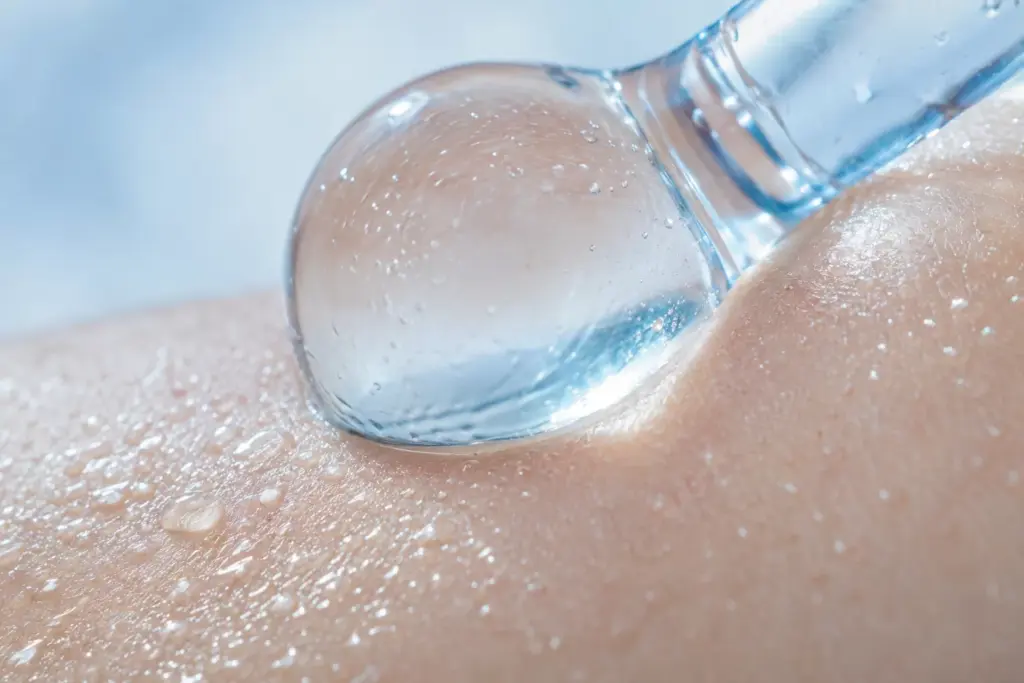
A macro close-up detail photograph of a smooth chilled cooling globe gliding over hydrated, glowing skin with a soothing serum texture to demonstrate safe cryo-toning.
Step 3: Glide a Chilled Cryo Globe or Gua Sha with Soothing Serum
Dispense 3–4 drops of a barrier-repair serum rich in panthenol or hyaluronic acid. Take a refrigerated stainless steel or glass cryo globe and glide it gently from the center of your face outward toward your lymphatic drainage nodes under your ears and jawline. Always wrap chilled glass globes or metal rollers in a thin tissue or soft cloth if you have extreme capillary sensitivity to prevent direct cold friction.
Step 4: Lock in Hydration with a Lightweight Cooling Gel-Cream
Finish with a breathable gel-cream containing squalane or phytoceramides. This locks in cool hydration, calms surface redness, and creates a smooth, glass-like canvas for effortless makeup application.
Who Should Be Cautious: If you suffer from active rosacea, severe cold urticaria, or inflamed cystic acne, avoid cryo-tools completely and rely solely on mild, room-temperature soothing serums.
5. Frequently Asked Questions (FAQ)
Q1. Can I practice a K-Beauty Ice Toning Routine every morning?
A. Yes! As long as you use refrigerated products (4°C–8°C) rather than sub-zero ice, a controlled cooling routine is safe for daily morning application to keep puffiness away.
Q2. Does ice toning permanently shrink pore size?
A. No product or temperature can permanently change your genetic pore size. However, regulated cooling temporarily constricts pore openings and tightens surrounding skin tissue for a smoother texture.
6. Final Thoughts
Adopting a gentle K-Beauty Ice Toning Routine allows you to achieve a sculpted, de-puffed, and glowing complexion without risking broken capillaries or severe barrier damage from extreme ice hacks. Prioritize chilled, botanical-rich formulas over freezing temperatures for healthy, long-term radiance.
Disclaimer
This article is provided for informational and educational purposes only and does not constitute professional medical advice, diagnosis, or treatment. Always consult with a board-certified dermatologist regarding persistent skin conditions, rosacea, or vascular sensitivity.