
If you have ever noticed your skin looking completely flushed, extra oily, and suddenly textured after a hot summer commute, an intense workout, or even a steaming hot shower, you are not imagining it. While most skincare lovers obsess over sun protection to block UV rays, very few realize that invisible infrared heat itself actively destroys skin structure. In the world of dermatological science, this silent culprit is known as skin thermal aging.
I learned this lesson the hard way two summers ago during an outdoor music festival. Even though I slathered on SPF 50 every two hours, standing under the scorching afternoon heat for six hours made my face feel like it was literally baking. By that evening, my T-zone was overflowing with excess sebum, yet my skin felt tight, raw, and intensely dehydrated underneath. Within two days, tiny heat bumps and painful breakouts flared across my cheeks. That frustrating experience sent me down a research rabbit hole, where I discovered that preventing heat-induced skin damage requires a dedicated, smart approach to cooling rather than just heavy sunscreens or extreme ice hacks.
In this guide, we will break down the exact biological mechanics behind heat damage, why traditional heavy moisturizers fail on overheated skin, and how to execute a safe 3-step routine designed to keep your complexion clear, calm, and resilient.
1. The Problem: Why Heat Causes Sebum Spikes, Pore Sagging, and Barrier Breakdown
When your skin surface temperature rises above its healthy baseline (around 31°C–33°C / 87.8°F–91.4°F), your epidermal ecosystem undergoes severe physiological stress.
Thermal Sebum Surge and Clogged Pores
Dermatological studies show that for every 1°C increase in skin temperature, your sebaceous glands increase sebum production by approximately 10%. This sudden surge of surface oil mixes with dead skin cells and sweat, clogging pore openings and creating an ideal breeding ground for acne-causing bacteria.
Collagen Degradation and Micro-Capillary Dilation
Sustained facial heat triggers matrix metalloproteinases (MMPs)—enzymes that actively chop up dermal collagen and elastin fibers. Concurrently, facial blood vessels rapidly dilate to release heat, leading to persistent facial redness, broken capillaries, and premature loss of skin elasticity.
2. Understanding the Science: Infrared Radiation and Thermal Aging Skincare
A clinical approach to preventing heat damage focuses on lowering skin surface temperature gently while repairing trans-epidermal water loss.
Biological Heat Stress and Epidermal Recovery
Infrared radiation penetrates deep into the dermal layer, accelerating cellular oxidative stress and disrupting stratum corneum lipids. Clinical research published on PMC highlights how environmental thermal exposure impairs the skin barrier, leading to rapid hydration depletion and photo-thermal aging. To counteract this damage, implementing an optimized K-Beauty skincare routine order with lightweight, heat-dissipating humectants helps stabilize skin temperature and preserve epidermal integrity.
3. Comparing Heavy Barrier Creams vs. Smart Cooling Solutions
To help you protect your skin barrier during high-heat conditions, here is a comparison showing how heavy occlusive formulas compare with lightweight thermal cooling techniques.
| Key Feature | Heavy Occlusive Creams / Oils | Smart Cooling K-Beauty Routine |
| Temperature Effect | Traps internal heat like a thermal blanket | Dissipates surface heat via watery evaporation |
| Sebum Impact | Can clog heat-stimulated pores | Regulates excess oil without stripping moisture |
| Active Ingredients | Thick petrolatum, heavy wax, thick butter | Mugwort, Centella, Beta-Glucan, Hyaluronic Acid |
| Skin Sensation | Heavy, sticky, suffocating finish | Weightless, refreshing, instant calm feeling |
| Long-Term Result | Potential heat bumps, congestion, breakouts | Balanced oil-water ratio, tight pores, calm barrier |
Pro-Tip for Heat Relief: Never use heavy, petrolatum-based balms on flushed, overheated skin immediately after sun or heat exposure. Heavy occlusives trap ambient heat inside the skin layers, escalating internal inflammation and triggering heat bumps.
4. The Solution: A 3-Step Heat Reset Routine for Overheated Skin
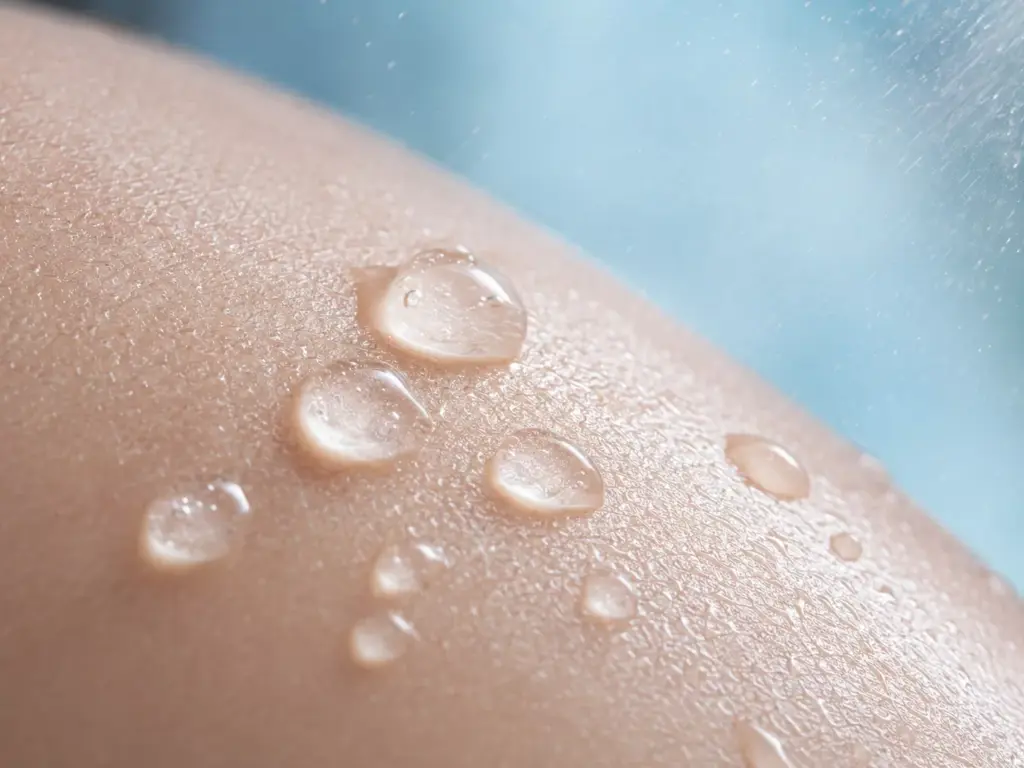
Here is the exact step-by-step protocol to cool inflamed tissue, control heat-induced oiliness, and protect your moisture barrier safely.
Step 1: Flash Thermal Relief with Soothing Mist
Skip harsh physical scrubs or heavy cleansers when your face is hot. Spritz a fine mist containing Artemisia (Mugwort) or Green Tea Extract across your face to rapidly draw heat away from the skin surface through gentle evaporation. If you are cooling down post-workout or after a humid commute, wait until your core body temperature normalizes before applying active serums to prevent sudden sweating from washing away your skincare.
Step 2: Layer Breathable Gel-Matrix Hydrators
Replace heavy cream layers with water-gel serums packed with Beta-Glucan, Madecassoside, or Panthenol. These lightweight ingredients deliver deep hydration into the stratum corneum without clogging pores or insulating internal heat.
Step 3: Apply a Chilled Hydrogel Mask or Water-Gel Moisturizer
Finish your routine with a breathable water-gel moisturizer or a soothing hydrogel sheet mask that has been stored in a skincare refrigerator (10°C–15°C / 50°F–59°F). This step locks in vital humectants, calms surface flushing, and seals your barrier without suffocating skin tissue.
Who Should Be Cautious: If you have active rosacea, extreme cold urticaria, or open skin lesions, avoid sudden temperature drops and rely strictly on gentle, room-temperature soothing serums.
5. Frequently Asked Questions (FAQ)
Q1. Does sun exposure cause thermal aging?
A. Yes! Sunlight carries both ultraviolet (UV) radiation and infrared (IR) rays. UV rays cause solar damage, while infrared rays generate intense skin heat, directly causing thermal aging.
Q2. Can I use my regular sunscreen to stop thermal aging?
A. Standard sunscreens reflect or absorb UV rays, but they do not automatically lower skin surface temperature. Pairing your sunscreen with lightweight cooling hydrators is the best way to prevent heat damage.
6. Final Thoughts
Integrating an effective Thermal Aging Skincare strategy into your daily regimen keeps your skin calm, balanced, and youthful even during scorching summer months. Focus on gentle heat dissipation and breathable hydration to maintain a healthy, glowing moisture barrier.
Disclaimer
This article is provided for informational and educational purposes only and does not constitute professional medical advice, diagnosis, or treatment. Always consult with a board-certified dermatologist regarding persistent skin conditions, severe flushing, or thermal sensitivity.