
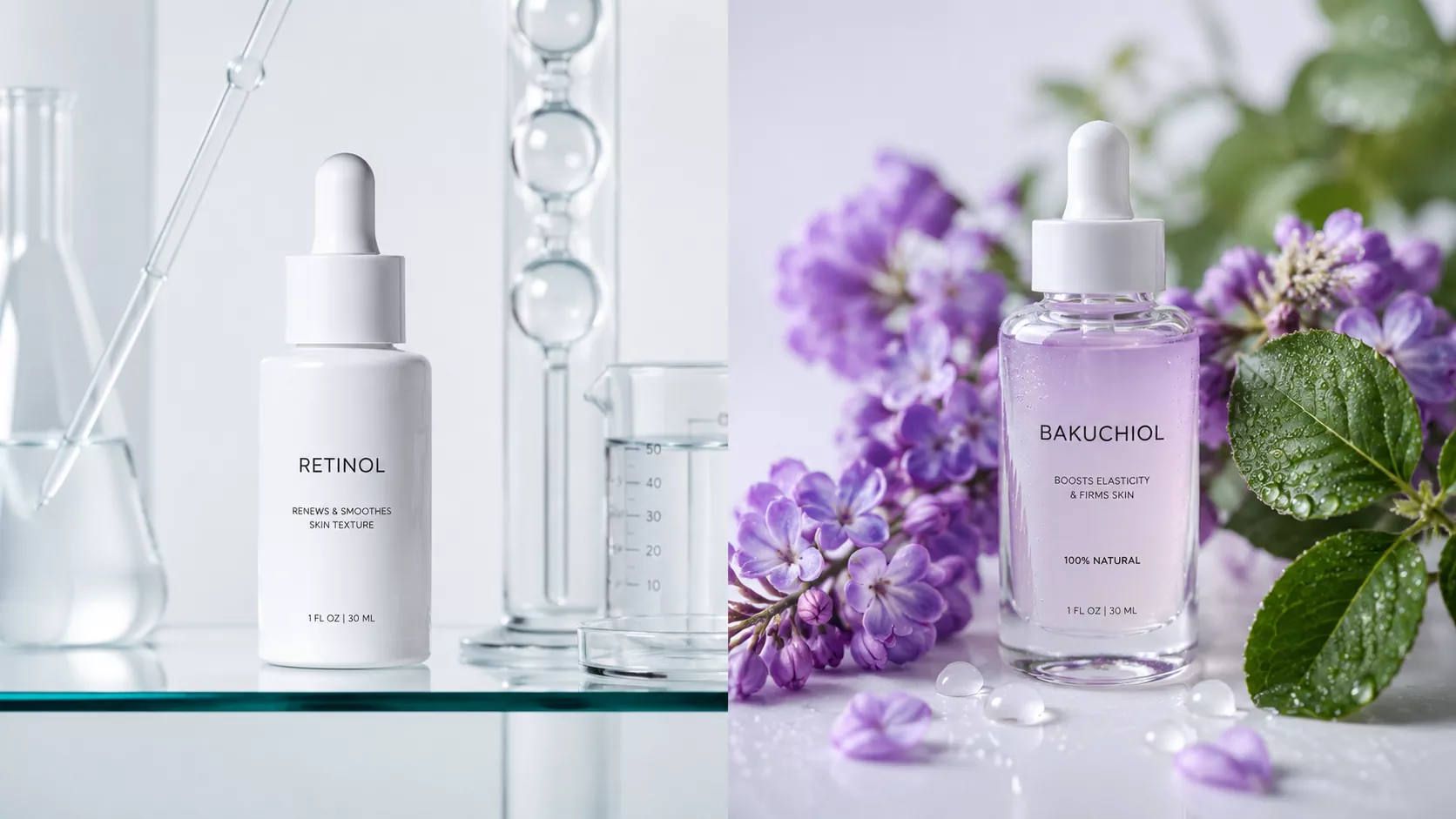
If you are navigating your late 20s or early 30s, shopping for anti-aging skincare can feel like walking through a psychological minefield. You are starting to notice those first subtle “skin-vestment” warnings—maybe some dynamic forehead creases, mild loss of elasticity, or stubborn post-acne marks—but you are also dealing with a finicky, dehydrated oily skin barrier that flares up at the slightest provocation. You want the heavy-hitting, pore-refining benefits of a classic retinoid, but your skin screams at the mere mention of standard Vitamin A.
For decades, pure retinol has been crowned the undisputed holy grail of healthy aging. However, a plant-derived rival called Bakuchiol has completely disrupted global skincare markets, promising the exact same smooth, radiant results without the dreaded “retinol uglies” (peeling, intense redness, and a compromised skin barrier).
But does the science actually hold up for a sensitive skin blueprint, or is it just clever clean-beauty marketing? Let’s break down the facts, look at clinical data, and analyze real-world application strategies to help you find your ultimate glow-up match.
1. The Problem: The Anti-Aging Catch-22 for Reactive Barriers
The core dilemma facing anyone with a combination, sensitive, or dehydrated skin profile is simple: most active ingredients that effectively speed up cellular turnover are inherently inflammatory.
When you introduce traditional retinol to your nightly routine, your epidermis undergoes a turbulent adaptation phase known as “retinization.” During these initial 4 to 6 weeks, the retinoic acid alters how your skin cells mature, temporarily disrupting the delicate stratum corneum (your outer skin barrier). If your barrier is already compromised or prone to dehydration, this triggers a predictable nightmare scenario:
- The Visual Nightmare: Patchy, snake-like flaking around the mouth, nose, and eyes that makes your favorite foundation look incredibly cakey and dry.
- The Sebum Rebound: Intense surface dehydration that signals your sebaceous glands to overproduce oil, leaving you with an oily sheen on top of dry, flaky patches.
- The Sensory Discomfort: A sharp, burning sensation when applying even the most basic, bland ceramide moisturizers or soothing creams.
An Experiential Reality Check: Anyone who has ever overdone a trendy 1% pure retinol serum knows the panic of waking up with a raw, bright-red face that feels tight enough to crack. I have been there—spending weeks texturing my face, losing my natural skin radiance, and abandoning makeup entirely while desperately slathering on Centella Asiatica and barrier serums just to undo the damage of a single night of over-enthusiastic anti-aging application.
This leaves those with reactive skin trapped. You want to stay ahead of preventative aging and fine lines, but the gold-standard solution repeatedly breaks down your skin barrier.
2. The Cellular Science Behind Retinol vs. Bakuchiol
To understand why one ingredient triggers a surface flare-up while the other stabilizes the skin matrix, we have to look closely at how these two molecules behave under the microscope.
Retinol: The Vitamin A Accelerator
Retinol is a synthetic or animal-derived derivative of Vitamin A. It does not work directly on the skin; instead, once absorbed, it must be converted by specific cellular enzymes into retinoic acid. This active form binds directly to retinoic acid receptors (RARs) in your skin cells. While this conversion is incredibly efficient at forcing rapid cellular regeneration and pumping up deep dermal collagen, it causes significant structural stress on the superficial layers of the epidermis, leading to moisture loss and surface redness.
Bakuchiol: The Botanical Shield
Bakuchiol is a potent terpenophenol antioxidant extracted from the seeds and leaves of the Psoralea corylifolia (Babchi) plant, a deeply rooted botanical in traditional Eastern practices. Structurally speaking, Bakuchiol looks absolutely nothing like Vitamin A.
However, advanced genetic expression mapping has revealed an astonishing reality: Bakuchiol targets the exact same genetic pathways as retinol. It upregulates Type I, III, and IV collagen in the skin just like a retinoid does. Because it does not bind to the specific retinoic acid receptors that trigger surface-level inflammation, it completely bypasses the burning, stinging, and peeling phase. Furthermore, as a natural lipid antioxidant, it actively neutralizes free radicals and prevents sebum oxidation, making it a dual-action savior for adult acne and preventative aging.
3. The 12-Week Head-to-Head Clinical Breakdown
We do not have to rely on anecdotal beauty reviews or marketing hype. A landmark double-blind clinical study published in the British Journal of Dermatology put these two powerhouse ingredients to the test, comparing 0.5% pure retinol against 0.5% plant-based bakuchiol over a rigorous 12-week period.
The verified clinical data reveals how they truly stack up against each other:
| Skin Metric | 0.5% Pure Retinol | 0.5% Plant-Based Bakuchiol |
| Wrinkle & Fine Line Reduction | Highly Effective (Significant structural improvement) | Equally Effective (No statistical difference) |
| Hyperpigmentation & Dark Spots | Rapid clearing and tone evening | Equally Effective clearance & brightening |
| Skin Scaling, Peeling & Flaking | Severe to Moderate (Reported by a majority of users) | Minimal to None |
| Stinging, Burning & Redness | High frequency during weeks 1 through 4 | Extremely rare / Well tolerated |
| UV Stability & Photosenstivity | Photolabile (Degrades in sunlight; Night use only) | Photostable (Safe and effective for Day & Night) |
4. The Solution: How to Optimize Your Daily Routine
You do not have to guess which active belongs on your vanity. By auditing your current skin barrier health and specific concerns, you can deploy a targeted skincare strategy.
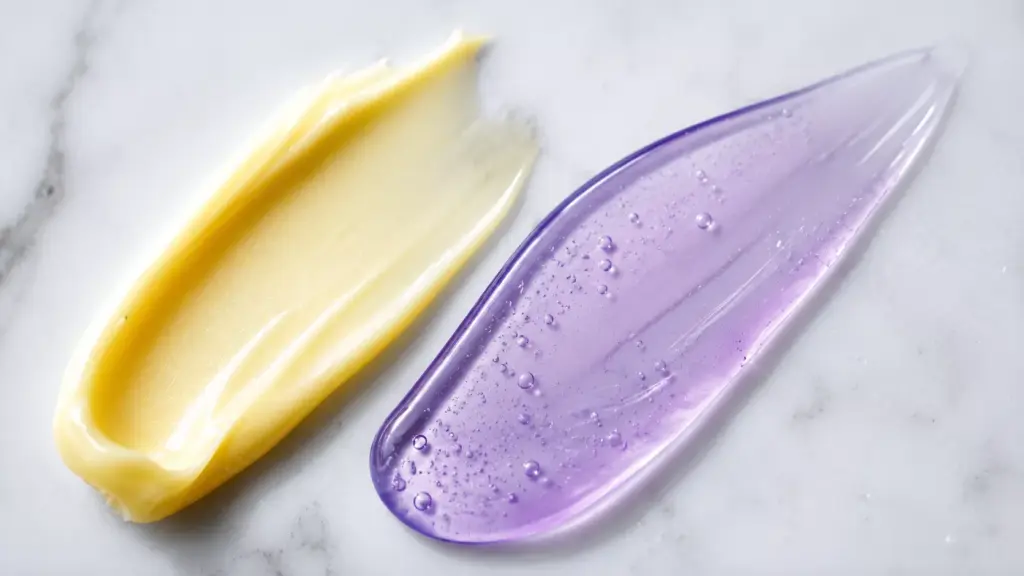
When to Choose Bakuchiol
If your skin gets red after a hot shower, feels tight by 3:00 PM, or breaks out into a rash when you mix too many active acids, Bakuchiol is your definitive match.
- The Protocol: Look for clean, sophisticated serums containing a functional dose of 0.5% to 1% pure Bakuchiol. Because it does not cause photosensitivity, you can apply it safely in both your AM and PM routines to double your anti-aging exposure.
- The Layering Advantage: It pairs effortlessly with other volatile actives like Vitamin C, Niacinamide, or Hyaluronic Acid without the risk of chemical conflict or product pilling. To see how to structure your daily regimen without overwhelming your skin barrier, explore our step-by-step blueprint on How to Build a Non-Irritating K-Beauty Routine for Dehydrated Oily Skin.
When to Choose Retinol
If your skin is resilient, thick, predominantly oily, and your main frustrations are stubborn cystic acne marks, deep-set sun damage, or rough textural irregularities, Retinol remains the superior option.
- The Protocol: Start low and slow. Opt for a gentle 0.1% to 0.3% encapsulated retinol formula. Use the famous “sandwich method”—apply a thin layer of a basic glycerin moisturizer first, let it dry completely, apply a pea-sized amount of retinol, and seal it with another layer of barrier-repair cream. Limit use to two nights a week initially.
5. Advanced Ingredient Pairings: Maximizing Your Results
To get the absolute most out of your chosen ingredient without triggering a sensitive skin crisis, you need to understand the ultimate pairing rules for 2026:
- Bakuchiol + Vitamin C: A match made in heaven. Applying Bakuchiol alongside your morning Vitamin C (L-Ascorbic Acid or derivatives) provides a massive antioxidant shield that stabilizes the Vitamin C, boosts photoprotection under your SPF, and brightens dull skin twice as fast.
- Retinol + Niacinamide: If you are determined to use retinol but fear a barrier breakdown, always layer a 2% to 5% Niacinamide serum underneath. Niacinamide stimulates natural ceramide production, reinforcing your stratum corneum so it can handle the intense cellular turnover of Vitamin A.
- What to Avoid with Retinol: Never layer retinol in the same evening routine as exfoliating acids like Glycolic Acid (AHA) or Salicylic Acid (BHA). Doing so is an express ticket to a chemical burn and a stripped skin barrier.
6. The 2026 Trend: The Hybrid Synergistic Routine
Skincare formulation has evolved past the era of harsh, single-ingredient mega-percentages. In 2026, the most sophisticated formulations—pioneered largely by cutting-edge Korean research labs—are no longer forcing consumers to choose a definitive side in the battle of Retinol vs. Bakuchiol.
Instead, clinical brands are blending them together into a single bottle. By pairing a micro-dose of time-released, encapsulated retinol (0.01% to 0.05%) with a high-purity dose of botanical bakuchiol (0.5%), a brilliant skin synergy occurs. The bakuchiol acts as a natural stabilizer and an anti-inflammatory cushion, soothing the skin tissue and preventing redness, while allowing the low-dose retinol to penetrate deeply to boost collagen.
If you want the ultimate clear, bouncy “glass skin” complexion without risking a sensitive flare-up, a hybrid serum is the smartest, most modern investment you can make for your skin barrier health.
Frequently Asked Questions (FAQ)
Q. Can I use Bakuchiol while pregnant or breastfeeding?
A. Yes. Unlike traditional retinoids, which are strictly contraindicated during pregnancy due to the systemic risks associated with high-dose Vitamin A derivatives, Bakuchiol is a completely safe, plant-derived botanical alternative. It provides a phenomenal way to manage hormonal breakouts and pregnancy-induced melasma without risking your health.
Q. How long does it take to see visible results from Bakuchiol?
A. While Bakuchiol reduces redness and provides immediate antioxidant hydration within the first few days, structural anti-aging results require patience. Clinical studies show that significant improvements in fine lines, skin elasticity, and hyperpigmentation become clearly visible after 8 to 12 weeks of consistent, twice-daily application.
Q. Can I use Bakuchiol and Retinol together?
A. Absolutely. In fact, utilizing them together is highly recommended if your skin can handle mild actives. Bakuchiol’s natural stabilizing properties help keep retinol stable for longer periods, and its inherent soothing nature significantly minimizes the irritation potential of the retinoid, giving you enhanced anti-aging results with less downtime.
Disclaimer: Skincare is deeply personal and dependent on individual genetics. If you are currently struggling with severe clinical rosacea, active eczema, or a completely raw, bleeding skin barrier, please consult a board-certified professional before introducing any new anti-aging actives to your daily routine. For official clinical guidelines on managing retinoid dermatitis and barrier care, visit the American Academy of Dermatology.