
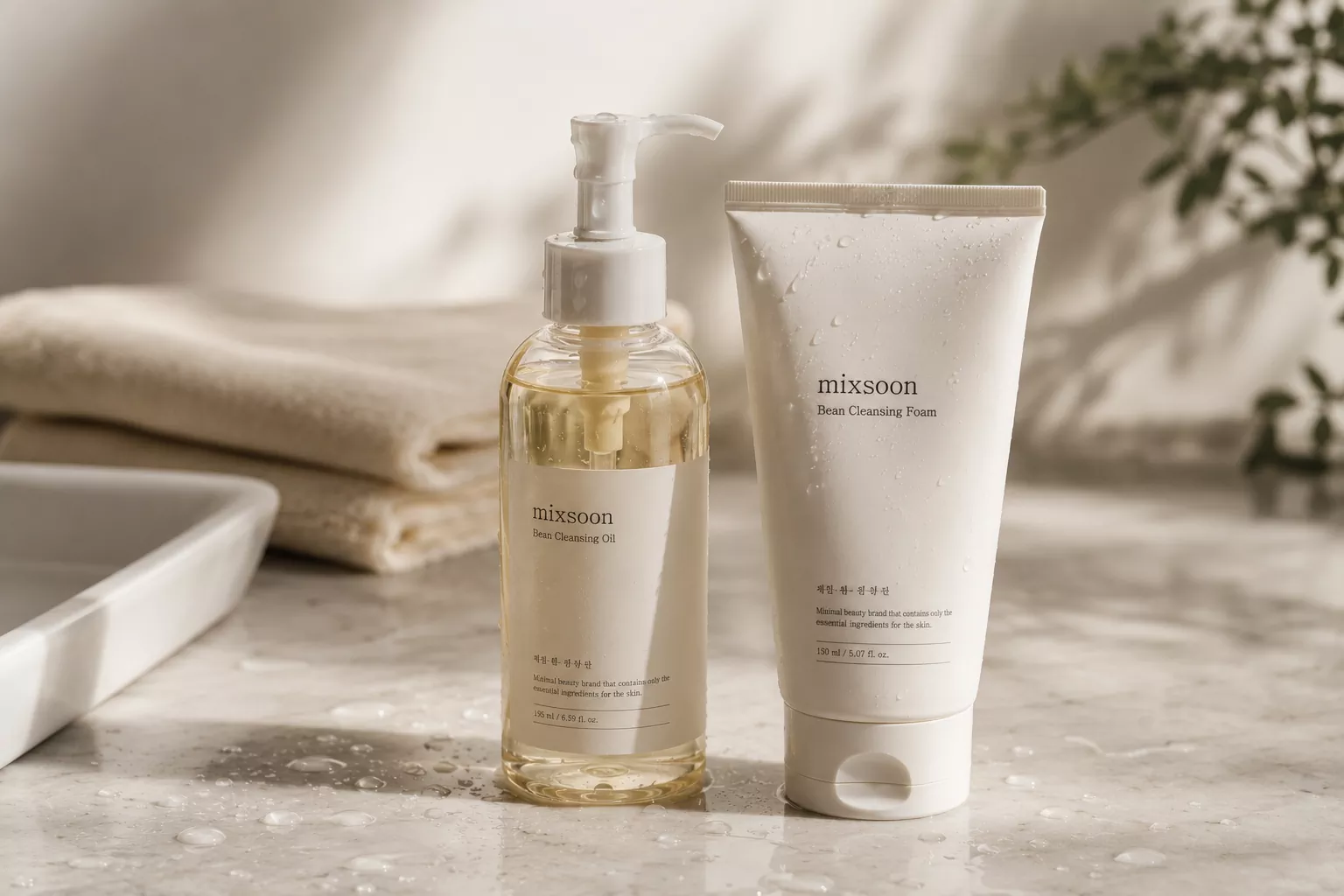
This guide focuses on the specific ingredients sensitive skin types must avoid when shopping for a Korean cleansing oil. Achieving a luminous, lit-from-within “glass skin” complexion can feel like a high-stakes gamble when you are navigating a reactive, breakout-prone skin barrier. In recent years, our collective skincare priorities have shifted dramatically toward barrier preservation. More of us are opting for mineral sunscreens and physical UV filters to keep inflammation at bay.
However, these protective mineral layers present a unique challenge: they are notoriously difficult to wash off. When left behind, they trap dead skin cells, sebum, and environmental pollutants, triggering the very breakouts we try so hard to avoid.
The first step of your evening routine should never be a source of anxiety. When formulated correctly, a premium oil cleanser acts as your barrier’s ultimate protector—not its enemy.
1. The Problem: The “Zinc Ghost” and Why Foam Cleansers Fail
For a long time, standard skincare advice targeted at women in their 20s and 30s warned against applying oil to acne-prone skin, immediately linking it to clogged pores and heavy residues. However, a standard water-based foam cleanser is chemically incapable of breaking down the stubborn matrices of physical sunscreens containing Zinc Oxide and Titanium Dioxide.
Because these mineral filters are engineered to adhere firmly to the skin, a water-based wash simply glides over them. This leaves behind a persistent, invisible film of leftover SPF and oxidized sebum.
When this layer mixes with urban micro-dust, it creates a breeding ground for sub-clinical inflammation and congestion. To compensate for that unclean feeling, many people resort to aggressive scrubbing or excessively hot water. This mechanical friction physically disrupts the delicate lipid barrier, culminating in chronic redness and a compromised skin texture. If you are struggling with unexpected bumps from your daily protection, check out our detailed guide on how trapped UV filters trigger adult acne breakouts to understand the mechanics of mineral filters.
2. The Explanation: The Science of Emulsification and Temperature Dynamics
The Science of Emulsification: What Makes the Best Cleansing Oil for Sensitive Skin K Beauty Work?
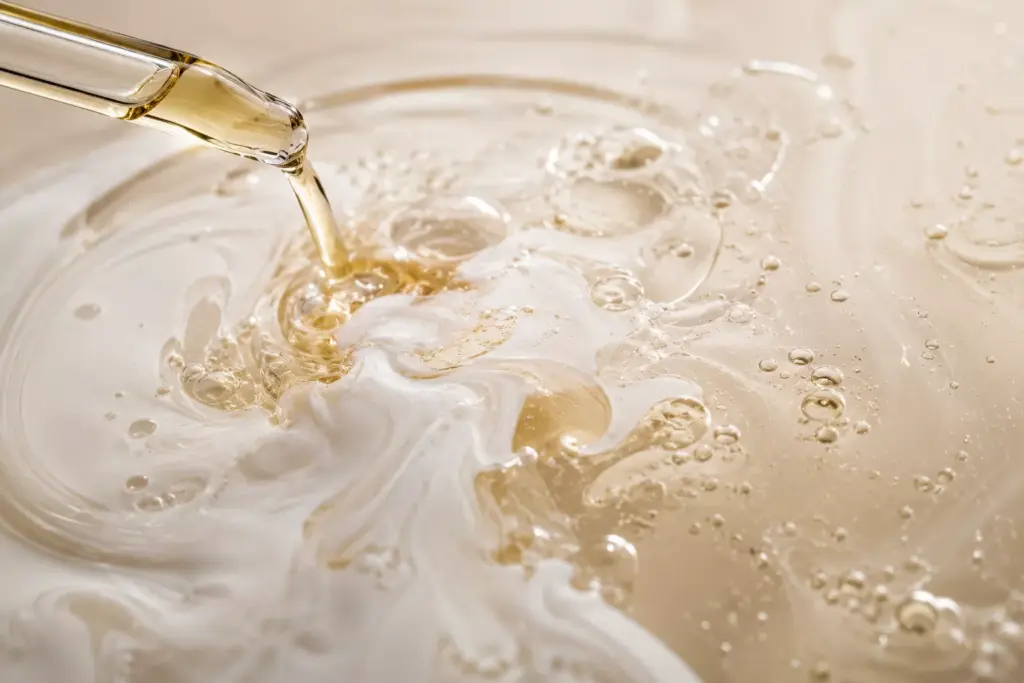
The efficacy of a modern oil cleanser relies heavily on the chemical principle that “like dissolves like.” Lipophilic (oil-loving) molecules in the cleanser easily bond with the sebum and mineral sunscreens on your face. However, the true magic depends on emulsification—the process where specialized surfactants allow oil and water to mix, transforming the liquid into a milky fluid that rinses away cleanly without leaving an oily film.
Why Water Temperature Acts as a Catalyst
According to clinical studies on transepidermal water loss (TEWL) and barrier function, the temperature of the water you use during this phase dictates whether your skin remains balanced or becomes stripped.
- The Danger of Hot Water (Above 38°C / 100°F): High temperatures liquefy the skin’s essential intercellular lipids—specifically ceramides and cholesterol. This completely destabilizes the skin barrier, leaving your face feeling uncomfortably tight and exposed to environmental irritants.
- The Optimal Zone (30°C–34°C / 86°F–93°F): True lukewarm water provides just enough thermal energy to activate the emulsifiers in a sensitive-skin-safe formula. This allows the oil to transition into a light, milky emulsion that lifts away debris while leaving your natural moisture factors intact.
3. Comparing Formulations: The Evolution of K-Beauty Cleansing Oils
Modern Korean skincare has shifted away from heavy mineral oils and synthetic fragrances, moving toward biocompatible ingredients and sophisticated textures. Advanced formulas utilize micro-emulsion technology, which allows the product to rinse off completely with minimal physical rubbing.
Tech Comparison: Traditional vs. Modern Sensitive Cleansing Oils
| Feature | Traditional Cleansing Oils | Advanced Sensitive K-Beauty Oils |
| Texture | Heavy, viscous, and occasionally suffocating | Weightless, serum-like, and highly breathable |
| Emulsification Speed | Slow; requires prolonged manual friction | Instantaneous upon contact with lukewarm water |
| Primary Base | Mineral oil or high-weight synthetic esters | Plant-derived Squalane, Oat Oil, and Rice Bran Oil |
| Barrier Impact | Can leave a film or strip natural lipids | Biomimetic; actively reinforces the lipid scaffold |
| Friction Level | High (frequently exacerbates underlying redness) | Ultra-low (provides excellent slip to minimize friction) |
A clinical review published in the Journal of Clinical and Aesthetic Dermatology confirms that a gentle oil-to-foam double cleanse is significantly less disruptive to the skin’s acidic mantle than a single, aggressive, surfactant-heavy wash.
4. Personal Experience: Overcoming Milia and Redness Through Technique
When I first integrated a K-beauty oil cleanser into my routine, I rushed through the steps. I would apply the oil to my face, rub it in quickly, and immediately splash it with cold water. Within two weeks, I noticed a cluster of tiny, hard white bumps—milia—forming around my jawline and cheekbones, accompanied by persistent redness.
I initially assumed my skin simply could not tolerate oil cleansing. However, the root cause wasn’t the product itself; it was a total lack of proper emulsification. Cold water caused the oils to congeal on my skin rather than rinse away, trapping impurities inside my pores.
Once I adjusted my approach—massaging the oil thoroughly on dry skin, adding a few drops of lukewarm water to turn it milky, and rinsing gently for 15 to 20 seconds—the milia cleared up completely, and my skin’s redness subsided. Technique is just as vital as the formulation you choose.
5. The Solution: A Step-by-Step “Barrier-First” Protocol
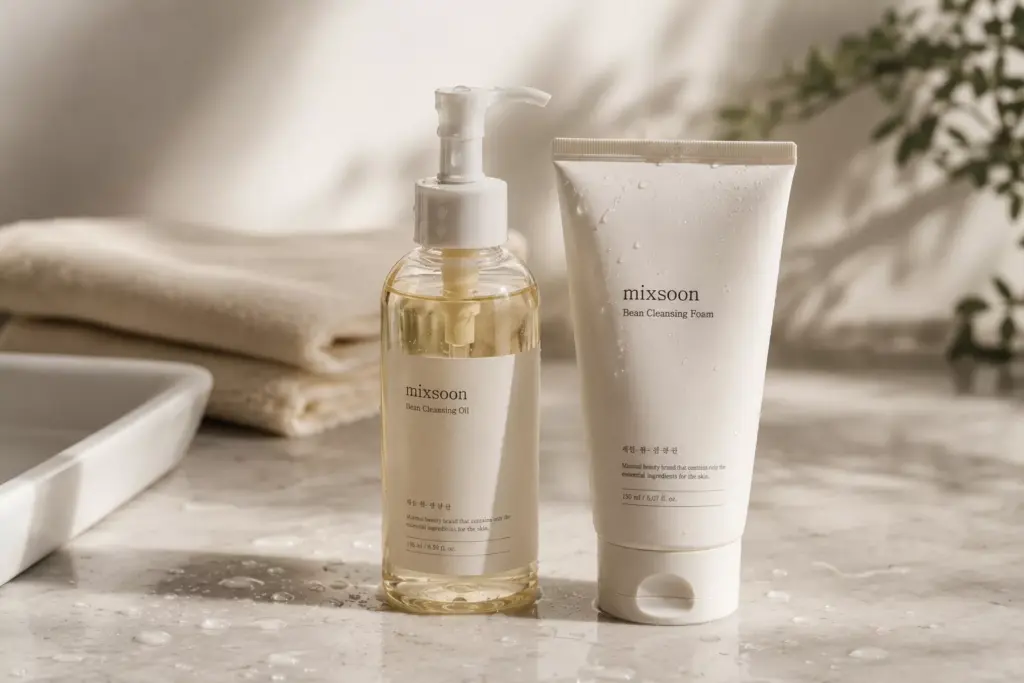
To thoroughly melt away stubborn physical sunscreens without inducing mechanical irritation, follow this precise method every evening:
- Keep Hands and Face Entirely Dry: Dispense two pumps of oil into completely dry palms. Introducing water too early triggers premature emulsification, preventing the oil from bonding with your sunscreen.
- The 30-Second Targeted Glide: Using only your ring and middle fingers to ensure minimal pressure, smooth the oil over your face in gentle, outward circular motions. Spend extra time on areas prone to congestion, such as the sides of the nose and the chin.
- The Milky Phase Activation: Splash a tiny amount of lukewarm water onto your face. Continue massaging for 15 seconds until the oil transforms into a thin, white, milky fluid. This step ensures all impurities are suspended and ready to be washed away.
- The Clean Rinse & Low-pH Finish: Rinse thoroughly with lukewarm water until your skin feels clean and free of residue. Follow up immediately with a gentle, non-stripping, pH-balanced water-based cleanser to remove any remaining water-soluble sweat or environmental dust.
6. Ingredient Deep Dive: What to Look For
When evaluating ingredients, prioritize non-comedogenic oils that offer documented skin-soothing benefits:
- Squalane: A highly stable, chemically inert lipid that mirrors human sebum perfectly. It breaks down impurities efficiently while keeping the skin barrier completely calm.
- Oat Kernel Oil (Avena Sativa): Rich in natural ceramides and antioxidant avenanthramides, oat oil acts as a biological cushion, drastically reducing irritation during the cleansing process.
- Jojoba Seed Oil: Outstanding for combination and oily-sensitive skin types. Because its molecular structure closely resembles our natural skin oils, it helps regulate excess sebum production without clogging pores.
Pro-Tip for Sensitive Barriers: If you’re using a Squalane-based K-beauty cleansing oil, pair it with a Centella Asiatica (Cica) or Heartleaf water cleanser as your second step. This combo instantly calms down any micro-redness from your day while leaving the lipid layer completely untouched.
Your evening cleanse should be a restorative foundation for the rest of your routine. By shifting away from harsh scrubbing and embracing the chemistry of gentle emulsification, you can clear away the most stubborn mineral filters while keeping your delicate skin barrier perfectly intact.
Disclaimer: The information provided in this article is for educational and informational purposes only and should not be construed as professional medical advice, diagnosis, or treatment. Always seek the advice of your dermatologist or other qualified health provider with any questions you may have regarding a skin condition.