
The quest for that translucent, lit-from-within “Glass Skin” glow is the ultimate skincare goal for our 2030s generation. But if you have Subuji skin—the Korean term for Subu-ji, or dehydrated oily skin—that journey often feels like a high-stakes gamble. We’ve all been there: trying to clear post-acne dark spots and stubborn hyperpigmentation, only to end up with a skin barrier that feels like it is on fire, covered in angry red patches and plagued by tight, flaky, yet greasy discomfort.
Understanding the delicate biological balance of your epidermal ecosystem is crucial. Layering two chemically incompatible formulas directly on your face without a strategy is a guaranteed way to cause severe barrier disruption and cellular irritation.
If your skin barrier is currently compromised, forcing these two heavy-handed brightening powerhouses into one chaotic routine will backfire completely. Let’s conduct a comprehensive dermatological audit of Niacinamide vs Vitamin C to permanently fix your skin tone without triggering a massive barrier breakdown.
1. The Problem: The High-pH Friction That Causes Barrier Disruption
The struggle is real. You want to fade post-inflammatory hyperpigmentation (PIH) fast, so you stack your high-concentration actives together in one massive skincare cocktail. Instantly, your face starts stinging, itching, and flushing a furious crimson. Traditional, old-school beauty advice often tells you to just “tough it out” or push through the painful irritation. However, that aggressive approach is exactly what destroys your lipid mortar—the essential ceramic-like glue holding your skin cells together.
In Western dermatology, Subuji skin is officially categorized as Oily-Dehydrated skin—an incredibly tricky state where the skin’s deep moisture content is severely depleted (often dropping below 10%), but the surface sebum production remains hyperactive to compensate for the internal dryness. When you apply mismatched, volatile ingredients simultaneously to this vulnerable base, the resulting chemical friction doesn’t just neutralize the cosmetic benefits. It triggers a cascade of intense vascular flushing, microscopic tears, and angry, deep-seated breakouts.
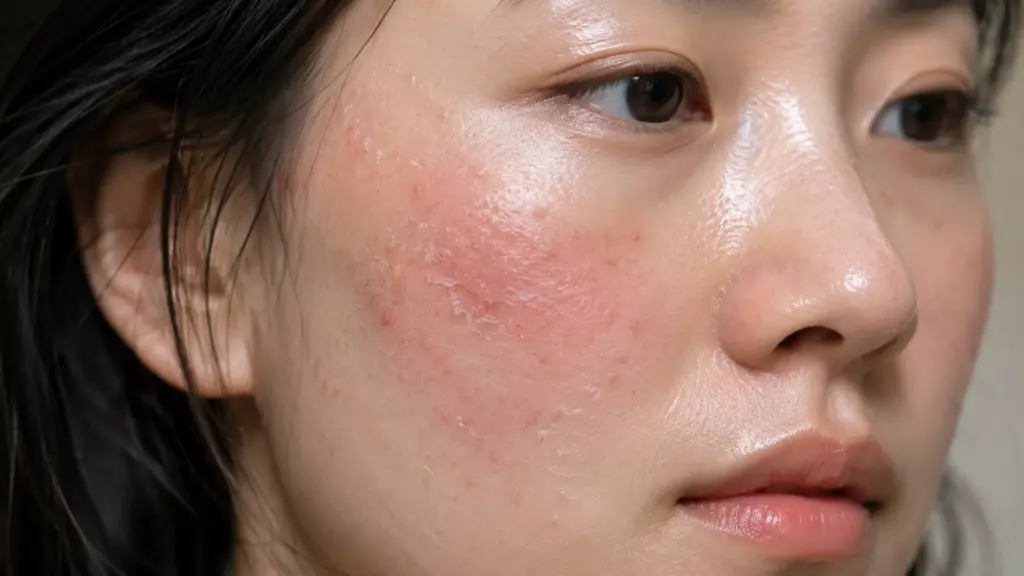
My Personal Skincare Breakdown: A Case Study in Irritation
I taught myself this biological rule through a painful personal experiment. During my first high-concentration trial on my own reactive skin, I blindly layered a 15% Pure Vitamin C serum directly with a 10% Niacinamide booster in the exact same application step. Within three minutes, my skin barrier went into a total systemic shutdown. My face developed an intense burning sensation and a severe breakout flare-up. It ultimately took three weeks of intensive, low-friction barrier rehabilitation utilizing pure ceramides, fatty acids, and low-molecular hyaluronic acid just to restore my biological baseline.
2. The Explanation: The Technical Science of Niacinamide vs Vitamin C
To master your 2026 brightening calendar, we must look closely at the molecular stability, pH requirements, and operating environments of Niacinamide versus Vitamin C. In advanced K-Beauty ingredient science, formula efficiency is calculated by a strict metric: how well an active compound stabilizes the skin matrix without triggering inflammation cascades.
The Active Component Matrix
- Niacinamide (Vitamin B3)
- Primary Role: The Shield, Barrier Repairer, & Sebum Regulator
- Optimal pH Range: Neutral to Slightly Acidic (pH 5.5 to 6.5)
- Best Skin Type Target: Dehydrated Oily, Acne-Prone, Highly Sensitive
- Main Mechanism: Blocks melanosome pigment transfer to surface cells
- Texture & Volatility: Highly stable, weightless, calming, non-oxidizing
- Vitamin C (Pure L-Ascorbic Acid)
- Primary Role: The Melanin Inhibitor, Free-Radical Scavenger, & Collagen Igniter
- Optimal pH Range: Highly Acidic (pH 2.5 to 3.5)
- Best Skin Type Target: Dull, Sun-Damaged, Non-Reactive, Resilient Skin
- Main Mechanism: Inhibits the tyrosinase enzyme to halt pigment synthesis
- Texture & Volatility: Highly volatile, easily oxidized by air, tingling sensation
Why Your Skin Struggles with Direct Mixing
Pure Vitamin C (L-Ascorbic Acid) is an absolute diva of a molecule. It is highly volatile, prone to turning brown and useless when exposed to light, and requires a severely low, intensely acidic pH to successfully penetrate your biological architecture. Conversely, Niacinamide is a resilient, reliable workhorse that operates optimally at a skin-neutral pH environment.
When you layer these two fluids directly on top of each other in the same step, the acidic environment of the Vitamin C alters the molecular integrity of the Niacinamide. According to a landmark clinical study published in the Journal of Cosmetic Dermatology, the formulation stability of L-Ascorbic Acid drops significantly when forced out of its acidic comfort zone, leading to rapid degradation.
This chemical conflict causes a dual-fold skin failure:
- The Nicotinic Acid Conversion: The low pH converts Niacinamide into nicotinic acid. This sudden chemical conversion triggers a massive release of skin prostaglandins, causing the intense, uncomfortable vascular flushing and heat waves you feel on your cheeks.
- The Complexation Effect: The opposite charges of the molecules cause them to bind together, forming a Niacinamide-Ascorbate complex. This essentially cancels out the efficacy of both actives, rendering your expensive routine completely useless.
To cross-reference the molecular stability, chemical safety metrics, and real reaction thresholds of these combined actives, you can verify the raw data via the National Center for Biotechnology Information to see how clinical testing defines these exact barrier boundary lines.
3. The Solution: The “Separated-Shift” Layering Blueprint
Resolving the Niacinamide vs Vitamin C dilemma isn’t about picking a single winner and discarding the other. Both molecules are elite, holy grail skin-transforming agents. Instead, the solution lies in smart routine scheduling. The most effective K-Beauty routines utilize a high-absorption time-separation strategy rather than heavy-handed, simultaneous layering.

The Morning Shift: Vitamin C
- The Objective: Environmental Defense & Radiance Activation
- The Protocol: Apply your pure Vitamin C serum in your AM routine immediately after cleansing and toning on completely dry skin.
- The Science: During the day, your skin is bombarded by UV rays, blue light, and environmental pollution. Vitamin C acts as a sacrificial antioxidant shield, neutralizing free radicals before they can damage your cellular DNA or ignite hyperpigmentation.
- The Finish: Always follow up with an ultra-low-friction, lightweight fluid sunscreen to lock in the volatile molecule and prevent surface oxidation.
The Night Shift: Niacinamide
- The Objective: Sebum Regulation & Barrier Remodeling
- The Protocol: Reserve your Niacinamide serum exclusively for your evening recovery cycle.
- The Science: At night, your skin enters its natural cellular repair and regeneration phase. Niacinamide works seamlessly with your nighttime barrier-repair molecules to seal micro-gaps, inhibit melanin transfer, and calm down the overactive sebum production characteristic of Subuji skin types.
By separating these shifts, you give each molecule the exact pH environment it needs to succeed. To learn the practical application of how to safely prep your skin infrastructure with moisture-binding steps before introducing these strong actives, make sure to read our comprehensive guide on the K-Beauty Skin Cycling Routine to avoid any standard cosmetic setbacks.
4. FAQ: Navigating Your Brightening Tolerances
Q1: Can I use Vitamin C derivatives and Niacinamide together in the same step?
Yes, absolutely. If you want a simplified, one-step routine, skip pure L-Ascorbic Acid entirely. Look for stabilized Vitamin C derivatives like Ascorbyl Glucoside, Sodium Ascorbyl Phosphate (SAP), or 3-O-Ethyl Ascorbic Acid. These innovative derivatives are specifically engineered to be stable at a neutral pH (pH 6.0 to 6.5), meaning they can coexist beautifully with Niacinamide in the same formula without causing barrier short-circuits.
Q2: Will Niacinamide clog or worsen my dehydrated oily (Subuji) skin?
No, quite the opposite. Niacinamide is an absolute lifesaver for Subuji skin because it possesses natural sebostatic properties, meaning it actively regulates oil production and refines the appearance of stretched pores. However, you must audit the vehicle formula. Avoid heavy, thick creams or oil-dense emulsions. Instead, opt for lightweight, water-based, or aqueous serums with a clean, minimalist ingredient list.
Q3: How long does it actually take to see hyperpigmentation fade?
Skincare requires structural patience. When adhering to a strict “Separated-Shift” schedule, you will notice surface cooling, decreased redness, and initial tone stabilization within 14 days. However, remodeling deep-seated dermal melanin, sun spots, and old acne scars requires a full 28-to-45-day cellular regeneration cycle. Consistency is your highest-yielding asset.
5. The Final Verdict: Optimize Your Skin Routine
The winner of the Niacinamide vs Vitamin C audit depends entirely on your skin’s current tolerance threshold and immediate structural needs:
- Choose Niacinamide if: Your skin barrier is highly reactive, easily inflamed, peeling, and battling a chaotic oily-yet-tight Subuji slick. It is your safe, non-negotiable stabilizing anchor.
- Choose Vitamin C if: Your skin matrix is structurally sound, resilient, and your primary objectives are erasing stubborn dark spots, correcting sun damage, and jumpstarting collagen production.
Stop punishing your delicate skin barrier with chaotic formulation mixing. Rebuild your skin from within with the precision of K-Beauty ingredient science, optimize your routine’s scheduling, and achieve that flawless, glass-skin radiance safely and effectively!
Medical Disclaimer: I am a passionate K-beauty ingredient auditor and researcher, but I am not a board-certified dermatologist or medical physician. The content provided in this audit is for educational and informational purposes only. Always conduct a localized patch test and consult with a skincare professional before introducing potent active ingredients into your daily routine.