
Your skin feels tight, looks visibly inflamed, and is throwing a literal tantrum. We’ve all been there: you apply your favorite “holy grail” moisturizer, and suddenly—it burns like acid. If your complexion feels completely “angry” at every single product in your vanity, congratulations: you’ve likely experienced a catastrophic system shutdown of your stratum corneum.
As an industrial tool technician, I spent years analyzing how mechanical systems fail when their protective seals wear thin. When I over-exfoliated my own skin in pursuit of that elusive K-beauty glow, I realized the human body operates under the exact same structural principles. When your moisture seal is blown, your routine needs an immediate, tactical intervention. Don’t panic. This is your definitive How to Fix Damaged Skin Barrier: 7-Day Guide to recalibrate your skin infrastructure from the brink of irritation back to structural resilience.
1. The Diagnostic Stage: My Structural Failure Experience
A few months ago, I woke up to what I call a total “Skincare Hangover.” My face was flaking in high-friction zones I didn’t even know could flake, and even plain lukewarm water felt like sandpaper on an open wound. This is the classic hardware alert for a compromised skin barrier. I realized my technical obsession with achieving “Glass Skin” had driven me to over-spec my routine with aggressive actives, leaving my epidermal defense matrix completely stripped.
When your skin infrastructure is this severely compromised, following a strict, calculated protocol is essential because your usual daily maintenance is likely causing further mechanical damage. I had to learn the hard way that in skincare, much like in handling high-voltage equipment, overloading the system with too many active components always leads to a short circuit.
2. The Molecular Blueprint: Why Your Skin Is Screaming
To effectively implement a repair protocol, you must understand the blueprint of your skin. Think of your skin barrier as a precisely engineered brick wall. Your skin cells (corneocytes) act as the solid bricks, while your intercellular lipids—specifically ceramides, cholesterol, and free fatty acids—serve as the high-grade mortar holding the entire system together.
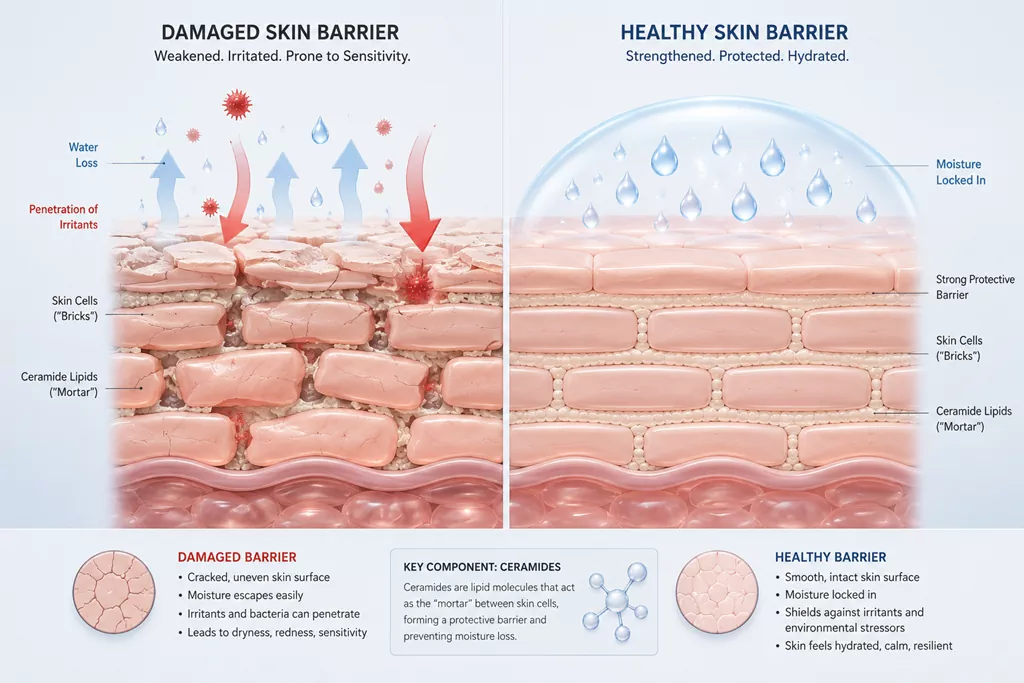
When that lipid mortar dissolves due to harsh weather or spicy skincare actives, moisture leaks out rapidly via Transepidermal Water Loss (TEWL), and external irritants leak in. It is not merely “dry skin”; it is a major structural failure. To fix it, you cannot just dump generic hydration onto the surface; you must repair the lipid cement. This is why a scientifically backed strategy focuses on direct lipid replenishment rather than superficial moisture.
3. The 7-Day System Recovery Protocol
Phase 1: The “Cold Turkey” System Reset (Days 1–3)
The first three days require absolute Skinimalism. You must go “cold turkey” on every single high-performance component: zero Retinol, zero Vitamin C, and absolutely no exfoliating acids (AHA/BHA/PHA). Your infrastructure needs an emergency shutdown from “active” beauty to trigger its natural self-healing mechanisms.
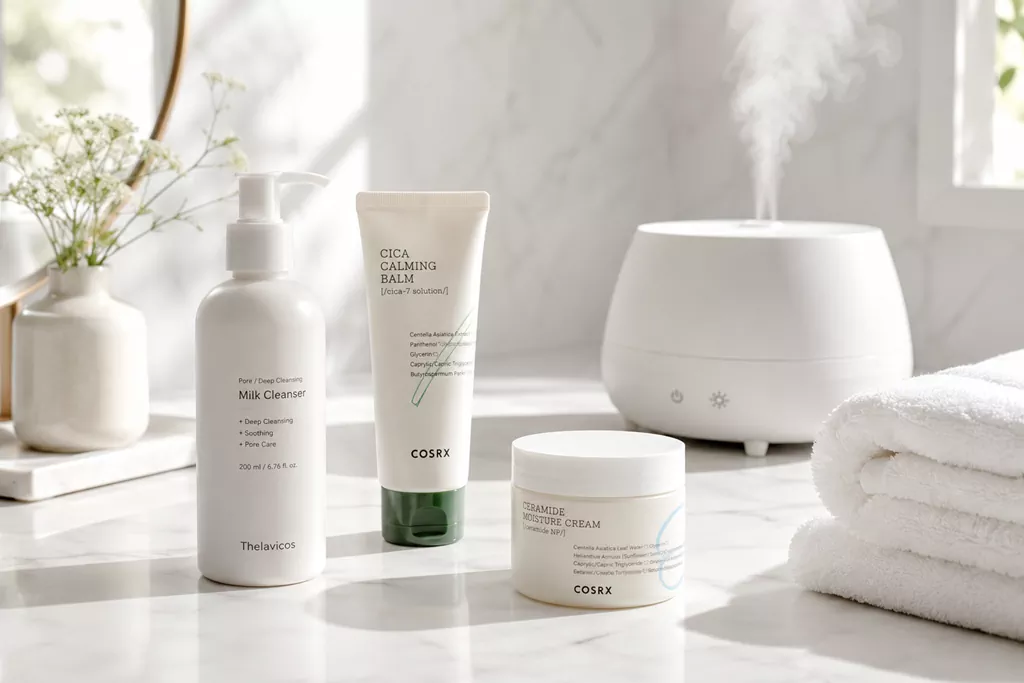
- The Routine: Cleanse with an ultra-gentle, non-foaming, lipid-replenishing milk or oil-based cleanser. Follow immediately with a thick, bland, occlusive balm at night to create an artificial safety seal.
- The Golden Rule: If it bubbles, shelf it. If it tingles, it’s a system violation.
Technical Caution for Dehydrated Oily Skin: If your system architecture falls under the “dehydrated oily” (aka su-bu-ji) category, avoid prolonged use of heavy mineral-oil occlusives like pure Vaseline. They may cause component clogging and unexpected breakouts. Opt for lightweight, non-comedogenic cica gels or specialized barrier balms instead.
Phase 2: Structural Foundation Rebuilding (Days 4–7)
By Day 4, the initial acute inflammation should subside, allowing you to reintroduce the structural building blocks of the skin barrier. This phase focuses on deploying targeted, bio-compatible ingredients like Ceramides, Panthenol (Vitamin B5), and Squalane, alongside high-performance K-beauty staples like Centella Asiatica (Cica) and Madecassoside to soothe internal irritation and weld the cellular cracks.
During my recovery phase, integrating a specialized barrier-cycle toner rich in soothing botanical extracts felt like a cooling coolant system for an overheating engine—completely zero sting. Layer a thin, fragrance-free hydrating essence directly under a heavy ceramide-dense cream. By Day 7, the mechanical “sting” will be eliminated, and your natural translucent glow will begin to peek through the stabilized infrastructure.
4. Hardware Optimization Matrix: Recovery Essentials
To streamline your recovery week, I have categorized the essential operational adjustments into a high-performance calibration matrix.
| Operational Category | System Villains (What to Avoid) | System Heroes (What to Deploy) | Expected Technical Result |
| Cleansing Systems | Salicylic Acid, foaming gels, sodium lauryl sulfate | Milk-based, oil-based, non-foaming low-pH formulas | Prevents lipid stripping during decontamination |
| Active Ingredients | Pure Retinol, Glycolic Acid, Ascorbic Acid | Ceramides, Panthenol, Centella Asiatica, Madecassoside | Accelerates cellular cement reconstruction |
| Thermal Regulation | Steaming hot showers, direct sauna heat | Lukewarm to cool water inputs | Prevents thermal degradation of surface lipids |
| Tactile Friction | Physical scrubs, clarifying brushes, rough towels | Soft microfiber cloths, hands-only “pat-dry” method | Eliminates micro-tears on vulnerable tissue |
| Atmospheric Control | Bone-dry indoor air, blasting heating units | Ultrasonic humidifiers, barrier mists | Minimizes Transepidermal Water Loss (TEWL) |
Analyzing the Recovery Essentials Matrix
The technical layout above highlights the core philosophy of our How to Fix Damaged Skin Barrier: 7-Day Guide. When your primary shield is down, your epidermal system is essentially “leaking” vital moisture. Utilizing the designated “System Heroes” creates an artificial, biomimetic seal over the stratum corneum. This temporary shield protects the tissue while your body synthesizes its own natural lipids behind the scenes.
For readers seeking a deeper dive into the exact lipid ratios required for optimal epidermal health, you can review the clinical studies published in the Journal of Dermatological Science regarding ceramide-dominant therapeutic moisturizers. Additionally, if you are wondering how to transition your routine once your barrier stabilizes, explore my comprehensive guide on the K-Beauty Niacinamide Benefits to learn how to safely introduce pore-blurring active modules without triggering further irritation.
5. Daily Habits for Long-Term Infrastructure Resilience
True skin maintenance is a long-term engineering commitment, not a temporary patch job. To guarantee your newly rebuilt barrier remains resilient against future environmental stress, integrate these three non-negotiable operational habits:
- Calibrate Your Water Temperature: Hot water is a highly effective solvent that strips natural oils. Shift your temperature gauge strictly to lukewarm or cool settings when rinsing your face.
- Eliminate Mechanical Friction: Never rub your face with traditional cotton towels. Switch to plush microfiber and utilize the “press-and-hold” patting method to dry your skin.
- Optimize Atmospheric Humidity: Air conditioning and indoor heating units act as moisture vacuums. Run a dedicated humidifier next to your bed to maintain a minimum of 40-50% ambient humidity while your skin undergoes its nighttime repair cycle.
6. Conclusion: Patience is Your Master Tool
Rebuilding a compromised skin barrier is a game of precision and patience, not guesswork. Your skin infrastructure cannot fully regenerate within 24 hours, but by systematically adhering to this structural protocol, you will see a dramatic reduction in erythema (redness) and a full restoration of your skin’s natural, bouncy elasticity by Day 7.
Before purchasing another trending product, perform a strict audit of your current skincare inventory. Sometimes, the most professional technician move you can make is to stop over-servicing the system—simply strip back the excess, protect the core foundation, and allow your skin’s natural biology to do its job.
Disclaimer: I am an industrial tool technician and dedicated skincare research enthusiast. This content is curated for educational and informational purposes only and does not constitute professional medical advice. Always consult a board-certified dermatologist for chronic skin conditions or severe medical concerns.