
Clean beauty enough for sensitive skin is the ultimate marketing riddle that we’ve all been desperately trying to solve in 2026. “Clean,” “Natural,” and “Organic”—these aesthetic buzzwords are entirely hijacking our social feeds. But for those of us navigating a fragile, easily triggered skin barrier, these pristine bottles are often major red flags wrapped in pretty pastel packaging.
I used to be the ultimate sucker for the “clean girl” aesthetic, genuinely believing that a 100% plant-derived ingredient list meant a product was inherently safe. That naive assumption ended abruptly when I woke up with a face full of burning, itchy contact dermatitis patches caused by a critically acclaimed, “all-natural” botanical facial oil.
That disaster taught me a brutal truth: marketing narratives don’t heal a compromised barrier; stable, biocompatible formulas do. If you are tired of your skincare routine triggering random flare-ups, it’s time to stop looking at the front of the bottle and start auditing the back.
1. The Problem: Is Clean Beauty Enough for Sensitive Skin When Your Barrier is Trashed?
A few months ago, my skin barrier was completely ruined, and I found myself seriously questioning if finding a routine that is clean beauty enough for sensitive skin was mathematically impossible. Eager to soothe the chronic redness and irritation, I invested a hefty chunk of cash into a high-end botanical serum proudly stamped with a major retailer’s clean seal.
Within 48 hours, my face looked like a map of angry, raised micro-bumps. It stung to apply even basic water. I was trapped in a cycle of constant inflammation, reacting aggressively to products that were supposedly formulated to be ultra-gentle, non-toxic, and safe for reactive complexions.
2. The Explanation: The Science Behind the “Natural” Allergic Reaction
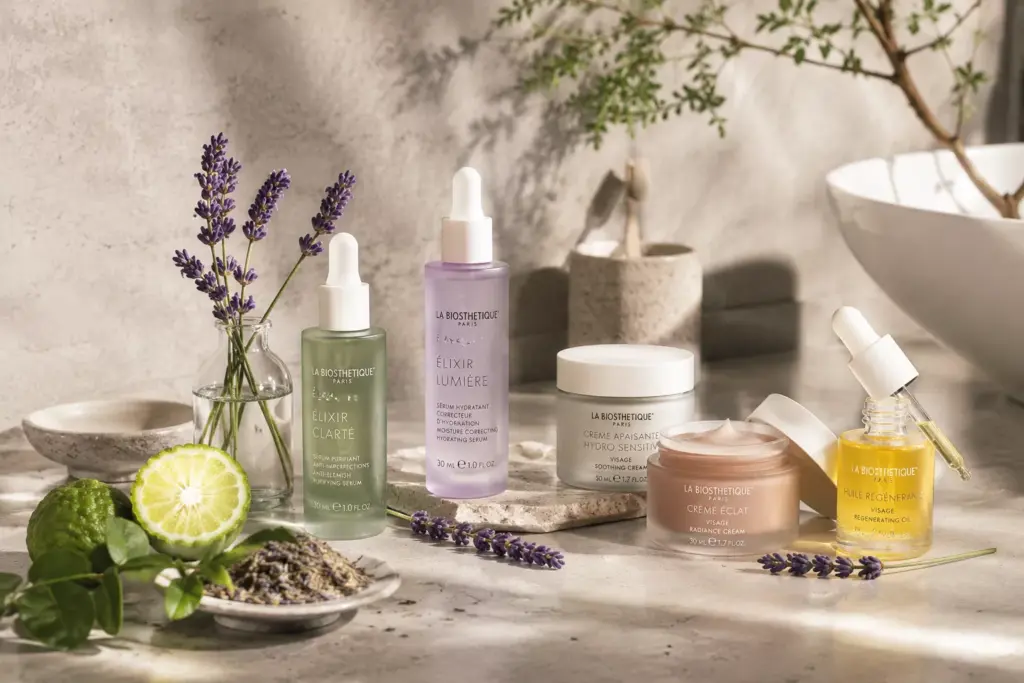
The medical explanation for my skincare nightmare is simple: the term “clean beauty” has absolutely zero legal, standardized definition by global regulatory bodies. It is purely a marketing framework designed to drive retail sales. When brands strip out synthetic stabilizers and traditional preservatives to fit this marketing mold, they frequently replace them with highly concentrated essential oils (like Lavender, Bergamot, Ylang Ylang, or Citrus oils) to preserve the product and maintain a luxurious “spa scent.”
The Chemistry of Plant Volatiles
For a highly reactive skin type, a raw botanical extract can be vastly more volatile than a lab-synthesized alternative. Essential oils contain complex mixtures of volatile organic compounds such as linalool and limonene. When these molecules are exposed to air and light on your vanity, they oxidize, transforming into potent allergens that trigger a type IV delayed hypersensitivity reaction.
Furthermore, when multiple botanical extracts are combined in a single formula, they can create negative formulation chemical synergies. For instance, mixing a plant extract rich in unstable natural Vitamin C with an unrefined plant acid can wildly disrupt your skin’s physiological pH. This acid imbalance causes microscopic fissures in the stratum corneum, allowing irritants to penetrate deeply and trigger chronic cellular inflammation.
Plants have natural defense mechanisms, and those exact chemical defenses will wage war on a compromised human skin barrier. If your “clean” routine tingles, stings, or leaves a low-grade itch, it is actively damaging your skin, no matter how eco-friendly the brand claims to be.
3. The Solution: Transitioning to Clinical Biocompatibility
To pull my skin out of the danger zone, I had to stop buying into the narrative on the front label and start analyzing the actual International Nomenclature of Cosmetic Ingredients (INCI) list. Finding a routine that qualifies as clean beauty enough for sensitive skin requires strict data verification, not aesthetic vibes.
Decoding Marketing Hype vs. Dermatological Reality
- All-Natural / Botanical: The Brand Hype claims that because it is derived from plants, it is inherently safe and gentle. The Biochemical Reality proves that plant extracts contain hundreds of un-isolated compounds that trigger contact allergies. Look for clinically validated, highly purified synthetic or bio-fermented ingredients instead.
- Chemical-Free: The Brand Hype claims it avoids toxic, scary, lab-made chemicals. The Biochemical Reality proves this is completely scientifically impossible since water, oxygen, and your skin are all made of chemicals. Look for stable, predictable, biocompatible formulas with minimal ingredient lists instead.
- Unscented: The Brand Hype claims it has no discernable smell, meaning it won’t irritate sensitive skin. The Biochemical Reality reveals these formulas often contain chemical “masking fragrances” to hide the unpleasant odor of raw materials. Look for legally certified Fragrance-Free products instead.
- Non-Toxic: The Brand Hype promises the formulation is entirely safe and free of hazards. The Biochemical Reality proves this is a pure marketing buzzword with zero legal parameters or third-party verification. Look for dermatologist-tested, hypoallergenic formulas balanced at a physiological pH of 4.5 to 5.5 instead.
The data above highlights the severe disconnect between cosmetic marketing and clinical dermatological science. To bridge this gap, modern consumers are shifting toward skin-minimalism—a philosophy focused on pared-down routines utilizing bio-identical actives. To learn exactly how to build a streamlined, irritation-free regimen using this exact methodology, read our comprehensive internal guide on the Nighttime Recovery Routine for Sensitive Skin.
To cross-reference any suspicious botanical ingredients in your current routine against peer-reviewed clinical studies, you can consult the official safety assessments published directly on the Cosmetic Ingredient Review (CIR) Independent Expert Panel database to verify their true irritation potential.
Your 3-Step Ingredient Audit Strategy
- Step 1: Blacklist the “Big Three” Disruptors: Immediately scan your INCI lists and eliminate drying alcohols (such as Alcohol Denat. or Isopropyl Alcohol), volatile essential oils, and aggressive surfactants like Sodium Lauryl Sulfate (SLS). If a cleanser leaves your skin feeling “squeaky clean,” your essential lipids have been stripped.
- Step 2: Prioritize Biocompatible Actives: Shift your mindset from asking “Is this ingredient natural?” to “Is this ingredient skin-identical?” Look for lab-refined molecules that mimic your skin’s natural moisturizing factors (NMF). Focus on Squalane (a highly stable, non-oxidizing emollient), Ceramides (NP, AP, EOP) to rebuild the cellular mortar, and Panthenol (Vitamin B5) to down-regulate inflammatory cytokines.
- Step 3: Leverage Ingredient Decoding Tools: Don’t stress if the back of the bottle looks like a foreign language. You can easily copy and paste any ingredient list into free, data-driven database platforms like INCIdecoder or CosDNA. These digital tools instantly break down the exact comedogenic rating, safety profile, and irritation potential of every single molecule in the formula, giving you the ultimate clinical advantage over greenwashed marketing.

4. Final Verdict: Choose Molecular Science Over Pretty Packaging
At the end of the day, your skin cells do not possess eyes; they cannot see the eco-friendly aesthetic of a bottle, nor do they care about a brand’s green marketing narrative. Your skin operates purely on molecular chemistry.
The concept of a routine being clean beauty enough for sensitive skin is only valid when “clean” translates to non-irritating, thoroughly vetted, biochemically stable, and structurally sound ingredients. Don’t let greenwashed marketing gaslight you into thinking a product is superior just because it grew out of the ground. By prioritizing rigorous formulation standards and skin-identical biocompatibility over trendy industry buzzwords, you can finally eliminate chronic redness and achieve a resilient, healthy, and genuinely calm complexion.
Disclaimer
The information provided in this article is for educational, informational, and personal experiential purposes only and should not be construed as professional medical or dermatological advice, diagnosis, or treatment. Individual skin types and conditions vary significantly, and what works for one person may cause adverse reactions in another. Always perform a patch test before introducing any new skincare product into your routine.
If you are experiencing severe, persistent, or painful skin conditions, chronic inflammation, or signs of an allergic reaction, please consult with a board-certified dermatologist or qualified healthcare professional immediately. Reliance on any information provided in this article is solely at your own risk.