
If you’re a 20-something or 30-something navigating a reactive, breakout-prone skin barrier, you’ve likely been told that double cleansing is the holy grail to achieving that effortless K-beauty “glass skin” glow. But if you’ve actually tried it, you might have ended up with a red, burning face and a fresh crop of breakouts.
As a professional K-beauty ingredient auditor who views skincare through a strict molecular lens, I look at formulas the way an engineer looks at blueprints. You can’t clean heavy, oil-soluble grime with just water. However, the wrong formula will absolutely wreck your skin’s defenses.
Before we dive into the solution, let’s establish the strict criteria used to vet formulas for sensitive skin. We don’t just recommend products because they “feel nice” or look cute on TikTok. In my audit checklist, a formula only passes if it contains 0% synthetic colorants, has a surfactant concentration below 5% to prevent lipid stripping, scores a 0 on the comedogenic scale for its base oil components, and strictly excludes the following triggers:
- Synthetic Fragrance & Cross-Reactors: The number one culprit behind contact dermatitis.
- High-Concentration Essential Oils: Citrus (Lemon, Bergamot), Eucalyptus, and Peppermint oils are highly volatile and trigger micro-inflammation on vulnerable skin.
- Harsh Surfactants (PEG overloads): While emulsifiers are necessary to make oil rinse off with water, heavy-handed synthetic pegs can strip your “intercellular cement”—the lipids holding your skin cells together.
- Heavy Comedogenic Bases: High percentages of isopropyl myristate or low-grade mineral oils that suffocate the pore walls.
1. The Problem: The “Zinc Ghost” and Why Foam Cleansers Fail
Here is a hard truth: if you are using mineral sunscreens (Zinc Oxide or Titanium Dioxide) to protect your sensitive skin, your standard water-based foam cleanser is chemically incapable of breaking them down.
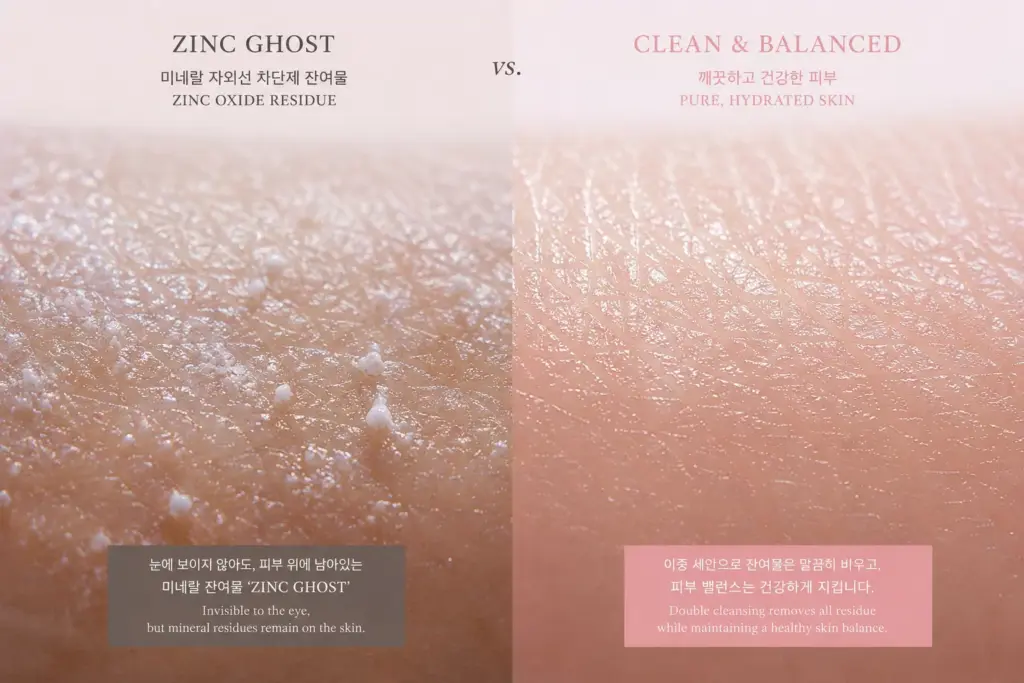
Mineral filters are designed to physically “grip” the epidermis. A water-based wash simply glides over them, leaving behind what I call the “Zinc Ghost”—an invisible, stubborn film of leftover SPF, mixed with oxidized sebum and daily pollution.
When you notice your skin feels rough or congested, your instinct is usually to scrub harder with your foam wash or reach for physical exfoliants. This friction physically tears your fragile lipid barrier. Most “oil-related breakouts” aren’t actually caused by oil itself; they are the result of poor emulsification or the irritation caused by trying to wash away the Zinc Ghost with raw aggression.
If your skin is currently trapped in this cycle of redness and tight tightness, pause the friction immediately. You can read my upcoming deep-dive on hydration balances, the 7-Day Skin Barrier Recovery Plan, right here on this blog to reset your baseline.
2. The Explanation: The Molecular Audit of 2026 K-Beauty Oils
To fix this, we look to the “like dissolves like” rule of chemistry. The ideal cleanser needs to act as a biocompatible solvent that melts the Zinc Ghost on contact without disturbing your skin’s natural moisture factors.
Modern K-beauty formulation has shifted away from heavy, suffocating textures toward biomimetic oils. Let’s look at how traditional formulations stack up against advanced sensitive skin options:
Traditional Cleansing Oils often rely on heavy mineral oil or synthetic esters. Their texture is thick and greasy with high drag, requiring aggressive warm water to slowly emulsify. This often strips the skin barrier, leaving a filmy or squeaky-clean, stripped after-feel.
Advanced Sensitive K-Beauty Oils utilize Squalane, Oat Kernel Oil, or Rice Bran. Their texture is watery, serum-like, and offers ultra-low friction. They emulsify instantaneously upon contact with lukewarm water, reinforcing the lipid layer while leaving the skin supple, calm, fresh, and completely hydrated.
Clinical studies published by the National Center for Biotechnology Information highlight that a gentle, highly emulsifiable oil-to-foam double cleanse preserves the skin’s acidic mantle far better than an aggressive single wash with a high-pH surfactant.
3. Formulating the Blueprint: Deciphering the Best Cleansing Oil for Sensitive Skin K-Beauty Standards
The ultimate goal for sensitive skin is choosing a product that aligns with the Best Cleansing Oil for Sensitive Skin K-Beauty standards, which prioritizes ultra-lightweight plant oils like Squalane or Jojoba that closely mimic human sebum. This “tricks” the skin barrier into staying perfectly calm during the cleansing process.
The Sensory Audit: What First-Hand Success Feels Like
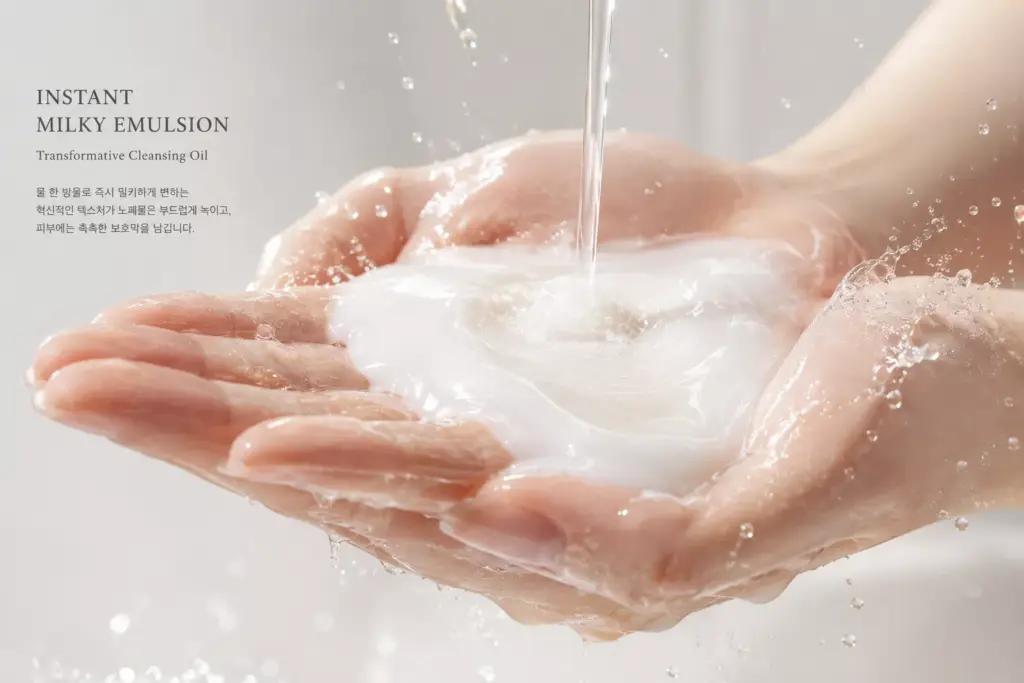
When you first pump a premium, sensitive-safe K-beauty cleansing oil onto your palms, the texture feels almost like a heavy hyaluronic acid serum—it has a “cushioning viscosity” that prevents your fingers from creating micro-friction against the skin. There should be absolutely zero “drag” or “tug” on your skin. As you massage it over dry skin, you will actively feel the grit and stubborn mineral sunscreen dissolve under your fingertips.
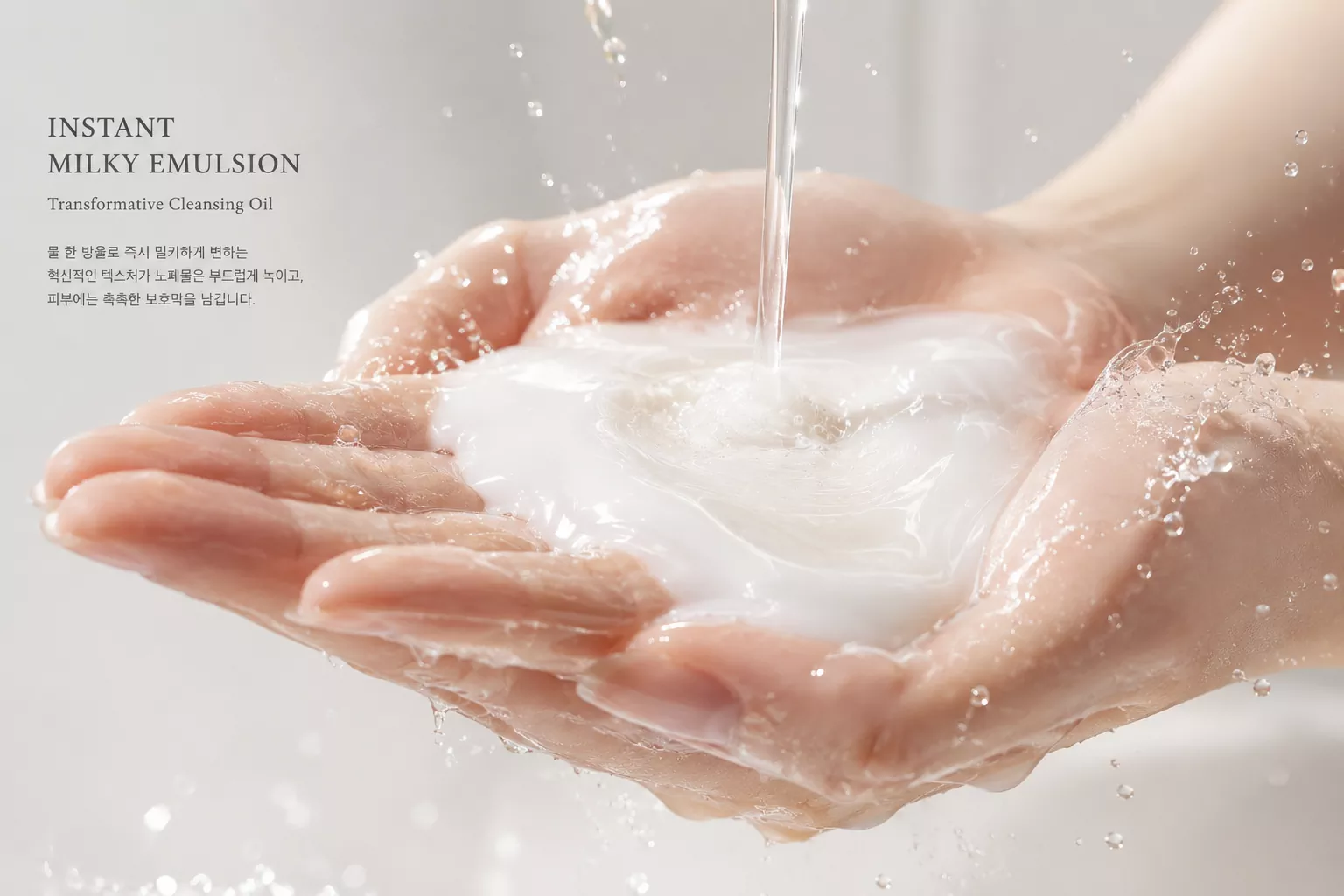
But the real breakthrough is the zero-residue rinse. As soon as lukewarm water touches it, the emulsion breaks instantly, transforming into a watery, milky fluid that rinses away effortlessly. There is no greasy residue left behind, nor is there that dreaded, dry “tightness” that makes you run for your moisturizer. Instead, you get a fresh, clean finish with a noticeably plumped, calm epidermis.
4. The “Milky Rinse” Protocol for Maximum Glow
Even the most flawless formula will fail if your technique is flawed. To safely melt the Zinc Ghost and maximize your glow without a hint of irritation, follow this exact method:
- Keep It Bone Dry: Dispense 2–3 pumps of oil onto completely dry hands and apply to a dry face. Introducing water too early premature-emulsifies the oil, rendering it useless against SPF.
- The 30-Second Ring Finger Glide: Using only your ring fingers (which naturally apply the least amount of pressure), gently glide the oil in circular motions. Focus on areas prone to congestion, like the sides of the nose and the chin.
- The Emulsion Phase (Crucial Step): Splash a small amount of lukewarm water (30°C–34°C) onto your face. Massage for another 15 seconds until the oil transforms completely into a stark white, milky fluid. This step detaches the dissolved grime from your pores.
- The Clean Rinse: Rinse thoroughly with lukewarm water before following up with an ultra-gentle, non-stripping water cleanser.
5. FAQ: Troubleshooting Your Sensitive Double Cleanse
Q. Can I use a cleansing oil if my skin is oily and acne-prone?
A. Yes. It sounds counterintuitive, but sebum dissolves sebum. Using a lightweight, non-comedogenic K-beauty cleansing oil rich in linoleic acid (like safflower or jojoba oil) will break up hardened oil plugs inside your pores far better than a harsh acne wash.
Q. Will double cleansing cause milia?
A. Milia is typically caused by trapped dead skin cells or heavy, non-emulsifying oils. If you use a modern, clean-rinsing K-beauty formula and ensure you thoroughly complete the “Milky Rinse” phase, the risk of developing milia is virtually non-existent.
Q. How do I know if my skin barrier is too damaged for an oil?
A. If even pure water stings your face, your barrier is severely compromised. In that specific scenario, hold off on everything except a basic barrier support routine until your lipid layer heals.
Medical Disclaimer
As someone who spent years analyzing industrial solvents and mechanical wear, I view the skin barrier as the ultimate biological machine. However, while I am a professional repair technician and K-beauty ingredient auditor, I am not a physician. This content is developed for educational and informational purposes only. Every skin type is unique, so always patch test new products and consult with a board-certified dermatologist before changing your healthcare or skincare routine.