
We’ve all heard the ultimate skincare commandment: “Wear your SPF every single day, or prepare to age like a grape.” But for my sensitive skin besties with a reactive barrier, understanding why most sunscreens cause breakouts is only half the battle. Finding a sunscreen that doesn’t leave behind stinging eyes, angry redness, or a fresh cluster of tiny whiteheads feels like a literal mission impossible.
If you’ve been lowkey gatekeeping your face from the sun because you’re terrified of a flare-up, you are not alone. It feels like the ultimate betrayal—the very product meant to protect your skin is the one destroying your progress. Today, we’re moving past the aesthetic packaging and diving deep into the clinical science of sunscreen-induced acne. Let’s figure out how to find your “Holy Grail” SPF formula, minus the drama.
1. The SPF Struggle: Why Your Sunscreen is Clogging Your Pores (My Experience)
For years, I had a toxic love-hate relationship with sun protection. I knew that UV rays were the number one cause of premature aging, hyperpigmentation, and barrier damage. Yet, every single “viral, top-rated” sunscreen recommended by beauty influencers turned my skin into a congested disaster zone.
I’d apply it in the morning, craving that clean, glass-skin glow, only to wake up the next day with painful cystic bumps along my jawline or that itchy, burning sensation on my cheeks that screams red flag.
I honestly felt gaslit by beauty marketing. Formulas labeled “non-comedogenic” or “dermatologist-tested” were still wrecking my skin barrier. After months of trial, error, and meticulous ingredient journaling, I realized my skin wasn’t just being “difficult.” When analyzing the core reasons behind why most sunscreens cause breakouts, the answers usually come down to two major culprits: aggressive chemical UV filters causing micro-inflammation, and heavy occlusive vehicles trapping my natural sebum.
2. The Science: Why Most Sunscreens Cause Breakouts Based on UV Filters
To stop the endless cycle of SPF-induced acne, you have to stop reading the front of the bottle and start auditing the ingredient list on the back. Sunscreen breakouts usually boil down to one fundamental difference: how Mineral (Physical) vs. Chemical (Organic) filters interact with your skin cells.
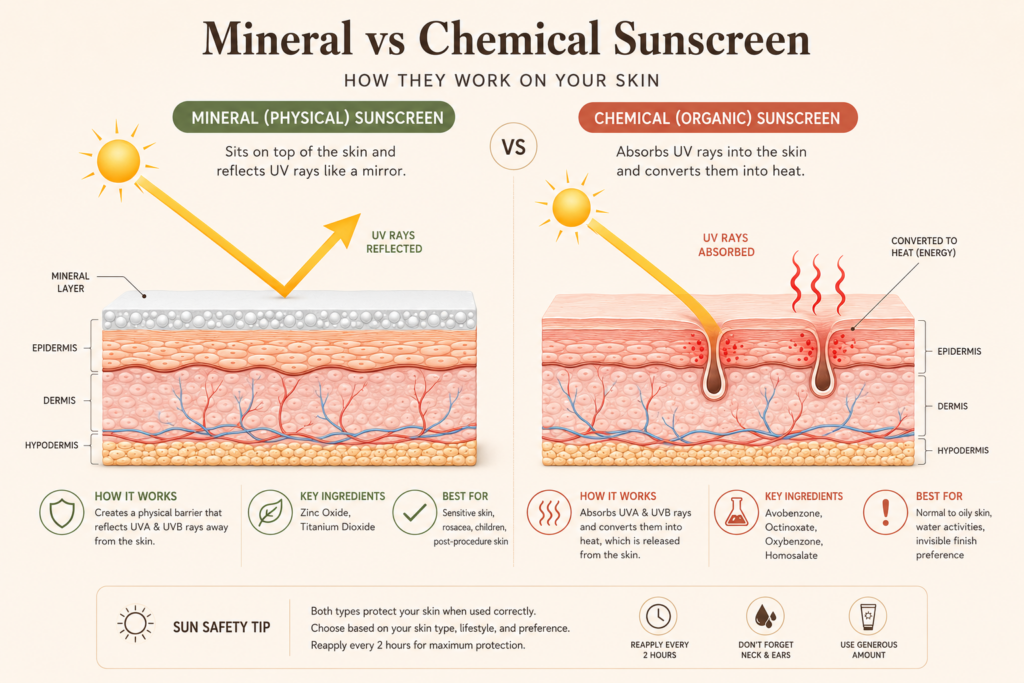
The Breakdown: Mineral vs. Chemical Filters
Mineral (Physical) filters sit on top of the skin and primarily reflect and scatter UV rays like a mirror. The active ingredients are Zinc Oxide and Titanium Dioxide. They provide a soothing, anti-inflammatory vibe to the skin barrier, though historically they had a thicker texture. Protection starts immediately upon application.
Chemical (Organic) filters absorb into the skin, convert UV rays into heat, and release it. The active ingredients include Avobenzone, Oxybenzone, Octisalate, Octocrylene, and Homosalate. They are lightweight, fluid, and invisible on the skin, but they can cause a sting, heat-flush, or allergic contact dermatitis. They require 15 to 20 minutes to fully absorb and activate.
The Mechanism of Chemical SPF Breakouts: Heat & Sebum Peroxidation
Why do chemical sunscreens cause breakouts for sensitive and acne-prone skin types? It comes down to heat conversion and molecular instability.
When traditional chemical filters like Oxybenzone or Octocrylene absorb UV light, they convert that energy into kinetic heat. For a reactive skin barrier, this internal heat spike triggers a cascade of micro-inflammation. Heat increases the skin’s surface temperature, which directly stimulates your sebaceous glands to produce more oil, while exacerbating vascular conditions like rosacea.
Furthermore, older chemical filters are notorious for generating free radicals as they degrade under sunlight. These free radicals oxidize the squalene in your natural sebum—a process called sebum peroxidation. Oxidized squalene is highly comedogenic. It alters the composition of your skin’s oil, making it thick, sticky, and guaranteed to block your pores.
The Mechanism of Mineral SPF Breakouts: The Occlusive Vehicle
If mineral sunscreens are so gentle, why do they still cause breakouts for some people? The culprit here isn’t the active mineral—Zinc Oxide is actually a known anti-inflammatory that helps soothe skin. Instead, the issue lies in the formulation vehicle.
Because zinc and titanium dioxide are naturally heavy white powders, cosmetic chemists have to suspend them in rich emollient bases—often loaded with heavy silicones (like Dimethicone cross-polymers) or comedogenic binding agents (like Isopropyl Myristate or Laureth-4)—to make them spreadable. If you don’t properly cleanse these heavy formulas off your face at night, they form a stubborn, occlusive film that traps dead skin cells, daily sweat, and p. acnes bacteria underneath.
3. Advanced Matching: Pair Your SPF to Your Specific Acne Type
Not all breakouts are created equal. To fix your skin, you need to match your sun protection to the exact type of congestion you are experiencing.
If You Get Tiny Whiteheads & Congestion (Comedonal Acne)
The Culprit: Heavy emollient bases and silicones in mineral sunscreens or pore-clogging isopropyl esters.
The SPF Match: Look for ultra-fluid, water-based, oil-free formulas. If going mineral, ensure it is labeled “fluid” rather than “cream,” and explicitly free of heavy botanical oils.
If You Get Deep, Painful Red Bumps (Inflammatory/Cystic Acne)
The Culprit: Heat generation and skin barrier disruption from unstable chemical filters like Avobenzone.
The SPF Match: 100% Non-Nano Zinc Oxide formulas. Zinc acts as a natural skin protectant and topical soothing agent that actively works to calm down the vascular heat and swelling associated with deep cystic blemishes.
4. The Solution: Your 3-Step “Breakout-Free” Sunscreen Protocol
Fortunately, skincare technology has advanced past the days when we had to choose between a chalky white cast and a massive breakout. We now have access to advanced Hybrid Sunscreens and clean mineral bases that offer the soothing benefits of physical blockers with the elegant, watery texture of a serum.
To completely eliminate SPF breakouts from your routine, implement this strict 3-step protocol:
Step 1: Commit to a Non-Negotiable Double Cleanse
Mineral filters and water-resistant SPFs are literally formulated to stick to your skin through sweat, water, and friction. A standard water-based foam or gel cleanser cannot break down these stubborn molecular bonds, leaving a microscopic layer of debris that triggers breakouts overnight.
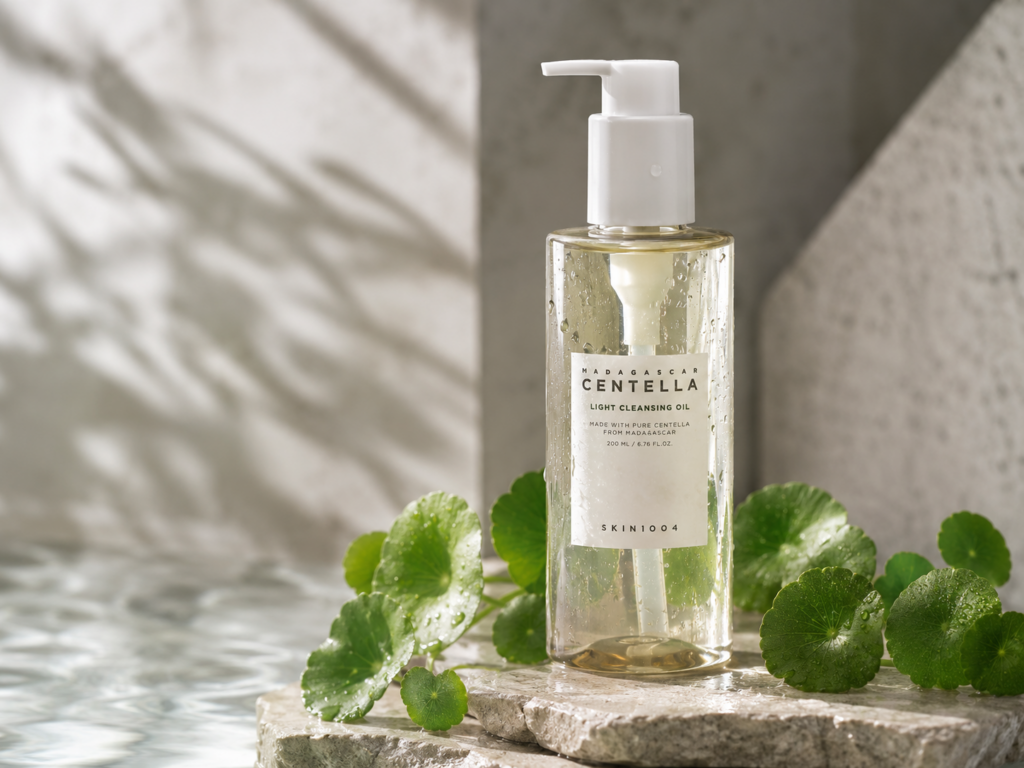
Every single evening, use an emollient cleansing oil or balm as your first step. Massaging the oil onto dry skin allows it to bind to the silicone and zinc particles, effectively emulsifying them. To make sure you are executing this step perfectly without stripping your delicate moisture barrier, check out my deep-dive breakdown over at KBeautyExplained where I detail how to thoroughly melt away physical filters without inducing irritation. Follow this up with a gentle, hydrating water-based cleanser to wash away the remaining residue without stripping your moisture barrier.
Step 2: Audit Your Ingredients for Next-Gen “Clean” UV Filters
If your skin cannot tolerate mineral formulas but loves the texture of chemical sunscreens, abandon old-school western filters and opt for modern, photostable filters (highly popularized in Korean and European sunscreens).
Look for these advanced ingredients on the back of your bottle:
- Tinosorb S & Tinosorb M (Bis-Ethylhexyloxyphenol Methoxyphenyl Triazine)
- Uvinul A Plus (Diethylamino Hydroxybenzoyl Hexyl Benzoate)
These next-gen molecules are much larger in molecular weight, meaning they sit safely on the surface of the skin barrier rather than penetrating into the deeper epidermal layers. They don’t cause the same heat-induced irritation or cellular degradation as older chemical filters.
Step 3: Create a “Damp Skin Buffer” to Block Penetration
Never apply a heavy sunscreen directly onto bone-dry, dehydrated skin. When your skin barrier is thirsty and lacking moisture, it will aggressively try to drink in whatever liquid you apply on top of it—including the heavy emollients and surfactants found in your sunscreen.
The Fix: Prep your skin with a lightweight, hydrating milky toner or a soothing centella (cica) serum while your face is still damp. Seal that in with a lightweight gel-cream moisturizer. This creates a healthy, hydrated physical buffer that keeps your sunscreen sitting comfortably where it belongs—on the outermost layer of your stratum corneum, protecting you from UV damage without seeping into your pores.
The Bottom Line
According to the official guidance from the Skin Cancer Foundation the single best sunscreen is the one you actually enjoy wearing every single day. Preventing photo-damage, hyperpigmentation, and premature aging shouldn’t come at the cost of your skin’s clarity.
By auditing your ingredients, switching to modern non-nano or hybrid filters, and mastering the nighttime double cleanse, you can finally enjoy maximum UV protection and a clear, glowing complexion simultaneously. No compromise required.
Your Turn: The 60-Second Sunscreen Audit
Flip your current sunscreen over right now and check the active ingredients. Is it powered by older chemical filters like Oxybenzone or Octocrylene? Does it contain heavy pore-cloggers like Isopropyl Myristate? Drop your current SPF in the comments below, and let’s figure out if it’s your holy grail or your hidden acne trigger!