
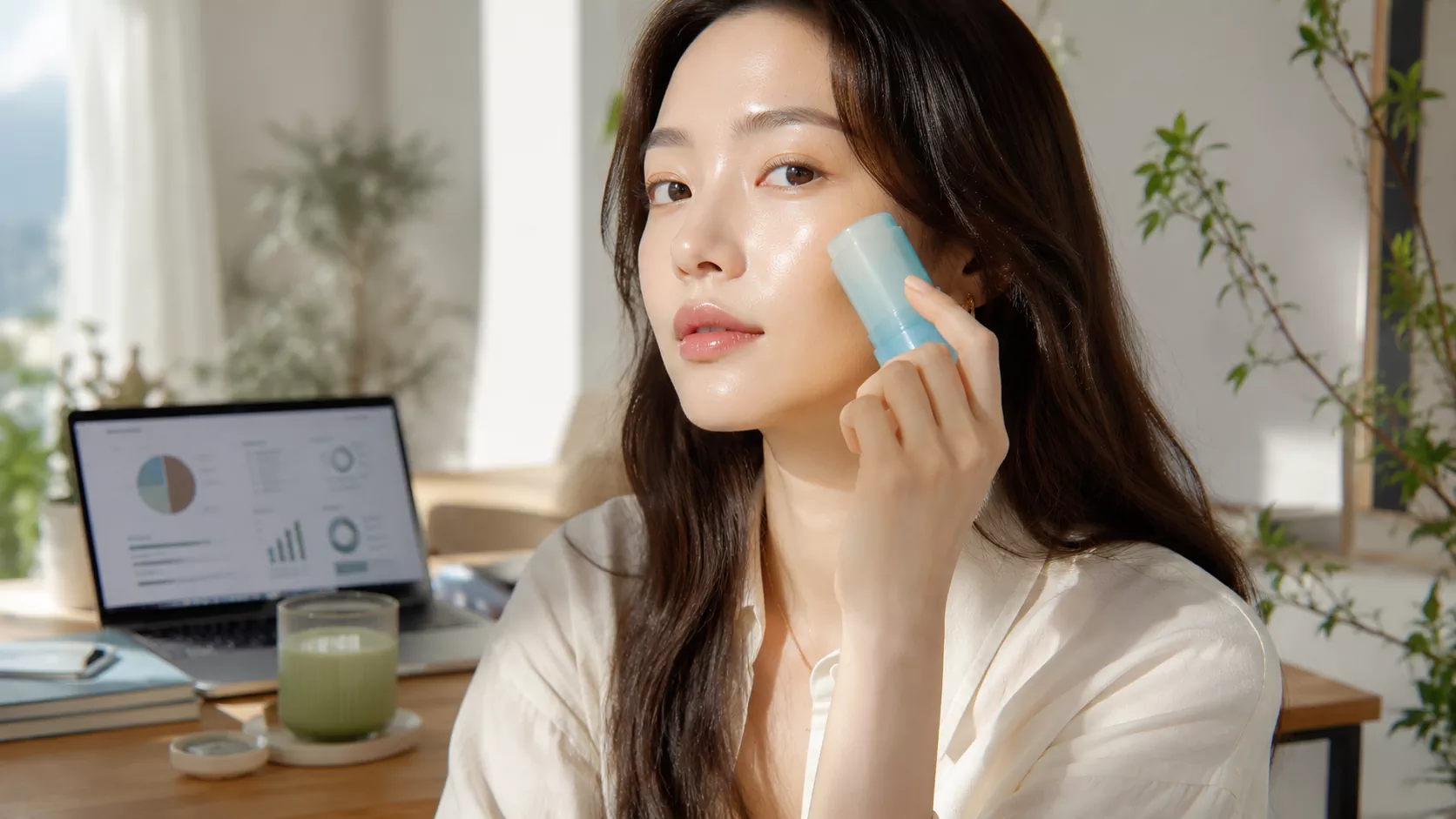
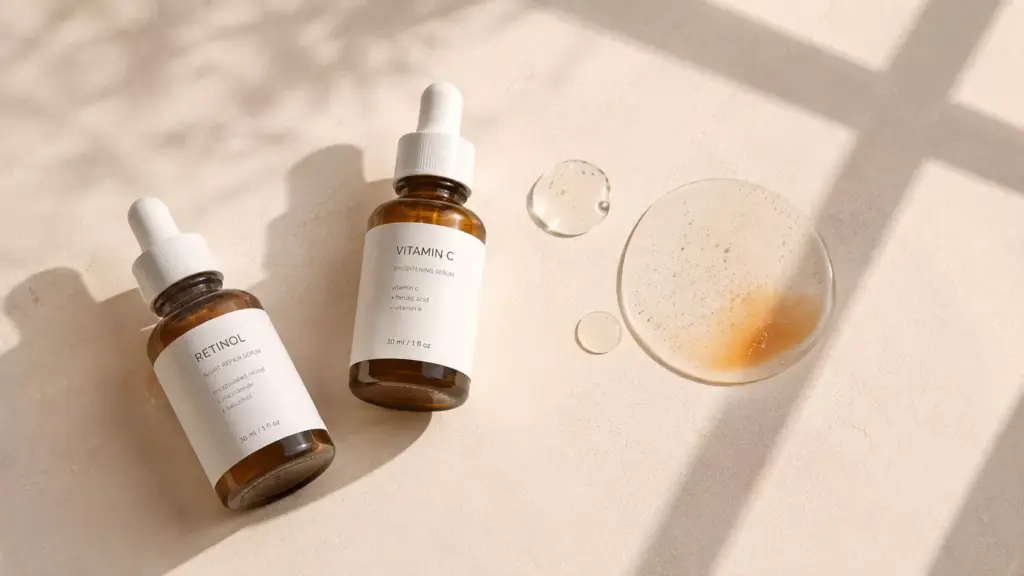
You just dropped sixty dollars on a stabilized Vitamin C serum, and your nighttime routine revolves around a high-potency Retinol that promises to erase texture. You are doing everything right—or so you think. But if you are applying these heavy-hitting actives without a highly strategic, next-generation daytime shield, you aren’t just wasting your time; you are actively accelerating the very skin issues you are trying to cure.
Here is the harsh reality of modern skincare: your active ingredients are only as good as the protection you give them during the day. Without a photostable barrier, your premium routine is leaking money, evaporating into thin air, and leaving your skin vulnerable to severe cellular damage.
1. The Invisible Skincare Leak: Why Actives Fail Indoors
The Problem
A few years ago, I hit a frustrating wall with my own skincare journey. As someone dealing with a classic dehydrated oily skin barrier—constantly battling a greasy T-zone while experiencing tight, flaky patches underneath—I thought a work-from-home setup would be a sanctuary for my skin. I was diligently applying a top-tier ascorbic acid brightener every morning, yet my stubborn post-inflammatory hyperpigmentation and acne scars refused to budge. In fact, my skin looked more sensitized, red, and dull than it did when I used a basic drugstore moisturizer. I was trapped in a costly cycle: buying stronger chemical exfoliants, experiencing micro-peeling, and seeing zero long-term results.
The Explanation
The culprit was not the formulation of my active serums; it was the invisible UV exposure inside my home office. Many indoor workers believe that if they are not sunbathing by a pool, their skin is perfectly safe. This is a critical, mathematically proven misconception. Standard residential and commercial window glass blocks almost one hundred percent of UVB rays (the short wavelengths responsible for sunburns), but it allows up to fifty percent to seventy-five percent of UVA rays (the long wavelengths responsible for deep cellular aging) to penetrate directly into your living space.
When UVA rays hit highly unstable active ingredients like L-Ascorbic Acid (Vitamin C) or Retinol (Vitamin A) on your skin, a destructive chemical reaction occurs. Instead of neutralizing free radicals, these light-sensitive molecules undergo rapid photo-oxidation. They degrade in seconds, rendering your expensive morning serum completely useless. Even worse, the breakdown of these ingredients on the skin surface can trigger an oxidative cascade. This process releases free radicals, damages cell membranes, induces micro-inflammation, and accelerates the degradation of dermal collagen fibers—effectively reversing every single benefit of your nighttime skincare investment.
2. Advanced Photostability: The Science Behind the K-Beauty Sunscreen Guide
The Solution
To stop this skincare leak, you need more than just a high SPF number on a bottle; you need an advanced, photostable matrix that locks your actives into place. This is where modern Korean sunscreen formulations completely disrupt the traditional Western skincare market.
Active Ingredient: Retinol (Vitamin A)UV Vulnerability Matrix: Extreme (Triggers rapid photo-degradation and chemical skin irritation)K-Beauty Synergy Benefit: Prevents DNA damage, micro-peeling, and UV-induced inflammation
Active Ingredient: Vitamin C (L-Ascorbic Acid)UV Vulnerability Matrix: High (Oxidizes into quinones, turning orange on the skin surface)K-Beauty Synergy Benefit: Synergizes at a cellular level to double free-radical defense mechanisms
Active Ingredient: Peptides and CeramidesUV Vulnerability Matrix: Moderate (Accelerated glycation and degradation via indoor environmental stressors)K-Beauty Synergy Benefit: Preserves structural skin density and locks in moisture barriers
Unlike older Western sunscreens that often rely on legacy chemical filters—which degrade quickly under light, lose up to half of their efficacy within two hours, and require heavy, chalky bases to stabilize—K-beauty utilizes advanced, European-grade synthetic filters that offer unparalleled photostability.
The Power of Next-Gen Molecular Filters
K-beauty formulations excel by leveraging cutting-edge chemical filters that act like an invisible, highly flexible polymer mesh over the skin. Two compounds lead this technological revolution:
- Bis-Ethylhexyloxyphenol Methoxyphenyl Triazine (commonly known as Tinosorb S): A broad-spectrum filter that covers both UVA and UVB ranges. It is exceptionally photostable and actually helps stabilize other less stable UV filters in the formulation, preventing them from breaking down under sunlight.
- Diethylamino Hydroxybenzoyl Hexyl Benzoate (commonly known as Uvinul A Plus): A dedicated UVA filter with high absorption efficiency. It targets the exact wavelengths that penetrate window glass, ensuring that indoor UV exposure never reaches your skin barrier.
These filters do not degrade when hit by photons. Instead, they absorb the harmful UV energy and release it safely as harmless heat without altering the molecular structure of the filter itself.
According to peer-reviewed clinical studies indexed in the National Center for Biotechnology Information database, the synergy between topical antioxidants and broad-spectrum, photostable chemical filters creates a cumulative double defense system. The photostable sunscreen matrix neutralizes the vast majority of incoming photons on the surface. Meanwhile, the underlying antioxidant serum mops up any stray free radicals that manage to slip through. This collaborative mechanism prevents the degradation of your skin barrier, halts melanin overproduction, and maximizes the cellular repair window of your targeted skincare products.
3. Decoding Formulations: Overcoming the Western SPF Dilemma
For many 2030 skincare consumers, the reluctance to wear daily sunscreen stems from bad experiences with heavy, mineral-based pastes. Traditional zinc oxide or titanium dioxide formulas frequently leave a ghostly white cast on deeper skin tones and cause severe pilling when layered under liquid foundations or primers.
Korean cosmetic science solves this through Formulation Elegance. By suspending advanced, oil-soluble next-gen chemical filters inside ultra-lightweight, water-essence bases, K-beauty sunscreens behave more like hydrating serums than traditional sunblocks. They melt into the skin instantly, leaving zero chalky residue and providing a weightless, breathable finish. This is particularly crucial for individuals managing dehydrated oily skin, as these formulas deliver essential hydration without triggering excess sebum production or clogging pores. If you want to understand how to properly prep your skin barrier before layering these advanced filters, check out my comprehensive breakdown in the K-Beauty Retinol Guide to ensure your base layers are fully optimized.
4. Mastering the Seamless Re-application Strategy
The ultimate test of an effective skincare routine is consistency, especially when juggling a busy lifestyle, heavy screen time, and daily makeup application.
Defending Against High-Energy Visible (HEV) Light
If you are staring at a laptop, tablet, or smartphone for eight hours a day, your skin is under constant bombardment from blue light (HEV). While HEV light does not cause immediate sunburn, clinical data indicates that it penetrates deeper into the dermis than UVA rays. This deep penetration stimulates melanocytes, leading to stubborn, long-lasting hyperpigmentation—particularly in darker, melanin-rich skin tones. Modern K-beauty sunscreens address this digital aging by infusing their formulas with potent botanical antioxidants, such as Centella Asiatica (Cica), Niacinamide, and Green Tea extract, which actively neutralize HEV-induced oxidative stress while you work.
The No-Pilling Re-application Method
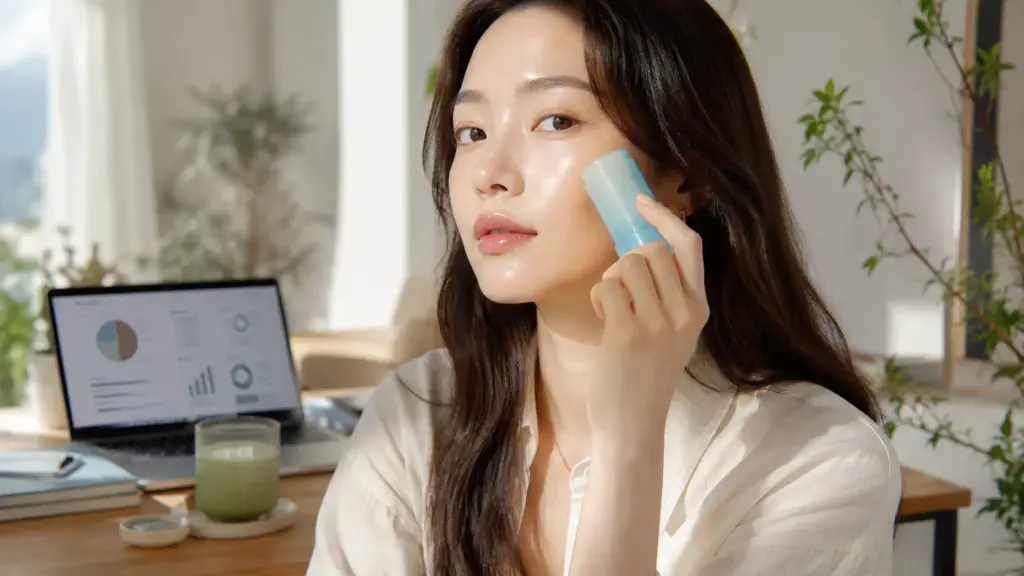
We all know the dermatological rule: re-apply your UV protection every two hours of cumulative exposure. However, smoothing a thick cream over a full face of liquid foundation and setting powder is a recipe for a messy, pilling disaster.
The ultimate solution to this dilemma is the K-beauty sun stick. Formulated with lightweight, sebum-regulating silica powders and soothing botanicals, these solid, twist-up sticks glide effortlessly over makeup without disrupting your underlying cosmetic base or leaving a greasy film. By lightly swiping a photostable sun stick across your face, you ensure your active skincare investment remains insulated under a fresh layer of protective filters from your morning routine until sunset.
The One-Year Shelf-Life Rule: Chemical UV filters are highly complex organic molecules. The exact moment the seal of your sunscreen tube is broken and exposed to atmospheric oxygen, those filters begin a slow, inevitable process of degradation. To guarantee the precise SPF and PA protection stated on the packaging, you should replace your product exactly twelve months after opening, regardless of the expiration date stamped on the crimp of the tube. Using oxidized sunscreen leaves your skin partially unprotected, letting UV rays quietly degrade your active ingredients underneath.
5. Deep-Dive Q&A: Troubleshooting Your Sunscreen Integration
Q. Will next-generation chemical filters break out acne-prone or dehydrated oily skin types?
A. No. Traditional Western chemical sunscreens often used Avobenzone or Oxybenzone, which are notorious for causing chemical contact dermatitis, stinging eyes, and triggering inflammatory acne breakouts. K-beauty formulations utilize modern filters like Tinosorb S, which possess significantly larger molecular weights. Because these molecules are too large to penetrate deeply into the stratum corneum, they sit safely on top of the skin barrier, drastically reducing the risk of pore-clogging or cellular irritation.
Q. Can I skip my morning moisturizer if my K-beauty sunscreen contains hydrating ingredients?
A. Absolutely. In fact, for oily and combination skin types, skipping a separate morning moisturizer is highly recommended. Because K-beauty sunscreens are formulated within an emulsion base rich in hyaluronic acid, glycerin, and ceramides, they provide ample hydration. Eliminating an extra layer reduces the risk of cosmetic pilling and prevents your makeup from sliding off due to excess oil production throughout the day.
6. Conclusion: Protect the Assets You Build
Investing in high-end, clinically backed skincare without integrating a dedicated, next-generation sunscreen is equivalent to purchasing a luxury sports car and never changing the oil. We focus so much on adding flashy new ingredients to our vanity setups, but we fail to protect the biological progress those ingredients make. By reframing your daytime SPF as a non-negotiable medical insurance policy for your complexion, you finally give your active ingredients the stable, protected environment they require to truly transform your skin.
Disclaimer
I am a dedicated skincare researcher and enthusiast sharing my personal journey and analysis of cosmetic science literature. This content is intended strictly for informational and educational purposes and does not constitute professional medical advice, diagnosis, or treatment. Always consult with a board-certified dermatologist or qualified healthcare provider regarding any specific skin conditions, allergies, or therapeutic routines.