
A few years ago, I fell into the classic skincare trap. Enticed by the promise of pristine, ageless skin, I jumped straight into a high-strength 1% pure retinol serum without a solid plan. Within ten days, my face felt like a tight, peeling mess. Instead of a radiant glow, I was dealing with severe redness, flaking, and a deeply compromised moisture barrier. It was a major red flag that my aggressive approach was doing more harm than good.
If you have avoided Vitamin A because you are terrified of the dreaded “retinol purge”—the breakouts, irritation, and flaking that often accompany its initial use—you are not alone. However, achieving smooth, fine-line-free skin does not require putting your skin through a traumatic transition period. By shifting your approach to a mindful, K-beauty-inspired philosophy, you can reap all the collagen-boosting benefits without the stinging drama.
1. The Science Behind the K-Beauty Retinol Guide: Low and Slow
To successfully integrate Vitamin A into your routine, understanding the biological mechanism of retinoids is essential. When applied topically, retinol accelerates cellular turnover, pushing underlying congestion to the surface while stimulating collagen synthesis in the dermis. This rapid renewal is what causes “retinization”—the adjustment period where the skin barrier can become temporarily vulnerable.
Where western skincare often pushes for maximum percentages that risk severe irritation, Korean product formulation prioritizes skin barrier integrity. The core of the K-beauty philosophy is “low and slow”: utilizing stabilized, slow-release derivatives or pairing lower-dose retinoids with deeply soothing, anti-inflammatory botanical complexes. This method gently coaxes the skin into building tolerance rather than forcing it into a state of chronic inflammation.
Before selecting a product, it is crucial to understand how different forms of Vitamin A function and match them to your specific skin concerns:
- Pure Retinol: High biological potency (requires two conversion steps within the skin). High irritation risk. Ideal for experienced users seeking rapid cellular turnover.
- Retinyl Palmitate: Mild potency (requires three conversion steps). Very low irritation risk. Perfect for retinol beginners and highly reactive, sensitive skin types.
- Bakuchiol: Moderate potency. A plant-based functional analog to retinol that targets similar cellular pathways with zero irritation risk, making it ideal for daytime use.
Independent clinical trials published by the National Library of Medicine demonstrate that continuous micro-dosing of low-concentration retinoids is highly effective. Over an extended period, it yields comparable improvements in skin texture and fine lines to high-strength formulas, but with a fraction of the barrier disruption.
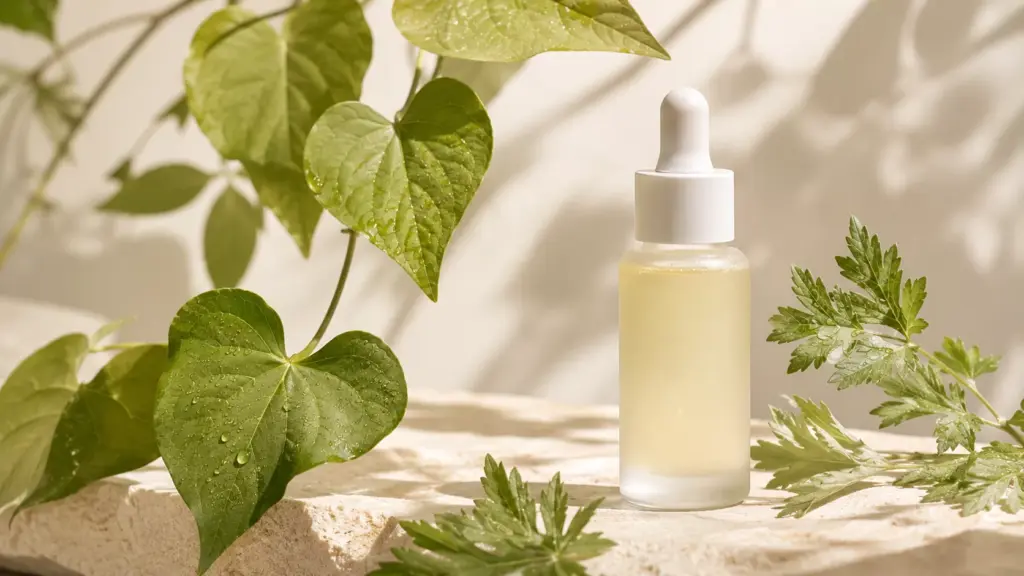
To maximize these benefits, K-beauty formulations often synergize Vitamin A with traditional hanbang ingredients like Mugwort (Artemisia) and Heartleaf (Houttuynia Cordata). These botanicals actively defuse vascular redness and calm the skin matrix before irritation can escalate. If you have already severely damaged your stratum corneum from past product misuse, it is highly recommended to pause all active retinoids and focus entirely on healing your skin barrier first.
2. Deciphering the Purge vs. Irritation: The Real Problem
The primary reason many intelligent consumers abandon their anti-aging journey prematurely is a misunderstanding of how their skin is reacting. There is a distinct biological difference between true “purging” and standard barrier irritation.
- The Purge: This occurs because retinol accelerates cell turnover, causing pre-existing, clogged pores deep beneath the surface to mature into blemishes all at once. True purging typically occurs exclusively in areas where you naturally break out and subsides within four to six weeks.
- Chemical Irritation: If you are experiencing diffuse redness, localized burning when applying basic moisturizers, or severe flaking in areas that are usually clear (like the cheeks or around the mouth), this is a sign of acute contact dermatitis or a severely impaired stratum corneum due to overuse.
To prevent both issues, the solution lies in a controlled, progressive introduction schedule known as the 1-2-3 Rule. For the first two weeks, apply your retinoid just once a week. If your skin shows no signs of localized redness or tightness, increase application to twice a week for the subsequent two weeks. By week five, your skin should naturally tolerate an every-other-night application. This deliberate pacing allows your epidermis to adapt to the increased cellular turnover without triggering a panic response.
3. The Solution: Mastering the K-Beauty Sandwich Method
To completely eliminate the risk of flaking and redness, you need to change how you apply the product. The most effective clinical technique for beginners is the Moisture Sandwich Method, which minimizes the penetration velocity of the active ingredient without reducing its long-term efficacy.
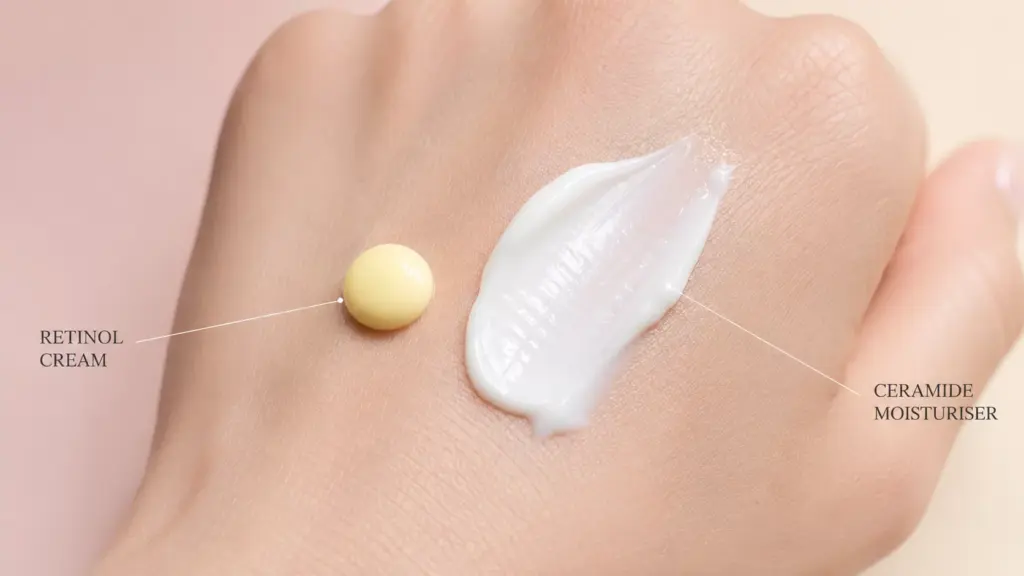
- The Initial Buffer: On clean, thoroughly dry skin, apply a thin layer of a lightweight, ceramide- or hyaluronic acid-infused moisturizer. Never apply retinol to damp skin; water increases the absorption rate of topically applied actives, which drastically escalates the risk of deep irritation. This initial layer acts as a safety buffer.
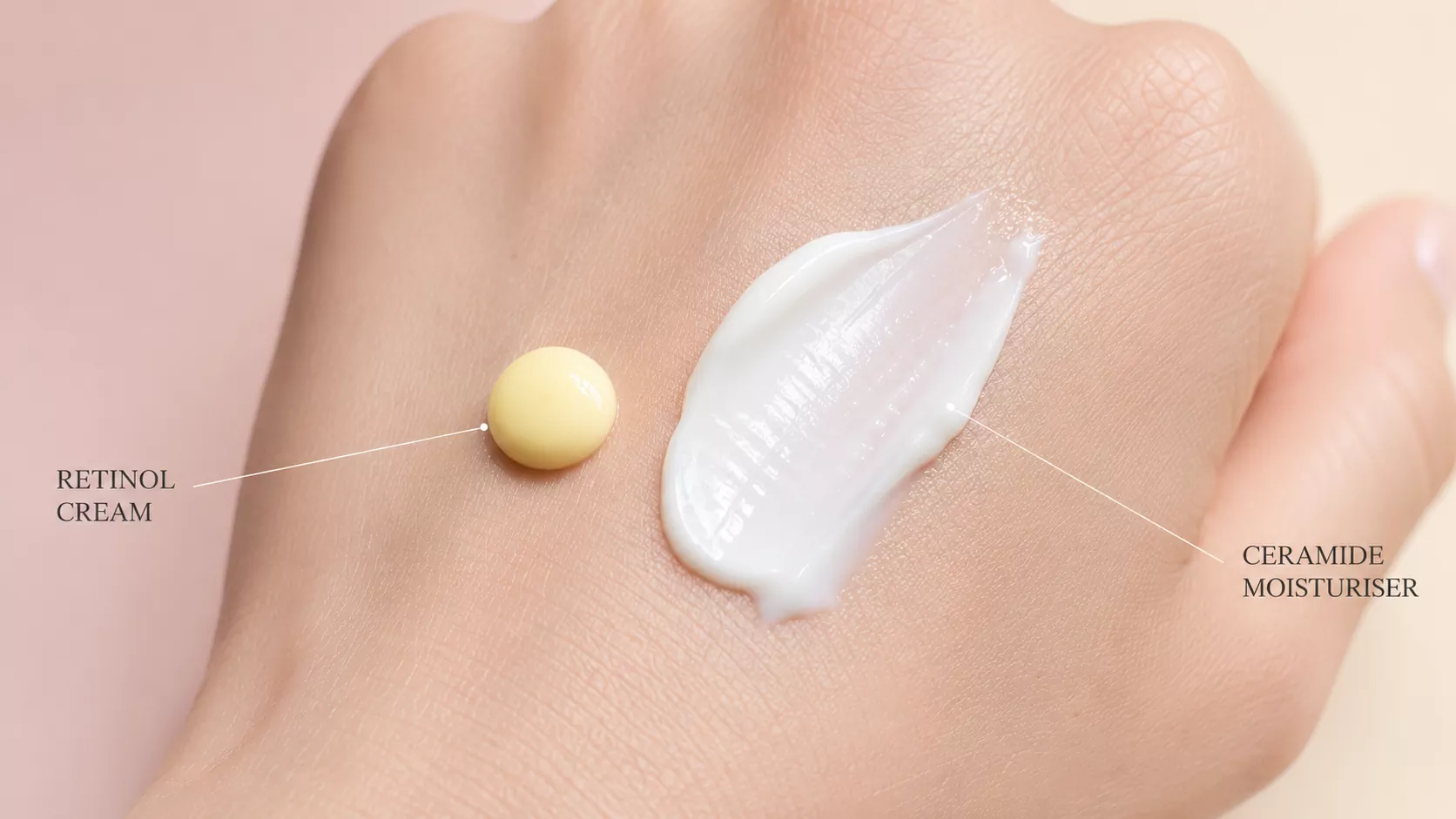
- The Controlled Dosage: Dispense a strict, pea-sized amount of your chosen retinoid for the entire face. If a single pea-sized amount still feels daunting, try the “Dotting Method”: mix the retinoid with your step-one hydrator on the back of your hand before micro-dotting it across your facial zones. Smooth it gently outward, avoiding the immediate orbital eye area and the corners of the mouth, where the skin is significantly thinner and prone to cracking.
- The Occlusive Seal: Allow the active layer to absorb for two to three minutes, then seal the skin with a slightly richer, lipid-replenishing barrier cream containing panthenol or squalane to lock in hydration while you sleep.
4. Crucial Compatibility and Product Stability Rules
A major mistake many skincare enthusiasts make is mixing too many potent actives at once. To protect your skin barrier, you must follow the strict compatibility rule: Never layer your retinoid with high-percentage Vitamin C (L-Ascorbic Acid) or exfoliating acids (AHA/BHA) in the same nighttime routine. This chemical overlap issues a sensory overload to your stratum corneum, leading to immediate barrier failure. If you want to incorporate multiple actives into your lifestyle, save your antioxidants for your morning routine and keep your retinoids exclusively at night.
Retinoids are inherently unstable molecules. Exposure to UV light and atmospheric oxygen causes rapid photodegradation, breaking down the chemical bonds of Vitamin A and rendering the formula completely ineffective. To preserve the potency of your skincare investment, always look for products housed in opaque, airless pumps rather than open-mouth jars. Additionally, store your bottles in a cool, dark environment away from direct sunlight and bathroom humidity.
Because retinol increases cellular turnover and thins the outermost layer of dead skin cells, your skin becomes significantly more vulnerable to UV-induced damage and hyperpigmentation. Clinical research confirms that pairing overnight retinoid therapy with a broad-spectrum sunscreen the following morning is absolutely mandatory. Skipping sun protection not only negates the anti-aging benefits of your routine but can actively accelerate photoaging.
5. Conclusion: Consistency Over Intensity
Rethinking your approach to Vitamin A is the ultimate turning point in a modern skincare routine. Anti-aging is fundamentally a marathon, not a sprint. While high-strength western treatments promise immediate changes at a high cost to your skin barrier, the K-beauty approach focuses on sustainable, long-term cellular health. Within twelve weeks of consistent, low-irritation use, the skin barrier adapts, revealing a visibly smoother, refined, and glowing complexion without the trauma of a heavy purge.
Links for Verification and Further Reading
- External Source: Read the peer-reviewed clinical research on Vitamin A delivery systems and cellular skin adaptation at the National Library of Medicine.
- Internal Guide: If you have already over-exfoliated or damaged your skin barrier by rushing into high percentages, please pause your actives and refer to our comprehensive K-Beauty Barrier Repair Guide to restore balance first.
Medical Disclaimer: The information provided in this K-Beauty Retinol Guide is for educational and informational purposes only and should not be construed as professional medical advice, diagnosis, or treatment. Topical retinoids are potent active ingredients that alter cellular behavior, and individual skin responses can vary significantly based on genetics, underlying dermatological conditions, and environmental factors. Always perform a localized patch test before introducing new formulations into your regimen. If you are pregnant, nursing, or suffering from chronic skin disorders such as severe rosacea, eczema, or cystic acne, consult a board-certified dermatologist before initiating Vitamin A therapy.