
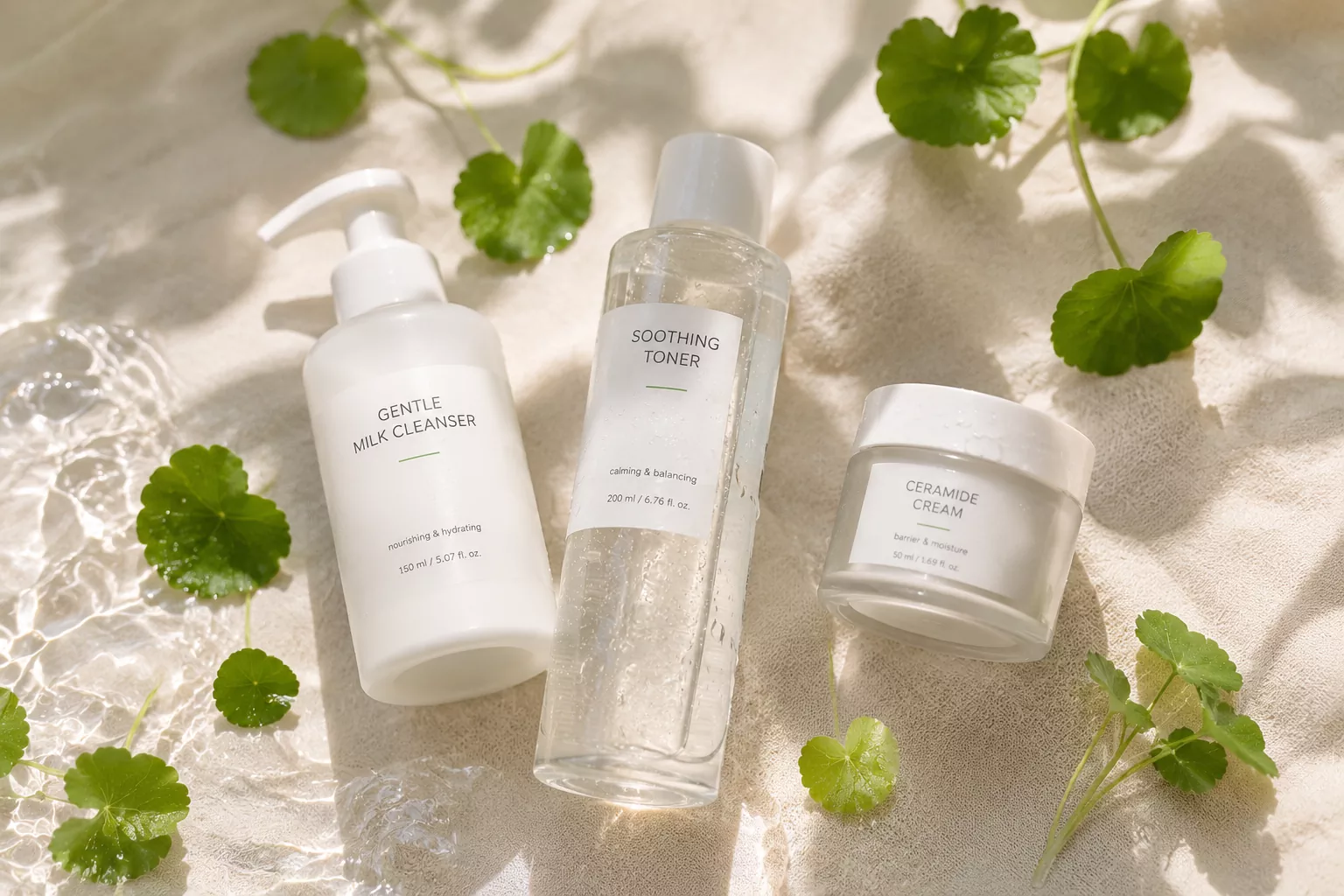
Imagine waking up, looking in the mirror, and realizing your ambitious quest for that viral “glass skin” has officially backfired. We’ve all been there—getting a little too eager with a 20% pure Vitamin C serum, layering a chemical exfoliant right after a retinol, or applying potent actives on damp skin. Instead of a translucent, lit-from-within glow, your face is suddenly reacting with a red, tight, and stinging nightmare.
When your skin feels like it is literally on fire and even a basic splash of lukewarm water feels like a personal attack, your complexion isn’t just having a temporary moment—your skin barrier is officially compromised. In this ultimate K-Beauty barrier repair guide, we will break down the exact science of why this happens, how to recognize the distress signals, and how Korean skincare philosophy can nurse your skin back to its bouncy, healthy, and resilient self.
1. The Science Behind the K-Beauty Barrier Repair Guide
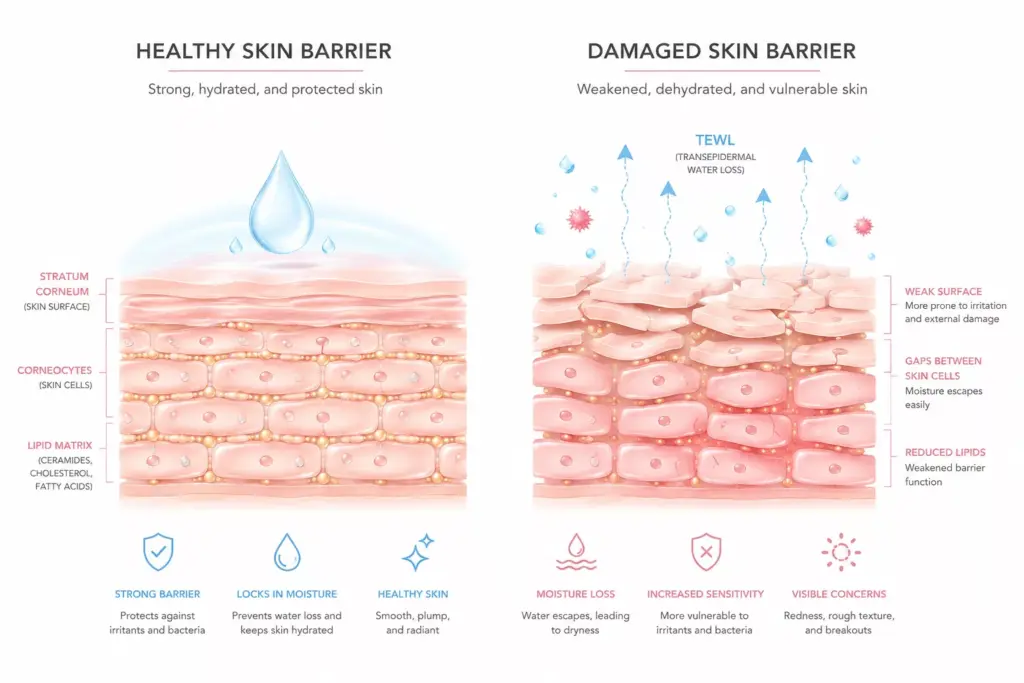
Before we talk about the cure, we need to understand the crisis. Your skin barrier, known scientifically as the stratum corneum, is your body’s outermost defense system. In the beauty world, we often describe it using the “brick and mortar” analogy. Your skin cells, or corneocytes, act as the bricks, while a delicate matrix of essential lipids—consisting of ceramides, cholesterol, and fatty acids—acts as the mortar sealing everything together. This lipid matrix has two primary jobs: keeping environmental irritants out and locking vital moisture in.
Recognizing the Red Flags
How do you know if you have crossed the line from temporary irritation into true barrier damage? If your skin is constantly freaking out, look for these major red flags:
- The Dehydration Paradox: Your skin is pumping out excess sebum on the surface, yet feels painfully tight, dry, and stripped underneath.
- Chronic Redness and Sandpaper Texture: Your face stays flushed for hours after your morning wash, and the surface feels rough and flaky.
- Sudden Product Intolerance: The gentle products that used to be your holy grail items now cause an immediate burning or stinging sensation upon application.
When this lipid matrix is stripped—often due to aggressive over-exfoliation or harsh pH disruptions—it triggers a phenomenon called Trans-Epidermal Water Loss (TEWL). Without the lipid mortar, your skin’s hydration literally evaporates into thin air, leaving your cells exposed, vulnerable, and chronically inflamed.
According to clinical dermatological guides verified by the Cosmetics Journal Editorial Board, a damaged stratum corneum exhibits a severe drop in natural ceramide levels, making targeted topical lipid replacement the absolute gold standard for recovery. Following a structured K-Beauty barrier repair guide mindset during this phase ensures you focus on deep, gentle reinforcement to heal the skin from within, rather than chasing aggressive quick fixes.
2. The Healing Trio: Ceramides, Cica, and Panthenol
To rebuild the mortar of your skin wall, you need ingredients that genuinely mimic your skin’s natural biology. In Korean dermatology, three specific powerhouses are widely utilized to rescue a distressed, angry complexion.
Ceramides for Rebuilding
First, Ceramides rebuild the essential intercellular lipid matrix. They are best for restoring long-term skin resilience and overall density by physically patching up the gaps in your lipid wall.
Centella Asiatica for Soothing
Second, Centella Asiatica, also known as Cica, actively inhibits inflammatory pathways and calms redness. This legendary herb is best for providing immediate, cooling relief to flushed, angry skin that feels hot to the touch.
Panthenol for Repairing
Third, Panthenol, or Provitamin B5, acts as a powerful humectant and accelerates cellular repair. It works best for strengthening the skin surface, sealing micro-tears, and preventing future irritation.
By integrating these specific ingredients, you are doing more than just slapping on a basic moisturizer; you are medically reinforcing your skin’s first line of defense.
3. The 3-Step Routine to Reset Your Complexion
When your skin barrier is broken, less is infinitely more. It is time to implement a strict “skin fast”—stripping your routine down to the absolute bare essentials for at least 7 to 14 days. This allows your natural cellular turnover cycle to reset without chemical interference or further irritation.
Step 1: The Non-Stripping, Gentle Cleanse
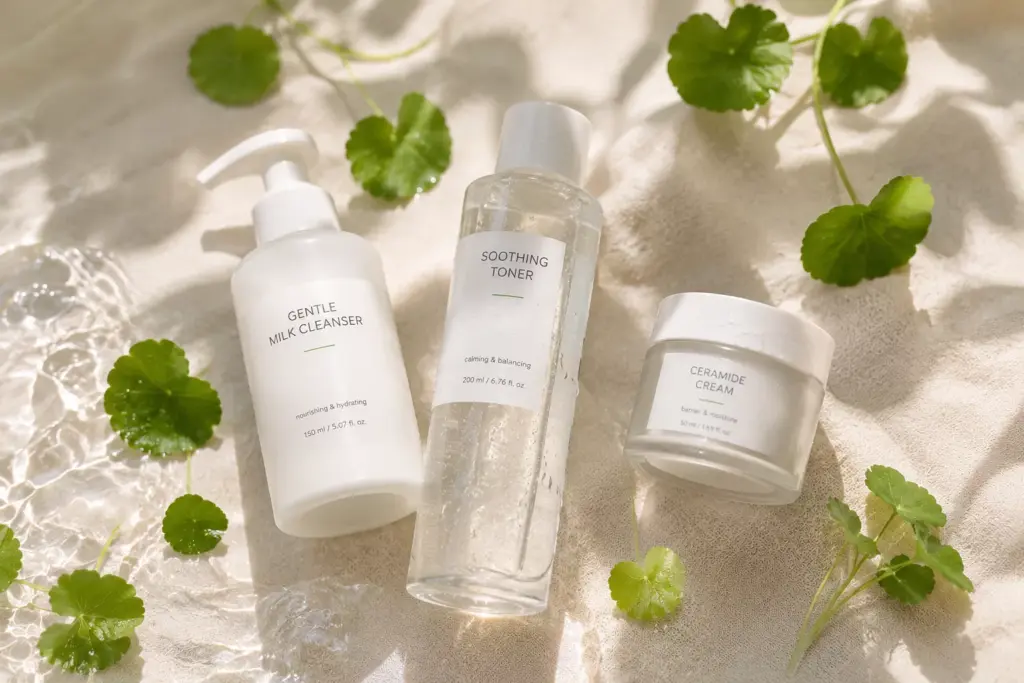
Put away the foaming cleansers and salicylic acid washes. When your barrier is crying for help, a “squeaky clean” feeling is your worst enemy. Opt for a low-pH, non-foaming milk or hydrating gel cleanser that respects your skin’s natural oils while gently lifting away impurities.
Step 2: The Calming Hydration Layer
Skip the vitamin C, retinoids, and exfoliating toners entirely. Instead, gently pat in a generous layer of an alcohol-free, watery toner infused with Centella Asiatica or Mugwort. This step acts like a soothing, anti-inflammatory blanket for your skin, instantly lowering its surface temperature.
Step 3: The Physiological Lipid Seal
Finish your minimalist routine with a rich, occlusive barrier cream packed with ceramides and fatty acids to lock everything in. This creates a protective shield that physically blocks Trans-Epidermal Water Loss, giving your skin the isolated environment it needs to knit itself back together. If your skin is still feeling intensely dry and parched even after applying your moisturizer, you can safely transition to a deeply hydrating Skin Flooding Routine before bed using only your safest, non-active humectants.
During this recovery phase, make sure to stay completely away from denatured alcohol, synthetic fragrances, and even “natural” essential oils like tea tree or lavender. On a healthy skin barrier, these ingredients might be perfectly fine, but on a compromised one, they act as immediate triggers for contact dermatitis.
4. Conclusion: True Glow Begins with Protection
Mastering the delicate balance between active ingredients and barrier maintenance is the ultimate turning point in any skincare journey. Your skin is a living, intuitive organ, not something to be scrubbed, peeled, or beaten into submission. When you respect its foundational barrier, your skin naturally rewards you with that plump, resilient, effortless radiance that makes your makeup look completely seamless.
Are you currently nursing your skin back to health after an active ingredient mishap, or are you currently in your strongest, most resilient skin era yet? Let’s swap our favorite barrier-saving hacks and recovery holy grails in the comments below.
Disclaimer: I am a dedicated skincare enthusiast sharing insights based on personal experience and cosmetic science principles. This content is for educational purposes and does not replace professional medical advice. If you experience blistering, weeping, or severe persistent swelling, please consult a board-certified dermatologist immediately.