
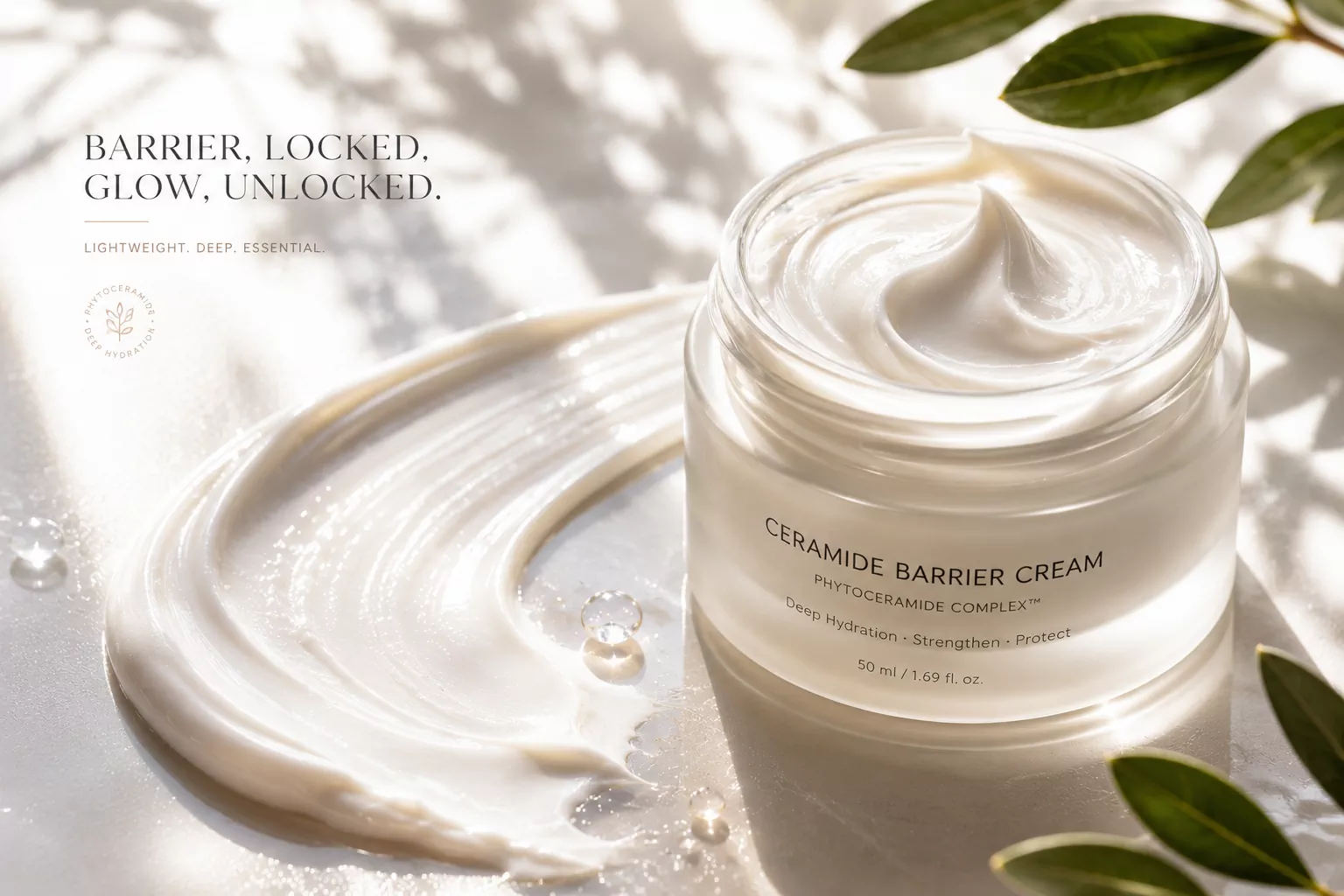
If your skin suddenly feels tight, raw, or inexplicably flaky during seasonal transitions, you are not alone. For the modern 2030 woman juggling unpredictable weather, urban pollution, and high-stress schedules, a compromised skin barrier is a frequent, frustrating reality. Many mistake this sudden sensitivity for standard dryness and mistakenly pile on heavy, occlusive creams, only to end up with micro-congestion and breakouts.
In my years of analyzing skincare formulations and troubleshooting stubborn skin barrier issues, I have learned that treating surface dryness without addressing the structural integrity of the skin is like trying to fill a leaking bucket. The core issue isn’t a lack of hydration; it’s a failure in your skin’s built-in sealing mechanism.
1. The Anatomy of a Leaky Barrier: Why Your Hydration Evaporates
When your skin barrier is compromised, it undergoes what dermatologists call Transepidermal Water Loss (TEWL). You experience this as a “leaky” barrier—where no matter how many hydrating serums you apply, the moisture evaporates within hours, leaving your complexion dull and vulnerable to environmental irritants.
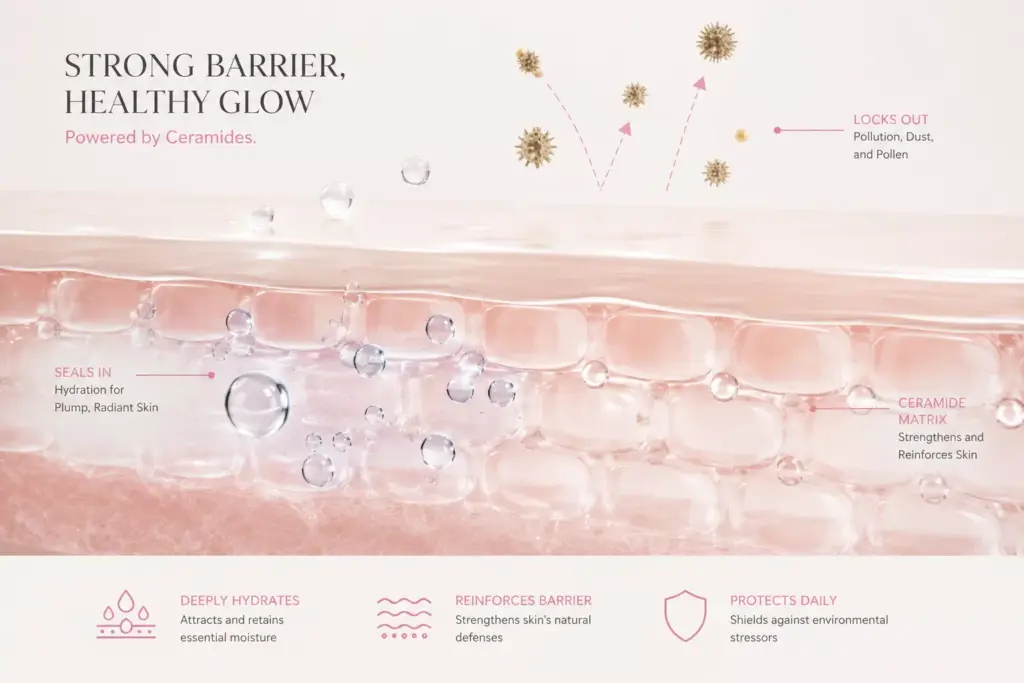
The Cellular Brick and Mortar
To understand why this happens, we need to look at the stratum corneum (the outermost layer of your skin). Think of your skin cells as microscopic bricks. Without a solid mortar to bind them together, the entire structure crumbles. This is where the core ceramides benefits for skin come into play. Ceramides are natural lipids (fats) that constitute over 50% of your skin’s composition. They act as the essential intercellular mortar, creating a waterproof, resilient seal that locks in nutrients while keeping microscopic allergens, dust, and bacteria out.
According to clinical research published by the National Institutes of Health, topical application of bio-identical ceramides significantly accelerates the recovery of the skin’s water-holding capacity and restores the lamellar structure. When your natural lipid levels drop due to stress, harsh cleansers, or seasonal shifts, your cellular infrastructure develops microscopic cracks, leading to chronic inflammation and reactive sensitivity.
2. Structural Reinforcement: Synergizing Ceramides with Your K-Beauty Routine
The solution to a vulnerable complexion is strategic, high-performance ingredient synergy. In K-Beauty philosophy, we rarely rely on a single ingredient to do all the heavy lifting. Instead, we use a layered approach to rebuild the skin’s infrastructure from the inside out, using ceramides as the ultimate protective topcoat.
If you are already utilizing soothing agents like Centella Asiatica or deep humectants like Hyaluronic Acid, adding ceramides is the non-negotiable final step that ensures those active ingredients do not evaporate before they can work. For a deeper look into preparing your skin before sealing it, check out my comprehensive Centella Asiatica Recovery Guide to optimize your soothing phase.
The Barrier Synergy Matrix
- Pairing: Ceramides + Niacinamide
- Mechanism: Stimulates natural lipid production and calibrates sebum texture.
- Clinical Result: A brightened, refined complexion with an enhanced self-repairing barrier.
- Pairing: Ceramides + Propolis Extract
- Mechanism: Delivers antioxidant defenses while reinforcing the intercellular matrix.
- Clinical Result: A deeply nourished, glossy “Glass Skin” finish with reduced redness.
- Pairing: Ceramides + Fatty Acids & Cholesterol
- Mechanism: Mimics the natural 3:1:1 golden ratio of the skin’s lipid profile.
- Clinical Result: Maximum emollient absorption and restored elasticity for bouncy skin.
By incorporating a dedicated ceramide layer into your K-Beauty routine, you effectively seal the “repair parts” delivered by your serums, maximizing the efficiency of your entire skincare investment.
3. Beyond the Grease: High-Tech Absorption for 2030 Complexions
A common misconception among the 2030 demographic—especially those with combination or dehydrated oily skin—is that ceramide creams are inherently heavy, pore-clogging, and prone to triggering breakouts. Particularly for those with dehydrated oily skin—a matrix I frequently analyze—traditional barrier creams often trigger localized breakouts around the T-zone while leaving the U-zone parched.
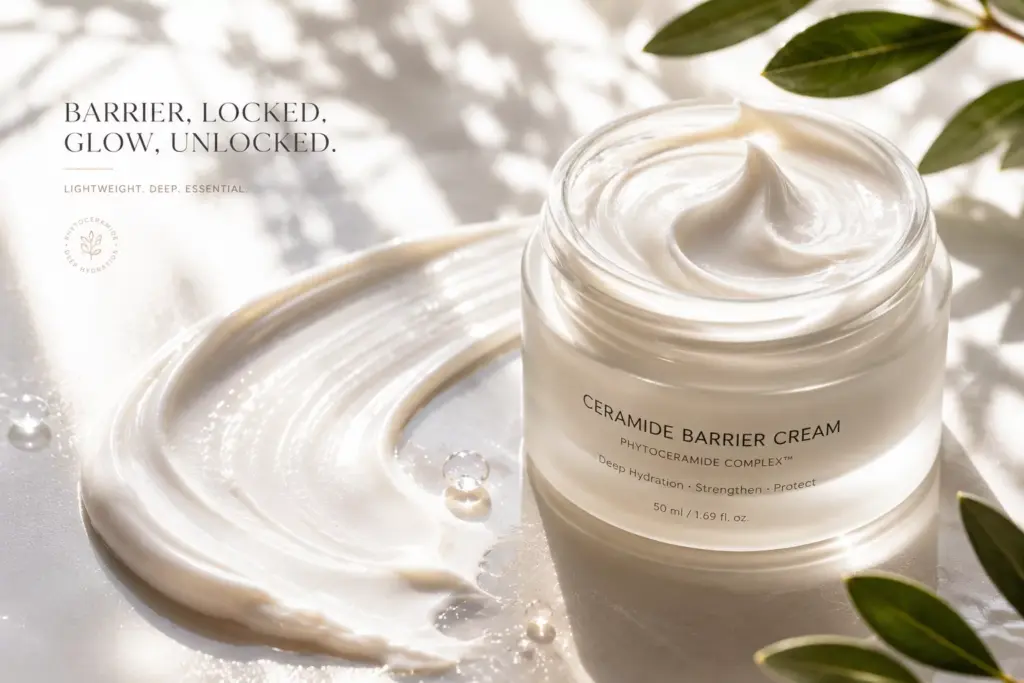
However, modern K-Beauty formulation technology has completely revolutionized this experience. Look for Ceramide NP (also known as Ceramide 3) on the ingredient list. Modern K-Beauty labs encapsulate Ceramide NP into nano-liposomes, which mimic the skin’s natural lipid structure. This high-tech absorption allows the formula to sink effortlessly into the skin matrix rather than sitting on top of it. You receive a heavy-duty structural seal without the suffocating feel, leaving a clean, velvety finish that reinforces your barrier while allowing your skin to breathe.
4. Conscious Innovation: The Rise of Phytoceramides
As conscious consumers, the modern 2030 generation demands that high performance aligns with ethical sourcing. This shift in priority has fueled the rise of Phytoceramides—plant-derived lipids typically sourced from wheat, rice, or soybeans.
Phytoceramides offer the exact same structural integrity and bio-compatibility as traditional animal-derived or synthetic lipids, but they bring additional plant-based antioxidants to the table. By opting for phytoceramide-infused K-Beauty products, you are choosing sustainable, clean-ical infrastructure that respects the environment while delivering medical-grade barrier resilience.
5. The Seasonal Stress Test: Achieving April-Proof Skin
The transitional weather of spring is the ultimate stress test for your skin infrastructure. Fluctuating humidity levels, dry winds, and airborne pollen strip away your skin’s natural oils, leaving your cellular barrier completely exposed and prone to rough texture.
Applying a precise layer of ceramides acts as an invisible shield against these environmental micro-aggressions. It stops moisture leakage before it starts, keeping your skin calm, balanced, and perfectly hydrated throughout the day. This proactive defense is the real secret behind a sustainable, long-lasting glow that stays flawless even under unpredictable seasonal pressure.
6. Optimization and Safety: The Tolerance Protocol
Even when dealing with skin-identical ingredients, proper application is key to achieving optimal results. Because ceramides work best in an environment that mimics the skin’s natural physiology, ensuring your surrounding routine is pH-balanced (ideally around 5.5) is critical for maintaining the stability of the lipid barrier.
When integrating a new, high-concentration barrier cream into your regimen, I always recommend a simple, disciplined patch test to ensure complete compatibility with your unique skin biome. To rule out any potential contact dermatitis or ingredient sensitivities, you can review standard patch testing guidelines provided by the American Academy of Dermatology to keep your skin journey completely safe. Follow this easy 3-step protocol:
- Apply a dime-sized amount behind your ear or along the jawline for 3 consecutive nights.
- Monitor for micro-congestion or unusual redness, especially if the formula contains heavy plant oils alongside phytoceramides.
- Introduce gradually, starting with an evening-only application before transitioning into your daily K-Beauty morning routine.
7. Conclusion: The Final Layer of Your Skincare Security
Your daily skincare routine is only as strong as its final layer. You can invest in the most expensive brightening serums and advanced radiance essences, but without a definitive sealant, your efforts will inevitably succumb to evaporative failure.
Prioritizing the profound ceramides benefits for skin is the most effective way to lock in your progress, stabilize your skin biome, and protect your complexion from daily environmental stressors. Give your skin the structural security it deserves, and transition from a vulnerable, reactive state to a resilient, deeply hydrated, and radiantly healthy complexion.
Disclaimer: I am a passionate skincare researcher and technical enthusiast sharing my personal formulation analysis and insights. This content is intended purely for educational and informational purposes and does not constitute medical advice. Always consult with a certified dermatologist before introducing new active ingredients into your routine.