
If you spend even ten minutes scrolling through skincare TikTok or browsing Reddit’s r/AsianBeauty, you have likely hit a wall of content praising the Aestura Atobarrier 365 Cream. It has rapidly achieved legendary, “holy grail” status among 2030 beauty enthusiasts navigating the tricky waters of modern skincare. But let’s be real: the skincare market is saturated with trendy, heavily marketed barrier creams.
As a cosmetic formulation analyst who spends my days dissecting ingredient lists and clinical data sheets, I wanted to strip away the viral social media aesthetic. In this audit, we are going to dive deep into the actual science, structural lipid chemistry, personal empirical testing, and clinical realities behind this formulation to see if it truly lives up to its barrier-repairing reputation.
1. The Problem: The Over-Exfoliation Crisis, “Subuji” Skin, and the Comedogenicity Dilemma
We have all been there. In our collective pursuit of the glass-skin aesthetic, it is incredibly easy to cross the line from glowing to chronically sensitized. The modern skincare routine often involves an aggressive cocktail of high-strength active ingredients. Whether you went a little too heavy-handed with a new salicylic acid cleansing foam, overused a 2% BHA liquid, or introduced a potent retinoid too quickly, a compromised skin barrier is an agonizing reality.
In my professional experience auditing skin profiles, I frequently encounter women in their 20s and 30s struggling with what the K-Beauty world terms “Subuji” or dehydrated oily skin. This specific skin state is highly frustrating because your skin feels tight, burning, and dry on the inside, yet it overproduces sebum on the surface to compensate for moisture loss, leading to painful breakouts and chronically clogged pores.
When your stratum corneum—the outermost layer of the skin—is stripped of its structural lipids, traditional lightweight gels simply evaporate into thin air via Trans-Epidermal Water Loss (TEWL). Conversely, heavy, rich, occlusive creams often contain high concentrations of comedogenic waxes or mineral oils that trap sebum and exacerbate acne. Finding that perfect balance feels nearly impossible. For a comprehensive roadmap on how to layer your products without triggering this exact type of irritation, you can read our step-by-step K-beauty skincare routine order guide.
2. The Explanation: The Science of Why Isolated Ceramide Formulas Fail
When your skin barrier is screaming for help, the instinctive human reaction is to slather on anything labeled with the word “Ceramides.” However, current dermatological research reveals a stark truth: applying random percentages of isolated ceramides can actually delay your skin’s natural healing process.
Your skin’s intercellular matrix relies on a highly sophisticated, crystalline structure composed of three core lipids: Ceramides, Cholesterol, and Fatty Acids. For your epidermis to successfully absorb, organize, and utilize topical lipids to rebuild its broken lamellar phases, these components must be delivered in a highly specific biological ratio.
This is exactly where the sophisticated engineering of the Aestura Atobarrier 365 Cream comes into play. Rather than tossing random amounts of lipids into a formulation, this product utilizes a patented 3:1:1 ratio, which means 3 parts Ceramides, 1 part Cholesterol, and 1 part Fatty Acids. This exact blueprint closely mimics the natural molecular infrastructure of healthy human skin, allowing the topical application to fit into your skin’s broken lipid matrix like a missing puzzle piece.
3. The Solution: Molecular Patches via Advanced Liposomal Encapsulation Technology
An effective barrier cream must do more than just sit heavily on top of your face acting like a synthetic band-aid. To truly rehabilitate structural damage, the lipids need to penetrate deep into the spaces between your skin cells. Aestura achieves this via their proprietary Derma-ON encapsulation technology.
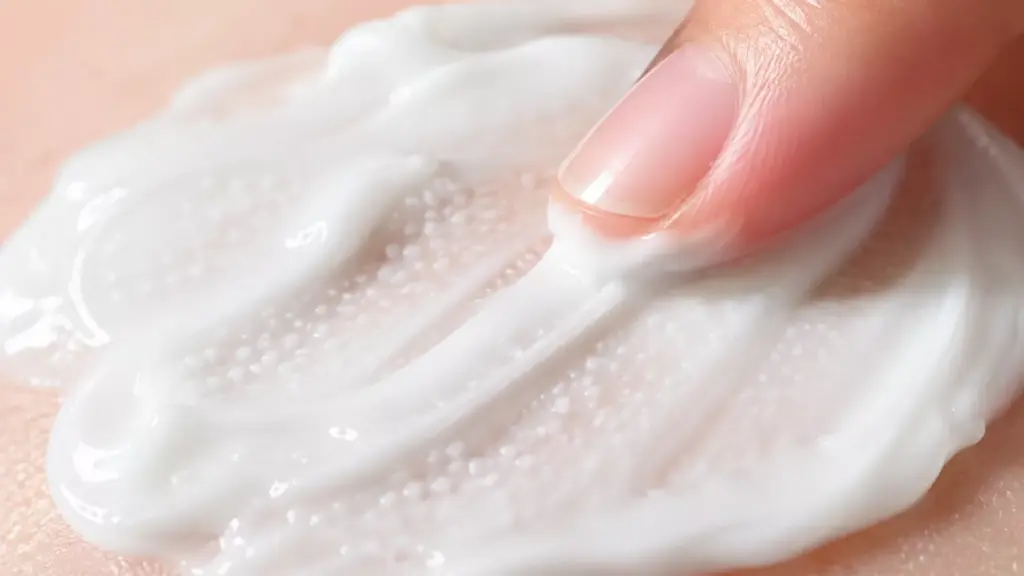
When you first squeeze the Aestura Atobarrier 365 Cream out of the tube, you will immediately notice tiny, visible white flecks within the rich emulsion. These are not physical exfoliants or plastic microbeads. They are soft, microscopic capsules holding the sensitive 3:1:1 lipid matrix.
The moment you massage the cream onto your skin, the ambient warmth of your fingertips and the gentle friction of application cause these micro-capsules to dissolve seamlessly. By applying this cream, you are essentially delivering a bio-identical, breathable molecular patch directly to your skin barrier, locking in deep hydration without suffocating your pores or triggering congestion.
4. Inside the Formula: Ingredient Stability over Superficial Gloss
A granular breakdown of the ingredient sheet reveals how this formulation prioritizes deep structural stability over superficial cosmetic gloss. The heavy lifting is done by Ceramide NP and Hydroxypropyl Bispalmitamide MEA, a highly stable patented pseudo-ceramide that prolongs the formulation’s efficacy on highly sensitive skin. These are structurally reinforced by Cholesterol and purified fatty acids like Stearic Acid and Palmitic Acid, which complete the final steps of the 3:1:1 lipid matrix to stabilize the skin biome.
To prevent the inner tightness common in dehydrated oily skin, the formula pairs the intrinsic humectant Glycerin with Squalane, a skin-identical emollient. Rather than relying on heavy petrolatum, mineral oils, or pore-clogging synthetic silicones that can trigger fungal acne, the inclusion of Squalane ensures that while the lipid barrier is being comprehensively repaired, the skin retains a breathable, lightweight, and non-suffocating finish.
5. My Personal 4-Week Empirical Trial: From Inflamed to Restored
To provide an honest audit that goes beyond theoretical data, I put the Aestura Atobarrier 365 Cream through a rigorous 4-week empirical trial on my own reactive, dehydrated-oily skin profile during a severe over-exfoliation flare-up.
During the first week of application, my skin was experiencing intense inner tightness and stinging from a previous retinoid mishap. Upon initial application, the cream felt noticeably richer than a standard lotion, but the micro-capsules melted without leaving a greasy, suffocating film. By day seven, the painful stinging sensation during cleansing had completely subsided.
By week three, the true structural transformation became evident. The chronic flaking around my nose and mouth disappeared, and my skin’s surface oil production actually began to decrease, proving that restoring internal hydration naturally regulates external sebum overproduction. By the end of week four, my skin barrier felt completely resilient, plump, and thoroughly repaired. It didn’t just sit on my skin; it actively healed the underlying infrastructure.
6. Scientific Backing: The Clinical Evidence on Accelerated Barrier Repair
The advanced lipid formulation of the Aestura Atobarrier 365 Cream is engineered with clinical precision to rapidly rehabilitate compromised skin infrastructure. To appreciate why the 3:1:1 ratio is so crucial, we must look at independent dermatological clinical trials regarding epidermal barrier recovery.
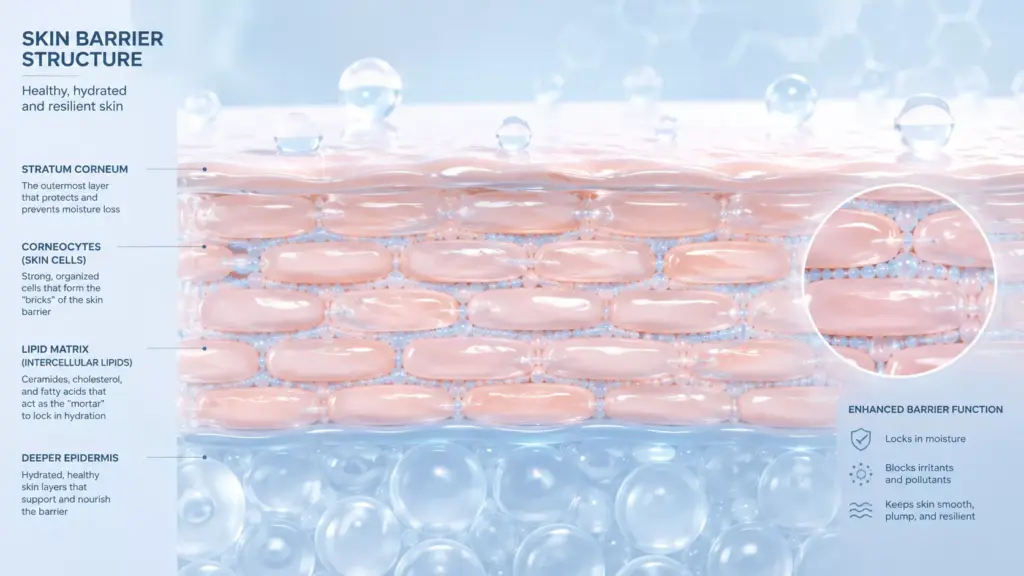
According to pioneering dermatological research published in international cosmetic science journals, when the stratum corneum is chemically stripped or physically abraded, applying an unbalanced single lipid can actually disrupt the skin’s endogenous lipid synthesis. The skin requires a synchronized, simultaneous delivery of all three essential lipids to properly initiate the healing cascade.
Aestura’s inclusion of Hydroxypropyl Bispalmitamide MEA works in perfect tandem with true Ceramide NP, cholesterol, and fatty acids to accelerate the synthesis of endogenously generated lipids within the lamellar bodies. For those who want to verify the independent safety profiles, chemical hazard ratings, and allergen data of these specific compounds, you can access the full regulatory analysis directly on the EWG Skin Deep Cosmetic Database.
7. Comparative Analysis: Aestura Atobarrier 365 Cream vs. Illiyoon Ceramide Ato Concentrate Cream
In the K-Beauty community, consumers frequently pit the Aestura Atobarrier 365 Cream against another major heavyweight: the Illiyoon Ceramide Ato Concentrate Cream. While both brands operate under the Amorepacific corporate umbrella and share advanced ceramide technology, their technical formulations cater to entirely different skin profiles.
In terms of lipid structure, Aestura strictly operates on the patented 3:1:1 physiological ratio with encapsulated Derma-ON technology, whereas Illiyoon focuses primarily on encapsulated ceramides without emphasizing the strict cholesterol-to-fatty-acid balancing ratio.
This difference directly impacts their texture and weight. Illiyoon is noticeably denser, heavier, and leaves a more pronounced, matte-occlusive layer, making it ideal for extremely dry body parts or severe, body-wide eczema. Aestura, conversely, possesses a far superior cosmetic elegance. It melts completely into facial skin without leaving a heavy, waxy film, making it highly compatible under makeup and perfectly suitable for facial application on dehydrated oily skin.
While Illiyoon serves as an excellent, budget-friendly everyday basic moisturizer for naturally dry bodies, Aestura operates as a high-performance therapeutic treatment cream meant to rapidly rehabilitate damaged, inflamed, or sensitized facial skin barriers.
8. The Caveats: Who Should Avoid This Formulation?
While this cream is an undeniable miracle worker for damaged, dry, and dehydrated-oily skin types, an honest audit requires looking at who it might not work for. Because the 3:1:1 ratio requires the presence of purified fatty acids like Stearic Acid and Palmitic Acid, this formulation may not be 100% ideal for individuals with extremely oily, acne-prone skin that is highly sensitive to fatty acids.
If you are currently dealing with severe, active cystic acne or are highly prone to malassezia folliculitis, or fungal acne, these specific fatty acids can occasionally act as a trigger for further congestion. It is always wise to patch test on a small area of your jawline if your skin profile leans aggressively oily.
9. Frequently Asked Questions (FAQ)
Q. Does the Aestura Atobarrier 365 Cream cause purging?
No. Skin purging is exclusively triggered by active ingredients that accelerate skin cell turnover, such as Retinoids or chemical exfoliants like AHA, BHA, and PHA. Because this cream is formulated strictly for barrier replenishment and contains no exfoliating agents, it cannot cause purging. If you experience breakouts, it is likely due to an individual sensitivity to a specific fatty acid, or an existing clogged pore reacting to a richer texture.
Q. Can I use this cream alongside Retinol or Vitamin C?
Absolutely. In fact, utilizing this specific lipid matrix in the same routine as high-strength Retinol or Vitamin C is highly recommended. The patented lipid profile acts as a protective buffer, significantly reducing the dryness, flaking, and irritation often associated with potent active ingredients without diminishing their clinical efficacy.
10. The Final Verdict: Is It Worth the Hype?
If your skin barrier is currently compromised from over-exfoliation, harsh seasonal weather shifts, or aggressive acne treatments, the Aestura Atobarrier 365 Cream is absolutely worth the investment. By prioritizing a data-backed 3:1:1 lipid ratio over generic marketing buzzwords, it repairs your skin at a structural level. It delivers deep, non-greasy therapeutic healing that 2030 consumers with sensitive, reactive, or dehydrated oily skin can completely rely on. It is a brilliant, scientifically sound component for any clean, evidence-based skincare regime.
Medical Disclaimer:The information provided in this article is for educational and informational purposes only and does not constitute professional medical advice, diagnosis, or treatment. The content is based on cosmetic formulation analysis and personal empirical experience, and should not be used as a substitute for professional dermatological consultation.
Always seek the advice of a board-certified dermatologist or other qualified healthcare provider with any questions you may have regarding a specific medical skin condition or persistent breakouts. Never disregard professional medical advice or delay in seeking it because of something you have read on this blog.